If you’ve ever watched a sushi chef glide through vegetables with precision that seems almost surgical, chances are you’ve witnessed a kiritsuke in action. This traditional Japanese blade has quietly become the darling of home cooks who crave versatility without sacrificing performance. With its distinctive angled tip and hybrid DNA, a kiritsuke knife bridges the gap between specialized Japanese blades and the all-purpose Western chef’s knife—all while commanding respect with its unique learning curve. Finding a quality kiritsuke under $200 might sound like hunting for unicorns, but this price point actually unlocks a surprising number of legitimate performers that don’t demand a executive chef’s salary.
The appeal lies in the knife’s chameleon-like nature. It performs pull cuts like a yanagiba for fish, push cuts like an usuba for vegetables, and—if you opt for a double-bevel version—can tackle 90% of what your chef’s knife does. But not all kiritsukes are created equal, especially in the sub-$200 category where marketing fluff often obscures what really matters: steel quality, geometry, and honest craftsmanship. This guide cuts through the noise to arm you with the knowledge to spot a genuine workhorse from a flashy imposter.
Top 10 Kiritsuke Knives for Hybrid Cutting
Detailed Product Reviews
1. HOSHANHO 9 Inch Kiritsuke Chef Knife, Japanese Hand Forged 9 Layers 10Cr15CoMoV High Carbon Steel Kitchen Knife, Professional Chef’s Knife with Ergonomic Rosewood Handle

Overview: The HOSHANHO 9-inch Kiritsuke delivers traditional Japanese craftsmanship with modern metallurgy. Featuring a 10Cr15CoMoV steel core wrapped in nine layers of composite steel, this hand-forged blade promises exceptional hardness and flexibility. The distinctive rosewood handle and hammered finish make it as beautiful as it is functional for daily prep work.
What Makes It Stand Out: This knife’s 9-layer construction with vacuum heat treatment and nitrogen cryogenic tempering creates a blade that balances hardness with resilience. The 12-15 degree hand-sanded edge offers professional-grade sharpness, while the octagonal rosewood handle provides a secure, ambidextrous grip even when wet. The hand-hammered texture prevents food from sticking and adds distinctive visual appeal that improves with age.
Value for Money: At $84.99, this knife sits in the sweet spot between budget and premium options. You’re getting legitimate hand-forged construction, high-quality steel, and thoughtful design details like copper accents without the $150+ price tag of comparable Japanese knives. It outperforms mass-produced alternatives while remaining accessible to serious home cooks.
Strengths and Weaknesses:
- Pros: Excellent edge retention from 10Cr15CoMoV steel; beautiful hand-hammered finish; ergonomic rosewood handle stays stable when wet; 9-inch length ideal for large prep tasks
- Cons: Requires careful maintenance (no dishwasher, no bones/frozen foods); rosewood needs occasional oiling; heavier than some Japanese knives; limited brand recognition
Bottom Line: A superb mid-range Kiritsuke that delivers authentic Japanese performance and aesthetics without breaking the bank. Perfect for dedicated home chefs ready to care for a high-carbon blade.
2. 8.27 Inch Japanese Kiritsuke Chef Knife with VG10 Core, Professional 67-Layer Hand-Forged Damascus Knife with Ergonomic Handle, Leather Sheath and Elegant Gift Box – Perfect Christmas for Women Men
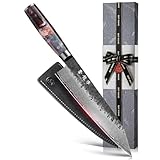
Overview: This premium Kiritsuke showcases authentic 67-layer Damascus steel with a VG10 core, hand-forged by skilled artisans. At 8.27 inches, it strikes an ideal balance between agility and cutting capacity. The stabilized wood-resin handle and included leather sheath elevate it beyond typical kitchen tools into heirloom territory that serious chefs will treasure.
What Makes It Stand Out: The legitimate 67-layer Damascus construction (not laser-etched) provides exceptional durability and corrosion resistance. With HRC62 hardness, it maintains its edge far longer than standard knives. The geometric tip excels at precision tasks like trimming silver skin, while the stabilized wood-resin handle offers unique grain patterns, water resistance, and ergonomic comfort. The premium gift packaging makes it presentation-ready for special occasions.
Value for Money: At $159.99, this is a genuine investment piece. While pricier than entry-level options, you’re paying for authentic hand-forging, superior VG10 steel, and legitimate Damascus layering. Comparable knives from established brands often exceed $200. The included leather sheath and elegant gift box add significant value for gift-givers and collectors alike.
Strengths and Weaknesses:
- Pros: Authentic hand-forged 67-layer Damascus; VG10 steel at HRC62 hardness; stabilized wood-resin handle resists moisture; geometric tip for precision work; beautiful gift presentation
- Cons: Premium price may deter budget-conscious buyers; 8.27-inch length may feel short for some tasks; requires maintenance to prevent patina; handle material may not appeal to traditionalists
Bottom Line: An exceptional gift-quality Kiritsuke that delivers true Japanese craftsmanship. Ideal for serious cooks who appreciate authentic materials and are willing to invest in proper maintenance.
3. DALSTRONG Hybrid Cleaver & Chef Knife - 8 inch - Phantom Series - ‘The Crixus’ - Japanese High-Carbon AUS8 Steel Kitchen Knife - Pakkawood Handle - Cooking Knife - Meat Cleaver Knife - Sheath Included

Overview: The Dalstrong Crixus boldly reimagines the Kiritsuke as a hybrid cleaver-chef knife, combining the Phantom Series’ signature performance with versatile functionality. Forged from Japanese AUS8 high-carbon steel at 58+ Rockwell hardness, this 8-inch blade tackles everything from delicate vegetables to breaking down poultry, making it a true kitchen workhorse for daily use.
What Makes It Stand Out: The hybrid cleaver design offers unprecedented versatility, bridging Western and Japanese styles. The blade is nitrogen-cooled for enhanced durability and honed to 13-15 degrees for razor sharpness. The full-tang construction with Spanish pakkawood handle provides excellent balance, while the brass and copper mosaic pin adds subtle luxury. Dalstrong’s lifetime warranty and satisfaction guarantee demonstrate exceptional confidence in their product.
Value for Money: At $62.50, this knife delivers remarkable value. You’re getting Dalstrong’s reputable quality control, premium AUS8 steel, and innovative hybrid design at a mid-range price. While it lacks the Damascus cladding of pricier options, the performance and versatility exceed many knives costing twice as much. The included sheath adds practical value for storage.
Strengths and Weaknesses:
- Pros: Versatile hybrid cleaver-chef design; excellent value from reputable brand; full-tang construction for balance; nitrogen-cooled AUS8 steel; lifetime warranty included
- Cons: AUS8 steel doesn’t hold edge like VG10; hybrid design may not please purists; pakkawood less premium than natural wood; Dalstrong branding not for minimalists
Bottom Line: A versatile, high-performance hybrid that punches above its weight class. Perfect for cooks wanting one knife that handles multiple tasks without sacrificing Japanese sharpness.
4. KYOKU Kiritsuke Chef Knife 8.5" - Shogun Series - Japanese Style VG10 Steel Core Forged Damascus Blade - with Sheath & Case
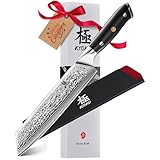
Overview: Kyoku’s Shogun Series Kiritsuke brings premium features to an accessible price point. This 8.5-inch knife centers a VG10 steel core within 67 layers of Damascus steel, cryogenically treated for enhanced performance. The fiberglass handle and included sheath/case system demonstrate thoughtful design for both daily use and long-term storage protection.
What Makes It Stand Out: The blade undergoes traditional Honbazuke sharpening to an impressive 8-12 degree edge, delivering exceptional precision for delicate tasks. At HRC 58-60, it balances sharpness retention with durability for everyday use. The fiberglass handle resists temperature extremes and moisture better than traditional wood, while the included protective case ensures safe storage. This combination of authentic Japanese methods and modern materials creates a practical, high-performance tool for serious home cooks.
Value for Money: At $64.00, this knife offers incredible value. You’re receiving legitimate VG10 Damascus construction, cryogenic treatment, and professional-grade sharpening at a price that competes with entry-level knives. The inclusion of both sheath and case adds $20-30 in value. It outperforms many knives costing twice as much while requiring less maintenance than wood-handled alternatives.
Strengths and Weaknesses:
- Pros: Authentic VG10 Damascus steel; Honbazuke sharpening to 8-12 degrees; durable fiberglass handle; includes sheath and case; excellent edge retention
- Cons: HRC 58-60 is slightly softer than premium options; fiberglass handle lacks traditional warmth; brand less recognized than competitors; limited warranty information
Bottom Line: An outstanding value proposition that doesn’t compromise on core performance. Ideal for cooks seeking authentic Japanese quality with modern durability and minimal maintenance requirements.
5. MITSUMOTO SAKARI Kiritsuke Chef Knife 9 inch - Hand Forged Japanese Kitchen Knives, 3-Layer 9CR18MOV High Carbon Steel, Rosewood Handle & Sandalwood Box
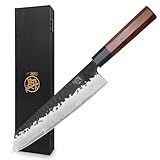
Overview: The Mitsumoto Sakari Kiritsuke embraces traditional Japanese forging methods in a practical, affordable package. This 9-inch knife features a 3-layer 9CR18MOV high-carbon steel blade with a hand-forged finish, paired with an ergonomic rosewood handle. The included sandalwood box emphasizes its heritage and gift potential for special occasions.
What Makes It Stand Out: The knife honors traditional 3-layer construction while incorporating modern nitrogen cooling for enhanced performance and durability. The octagonal rosewood handle provides an authentic grip that reduces wrist tension during extended use. At 9 inches, it offers substantial cutting capacity for large ingredients. The sandalwood presentation box adds ceremonial value, making it feel special for home cooks exploring Japanese knives for the first time.
Value for Money: At $59.49, this is the most budget-friendly option that still delivers authentic hand-forged quality. While the 3-layer construction is simpler than 67-layer Damascus, the 9CR18MOV steel offers excellent sharpness and corrosion resistance. You’re getting a full-sized knife with traditional aesthetics and modern heat treatment at an entry-level price that undercuts most competitors by $20-40 while maintaining quality.
Strengths and Weaknesses:
- Pros: Most affordable hand-forged option; traditional 3-layer construction; beautiful rosewood handle; includes premium sandalwood box; 9-inch length handles large tasks
- Cons: Simpler steel construction than premium options; edge retention inferior to VG10; brand recognition limited; requires careful maintenance like all high-carbon knives
Bottom Line: An excellent entry point into Japanese hand-forged knives. Perfect for budget-conscious cooks who value traditional aesthetics and are willing to maintain their blade properly for optimal performance.
6. KAWAHIRO 210mm Japanese Kiritsuke Chef Knife with Tri-Ply VG-10 Stainless Steel Blade, Ergonomic Handle Grip and Premium Wood Box, Cooking Gifts for Men Women

Overview: The KAWAHIRO 210mm Kiritsuke represents authentic Japanese craftsmanship through its VG-10 core tri-ply construction achieving 62HRC hardness. This hand-forged knife merges traditional techniques with premium materials, delivering exceptional sharpness and edge retention. The 210mm length provides versatile performance for both professional chefs and passionate home cooks seeking heirloom-quality cutlery that honors Japanese knifemaking heritage.
What Makes It Stand Out: The three-layer composite steel creates an optimal balance between razor-sharp VG-10 core and protective softer steel outer layers. Its Red Cinnamon wood handle, featuring Ebony accents and Turquoise inlay, offers stunning aesthetics alongside ergonomic comfort for extended prep sessions. Each blade is individually hand-forged and polished by master artisans, ensuring unique character and superior quality control absent in mass-produced alternatives.
Value for Money: At $139.99, this knife significantly undercuts comparable VG-10 knives from brands like Shun or Miyabi that typically exceed $200. The combination of premium steel, traditional hand-forging, artistic handle materials, and luxury wooden gift box delivers exceptional value. For serious culinary enthusiasts, this represents an accessible entry into high-end Japanese cutlery without compromising core performance attributes.
Strengths and Weaknesses: Pros include outstanding edge retention and sharpness, beautiful handcrafted design, comfortable secure grip, and impressive gift presentation. Cons involve higher maintenance requirements including immediate drying after use, delicate edge needing quality cutting boards, and price point that may intimidate beginners unfamiliar with high-carbon steel care protocols.
Bottom Line: An excellent investment for passionate cooks seeking authentic Japanese quality. The KAWAHIRO offers professional-grade performance and aesthetics at a mid-range price, making it ideal for those ready to properly maintain a premium blade that will last decades with correct care.
7. Dalstrong Kiritsuke Chef Knife - 9.5 inch - Phantom Series - Japanese High-Carbon AUS8 Steel Kitchen Knife - Pakkawood Handle Kitchen Knife - Asian Cooking Knife - Sheath Included

Overview: The Dalstrong Phantom Series 9.5-inch Kiritsuke delivers professional performance with ice-tempered AUS-8 steel at 58+ Rockwell hardness. This precision-forged knife features a painstakingly honed single-bevel edge at 13-15°, nitrogen cooling for enhanced durability, and Dalstrong’s renowned quality assurance. The full-tang construction ensures robust handling for demanding kitchen tasks.
What Makes It Stand Out: The nitrogen-cooled blade treatment enhances hardness, flexibility, and corrosion resistance beyond standard AUS-8 steel. The hand-polished Spanish Pakkawood handle provides exceptional balance and control, while the included protective sheath adds practical value. Dalstrong’s lifetime warranty and 75,000+ chef endorsements demonstrate remarkable brand trust and industry-leading customer support that competitors rarely match.
Value for Money: At $64.50, this knife offers tremendous value for intermediate users. AUS-8 steel provides excellent sharpness with easier maintenance than premium carbon steels, while the robust construction and warranty protection rival $100+ knives. It’s an accessible step-up from entry-level cutlery, delivering professional features without premium pricing.
Strengths and Weaknesses: Pros include merciless sharpness out of box, excellent edge retention for the steel type, comfortable D-shaped handle, and outstanding warranty support. Cons involve AUS-8 being less premium than VG-10, single-bevel design requiring technique adjustment for Western cooks, and the 3.5mm blade thickness being slightly heavy for delicate precision work.
Bottom Line: A superb choice for serious home cooks seeking reliable performance without premium prices. Dalstrong’s warranty and quality control make this a risk-free investment that delivers professional results and exceptional durability for daily kitchen demands and specialized tasks alike.
8. kanngou Japanese Kiritsuke Knife Chefs Knife with 67 Layers Damascus Steel AUS-10 Core, Professional Kitchen Knife with Full-Tang Ebony Wood Handle and Premium Gift Box(Hammered Damascus Series)
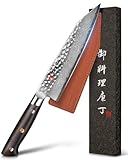
Overview: The Kanngou 8.27-inch Kiritsuke features 67 layers of Damascus steel with an AUS-10 core, achieving HRC 60-62 hardness. Hand-sharpened using the traditional Honbazuke method to a 10-12° edge, this knife delivers professional-grade performance. The full-tang construction and ebony wood handle provide excellent balance for versatile kitchen applications from precise vegetable work to protein slicing.
What Makes It Stand Out: The intricate Damascus pattern enhances both structural strength and visual appeal, while the Honbazuke sharpening creates an exceptionally keen edge lasting twice as long as standard blades. The handcrafted ebony wood handle offers superior comfort and stability, minimizing fatigue during prolonged use. This combination of traditional methods and premium materials distinguishes it from mass-produced alternatives.
Value for Money: At $79.99, this knife bridges budget and premium categories. The AUS-10 steel core, genuine Damascus layering, and traditional sharpening methods offer performance typically found in $120+ knives. For value-conscious enthusiasts wanting authentic Japanese characteristics without established brand premiums, this represents intelligent purchasing.
Strengths and Weaknesses: Pros include beautiful Damascus construction, hard steel rating (HRC 60-62), comfortable full-tang handle, and included premium gift box. Cons involve lesser-known brand reputation, potential quality control inconsistencies between units, and the need for careful maintenance to prevent corrosion on the high-carbon steel blade.
Bottom Line: An excellent mid-range option for cooks wanting Damascus aesthetics and premium performance without breaking the bank. The Kanngou delivers impressive specifications and craftsmanship that rival established brands at a fraction of the cost, making it a smart value purchase.
9. Dragon Creek Damascus Kiritsuke Knife - Japanese Kiritsuke Chef Knife for Meat Vegetable Cutting Birthday Christmas Thanksgiving Gift for Mom or Dad
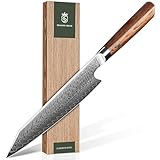
Overview: The Dragon Creek Kiritsuke offers entry-level access to Japanese-style knives with its 67-layer Damascus pattern and German stainless steel construction. This claimed 12-step handmade process creates a 15° V-edge blade for versatile kitchen tasks. The Pakkawood handle and gift-ready packaging target budget-conscious buyers seeking Japanese aesthetics at minimal investment.
What Makes It Stand Out: At $41.85, it provides Damascus visuals and multi-purpose functionality that appeal to beginners exploring Japanese cutlery. The Pakkawood handle offers reasonable comfort and durability for light home use. The attractive price point and included packaging make it an accessible gift option for casual cooks wanting to experiment with Kiritsuke blade geometry without financial risk.
Value for Money: This is among the most affordable Damascus-pattern knives available. While “German steel” contradicts traditional Japanese specifications, the price justifies experimentation for novices unwilling to invest significantly. It functions adequately for basic home cooking, though serious cooks will quickly recognize performance limitations compared to authentic Japanese knives.
Strengths and Weaknesses: Pros include extremely low price, attractive Damascus appearance, comfortable handle, and low-risk purchase. Cons involve questionable steel quality claims, likely mass-produced origins despite marketing, inferior edge retention compared to AUS-10 or VG-10 steels, and questionable long-term durability under regular heavy use.
Bottom Line: Suitable only for absolute beginners or as a decorative gift. Serious cooks should invest at least $60-80 for viable performance. The Dragon Creek functions adequately for basic tasks but lacks the steel quality and craftsmanship to compete with authentic Japanese knives or even solid mid-range alternatives.
10. Huusk 8 Inch Kiritsuke Chef Knife Professional, High Carbon Steel Japanese Hand Forged Sushi Fish Knife, Ergonomic Pakkawood Handle - Father’s Day for Men Women

Overview: The Huusk 8-inch Kiritsuke positions itself as an ultra-budget professional knife with high-carbon steel construction and traditional hot-forging claims. Featuring a hammered finish and Pakkawood handle at just $24.14, it targets home cooks seeking Japanese aesthetics at the lowest possible price point for light-duty kitchen tasks.
What Makes It Stand Out: The rock-bottom price makes this the most accessible Kiritsuke commercially available. The hammered finish provides a rustic aesthetic while theoretically reducing food adhesion. Its claim of traditional forging combined with modern treatment attempts to bridge authenticity and affordability for first-time users testing Kiritsuke blade profiles.
Value for Money: At $24.14, expectations must remain realistic. The knife offers basic functionality for casual cooks prioritizing cost over longevity. While the 56±2 HRC hardness indicates mediocre edge retention requiring frequent sharpening, the price allows beginners to experiment with knife style before committing to quality alternatives.
Strengths and Weaknesses: Pros include unbeatable price, initial sharpness, lightweight handling, and attractive hammered texture. Cons involve low Rockwell hardness causing rapid dulling, questionable quality control and consistency, likely short functional lifespan, and false economy for serious cooks who will quickly require superior replacement.
Bottom Line: Only appropriate for absolute beginners testing preferences or as a backup beater knife. Serious home cooks should spend at least $60-80 for viable long-term performance. The Huusk serves a purpose at its price but cannot compete with even mid-range alternatives for durability or sustained edge retention.
What Is a Kiritsuke Knife and Why Is It Called a Hybrid?
The Dual Heritage: Yanagiba and Usuba
The kiritsuke earned its hybrid reputation by literally combining DNA from two highly specialized Japanese blades. The yanagiba, a long, single-bevel slicer designed for pristine fish butchery, contributes the length and slicing prowess. The usuba, a rectangular vegetable knife celebrated for its katsuramuki (rotary peeling) abilities, brings the flat profile and push-cutting excellence. When these two lineages merge, you get a blade that theoretically handles both protein and produce with equal grace.
Traditional kiritsukes maintain this heritage through a single-bevel grind, meaning only one side of the blade is sharpened to a fine edge while the other remains concave. This asymmetry creates incredibly clean cuts but demands proper technique and handedness—left-handed versions are rare and expensive. The flat edge profile excels at katsuramuki and precise vegetable work, while the length and tip allow for confident fish slicing.
Modern Hybrid Adaptations
Contemporary knife makers recognized that most home cooks—and many professionals—need more flexibility. Enter the double-bevel kiritsuke, often called a “kiritsuke gyuto” or “K-tip” chef’s knife. These retain the iconic angled tip and relatively flat belly but sharpen both sides like a Western blade. This adaptation sacrifices some of the traditional single-bevel’s purity but dramatically improves versatility and user-friendliness.
The hybrid designation now extends beyond geometry to encompass function. A modern kiritsuke under $200 typically serves as a bridge between Japanese precision and Western utility, handling everything from brunoise shallots to breaking down chicken. Understanding which hybrid you’re considering—traditional single-bevel or modern double-bevel—is the first critical decision in your search.
Understanding the Kiritsuke’s Unique Design Elements
The Signature Reverse Tanto Tip
That dramatic angled tip isn’t just for show. The “k-tip” or reverse tanto design provides a fine point for intricate work—removing silver skin, scoring vegetables, or precise garnish cuts—while maintaining the strength of a thicker spine. Unlike a chef’s knife’s gradual curve, this angular transition creates a distinct fulcrum point that changes how you approach detail work. On cheaper knives, this tip often suffers from poor heat treatment, becoming brittle or misaligned. Inspect photos carefully; the grind should be symmetrical and the tip finely pointed without appearing fragile.
Blade Geometry Explained
The kiritsuke’s soul lives in its geometry. Traditional models feature an exceptionally flat edge profile—sometimes only 20% of the blade has any curve near the tip. This flatness is what makes katsuramuki possible and why push-cutting feels so natural. Double-bevel versions introduce slightly more belly but remain flatter than typical gyutos. At under $200, you’ll encounter compromises: some blades have uneven grinds where the flat section isn’t truly flat, or the tip transitions are poorly executed. Look for product descriptions that mention “flat profile” or “minimal belly” and verify with user photos showing the blade against a straight edge.
Length Considerations
Kiritsukes typically range from 210mm to 300mm, with 240mm being the professional standard. For home cooks under the $200 mark, 210mm offers the best balance of maneuverability and utility. Longer blades demand more skill and typically cost more due to steel requirements. A 210mm kiritsuke handles cabbage, large squash, and fish filets while fitting comfortably on most cutting boards. Shorter 180mm versions exist but lose the blade presence that defines the kiritsuke experience.
The $200 Price Point: What to Expect
Steel Quality at This Budget
Cross the $200 threshold and you’re firmly in entry-level Japanese knife territory—not a bad place to be, but requiring realistic expectations. You’ll find legitimate Japanese steels like AUS-10, VG-10, and increasingly popular Swedish Sandvik 12C27. These offer excellent corrosion resistance and decent edge retention without the premium of high-carbon blue or white steel. Avoid mystery “high carbon stainless steel” descriptions without specific alloy numbers; reputable makers proudly name their steel.
Heat treatment matters more than steel type. A well-tempered AUS-10 blade at 58-60 HRC will outperform poorly treated VG-10 at 62 HRC. In this price range, expect HRC ratings between 58-61—hard enough to hold an edge but forgiving enough not to chip during normal use. Be skeptical of claims exceeding 62 HRC; achieving that consistently requires expensive processes that don’t fit sub-$200 economics.
Handle Materials and Construction
Handles reveal where budget knives often cut corners. You’ll encounter pakka wood (compressed wood-resin composite), G10, and entry-level hardwoods like magnolia with plastic ferrules. These materials are durable and functional, if not luxurious. Avoid “stainless steel handles” on traditional-style knives—they’re often poorly balanced and slippery. The handle-to-blade transition (the machi) should be flush with no gaps where moisture can collect. In this price bracket, full tang construction is rare and unnecessary; traditional partial tangs with reinforced handles offer better balance.
Fit and Finish Realities
Under $200, perfect fit and finish is aspirational, not guaranteed. Expect minor cosmetic imperfections: slight asymmetry in the handle, faint scratches on the blade face, or a choil that isn’t perfectly polished. These don’t affect performance. What matters is edge straightness, tip alignment, and handle security. Red flags include wobbly handles, visibly crooked edges, or burrs left on the spine. Read reviews specifically mentioning fit and finish—enthusiasts quickly spot consistent quality issues.
Key Features to Evaluate Before Buying
Hardness (HRC) and Edge Retention
The Rockwell Hardness Scale directly impacts your daily experience. At 58-60 HRC, your kiritsuke will hold a working edge through several meal preps but require weekly honing. Bump to 60-61 HRC and you gain a few extra days of sharpness but increase chipping risk on hard vegetables or bones. Below 58 HRC in a kiritsuke is disappointing—you’ll constantly sharpen. Manufacturers sometimes inflate HRC numbers; cross-reference independent tests when possible. For hybrid cutting, 59-60 HRC hits the sweet spot of durability and performance.
Grind Quality and Consistency
The grind determines how the knife moves through food. A quality kiritsuke features a thin, even grind behind the edge—typically around 1-2mm at the spine above the heel. Some budget knives cheat with thick grinds that wedge in dense vegetables. Check choil shots (photos looking down the blade’s heel) in reviews; you want a visible taper without abrupt thickness changes. The bevel should be even on both sides (for double-bevel) or precisely angled (for single-bevel). Inconsistent grinds cause steering, where the knife pulls left or right during cuts.
Weight and Balance
Traditional kiritsukes are surprisingly light—often under 200g for a 240mm blade—balanced slightly forward of the handle. Western hybrids trend heavier, 200-250g, with more neutral balance. Your preference depends on cutting style. Push-cutters who work vertically prefer blade-heavy knives that do the work. Rock-choppers need neutral balance for control. Under $200, you’ll find both styles, but many budget knives suffer from handle-heavy construction due to cheap, dense materials. Always check listed weight and balance point; a blade-heavy 210mm kiritsuke around 180g often feels more agile than a 240mm model.
Single Bevel vs. Double Bevel: The Great Divide
Traditional Single Bevel Characteristics
Single-bevel kiritsukes demand commitment. The concave back (urasuki) creates food release and reduces friction, while the acute bevel angle (typically 15-17 degrees) produces surgical precision. However, they cut with a steering motion—right-handed models naturally pull left—requiring technique adjustment. They’re also handedness-specific and nearly impossible for lefties to find under $200. The learning curve is steep; your first weeks will involve accidental angled cuts and frustration. But for dedicated practitioners, nothing matches the pure push-cut feel and edge refinement possible.
Double Bevel User-Friendliness
Double-bevel kiritsukes trade tradition for accessibility. Both sides are ground symmetrically (usually 50/50 or 70/30), eliminating steering issues and handedness restrictions. They sharpen on standard whetstones without needing specialized single-bevel technique. The compromise? You lose the urasuki’s food release and some of that magical flat-profile precision. Edge angles are typically wider (16-18 degrees per side), making them slightly less sharp but more durable. For hybrid cutting at home, a double-bevel kiritsuke under $200 offers 90% of the experience with 50% of the learning curve—an equation most cooks find compelling.
Steel Types Demystified
Stainless Steel Options
AUS-10 and VG-10 dominate this category. AUS-10 sharpens easily, resists rust admirably, and offers good toughness—ideal for cooks who prioritize low maintenance. VG-10 holds a slightly finer edge but can be chippy if poorly heat-treated; it’s also more prone to micro-chipping on cutting boards with hard particles. Newer entries like Sandvik 12C27 and 14C28N deliver impressive performance with excellent corrosion resistance and toughness, though they’re less common. For hybrid cutting, prioritize toughness over absolute edge retention; you’re asking this knife to do everything, so it can’t be fragile.
Carbon Steel Considerations
True carbon steel kiritsukes under $200 are rare but exist, typically using SK steels or White #3. These alloys achieve incredible sharpness and easy sharpening but demand meticulous drying and oiling. They develop patina—a dark oxide layer that protects against rust but stains acidic foods. If you’re drawn to carbon steel’s performance, ensure you have the discipline for immediate cleaning and drying. For most home cooks, stainless or stainless-clad options provide better sanity at this price point.
Clad and Damascus Patterns
Many sub-$200 kiritsukes feature san-mai construction: a hard core steel jacketed in softer stainless steel. This combines core performance with durability and rust resistance. The outer layers are often etched to create Damascus patterns—visually stunning but functionally irrelevant. Don’t pay extra for “Damascus” alone; focus on the core steel quality. Some budget knives use fake Damascus (laser-etched patterns) that wear off. Real Damascus cladding will show subtle texture even at the spine. Pattern-welded steel is nice but secondary to grind and heat treatment.
Handle Styles and Ergonomics
Traditional Wa Handles
Wa handles are lightweight, octagonal or D-shaped, and made from ho wood, magnolia, or pakka wood. They create a blade-forward balance ideal for precise push cutting. The octagonal shape provides tactile feedback for grip orientation, while D-shapes offer ergonomic security for right hands (left-handed D handles are rare). Under $200, you’ll find decent wa handles, but check ferrule quality—cheap plastic ferrules can crack. The handle should be smooth but not slippery; unfinished wood can feel rough but offers excellent grip when dry.
Western-Style Handles
Western handles bring heft and familiarity, often using full-tang construction with riveted scales. They balance closer to the handle, suiting rock-chopping motions. In budget knives, these handles sometimes use cheap, dense plastics that feel hollow. Look for listed weight; a 210mm kiritsuke under 180g with a Western handle likely has balance issues. The advantage is durability and dishwasher resistance (though you should never dishwash any good knife). For hybrid cutting, Western handles work better if you transition frequently between knife types.
Hybrid Handle Designs
The newest category blends elements: Japanese silhouettes with Western materials, or vice versa. You might find an octagonal handle in G10 or a Western handle with Japanese balance. These can be excellent values, offering modern ergonomics with traditional aesthetics. Pay attention to texture—smooth G10 gets slippery when wet, while contoured versions provide secure grip. Hybrid handles often signal a manufacturer thinking about function over tradition, which at under $200 is frequently a good sign.
Blade Length: Finding Your Sweet Spot
210mm: The Home Cook’s Workhorse
A 210mm kiritsuke hits the sweet spot for most home kitchens. It’s long enough for slicing cabbage, breaking down fish, and handling large vegetables, but short enough for detailed work and small boards. Under $200, this length offers the best steel quality and fit-and-finish for your dollar; manufacturers allocate budget more generously per inch. The lighter weight reduces fatigue during extended prep sessions. If you own a 210mm gyuto, expect the kiritsuke’s flatter profile to feel more precise but less forgiving on rock cuts.
240mm: More Blade, More Versatility
Stepping up to 240mm brings professional presence. The extra length tackles watermelons, large fish, and big roasts with authority. However, under $200, you’re stretching the budget—240mm models often have thinner grinds or cheaper handles to maintain price. They also demand more technique; that much flat edge requires confident push-cutting skills. Board space becomes a real consideration—a 240mm kiritsuke needs at least 18 inches of workable board. For hybrid cutting, the longer blade excels at single-stroke slicing but can feel unwieldy for quick onion brunoise.
Maintenance and Care Essentials
Cleaning and Drying Protocols
Never put your kiritsuke in the dishwasher. The harsh detergents and rattling environment will destroy the edge and potentially damage the handle. Wash immediately after use with warm water and mild soap, using a soft sponge. Pay special attention to the machi (handle-blade transition) where food particles hide. Dry with a clean towel immediately—don’t air dry, as water spots can lead to rust even on stainless steels. For carbon steel blades, wipe down with a lightly oiled cloth after drying. This 30-second routine prevents 99% of maintenance issues.
Honing vs. Sharpening: What You Need to Know
Honing realigns a rolled edge; sharpening removes steel to create a new edge. Use a ceramic honing rod weekly for stainless kiritsukes, stroking at the same angle as the bevel (typically 15-17 degrees). Avoid steel rods—they’re too harsh for Japanese steels. When cutting performance drops despite honing, it’s time to sharpen. For double-bevel kiritsukes, a 1000-grit whetstone followed by 3000-4000 grit restores a screaming edge. Single-bevel knives need specialized technique: sharpen the bevel side aggressively, then lightly polish the ura side. At under $200, you’re buying a knife that sharpens easily—take advantage of that.
Storage Solutions That Protect Your Investment
Magnetic strips are ideal—easy access and no blade contact. Ensure the magnet isn’t so strong that it snaps the knife against the strip, potentially chipping the edge. Knife blocks work if slots are wide enough; traditional Japanese knives often don’t fit Western blocks. Drawer inserts with individual slots are excellent space-savers, but never toss a kiritsuke loose in a drawer. Blade guards (saya) are affordable protection for transport or drawer storage. For carbon steel, store in a dry environment; consider a dehumidifier in humid climates. The goal is protecting that fine edge from contact and moisture.
Common Misconceptions Debunked
“It’s Just a Fancy Chef’s Knife”
This misunderstanding sells kiritsukes short. While a double-bevel version can replace a chef’s knife, the geometry fundamentally changes cutting mechanics. The flatter profile excels at push cuts and slicing but struggles with rock-chopping. The k-tip provides precision a chef’s knife can’t match but requires adjustment for tip-down work. The balance is typically more blade-forward. Claiming they’re interchangeable ignores these nuances—it’s like saying a sports car and sedan are the same because both have four wheels. You buy a kiritsuke for what it does differently, not just for aesthetics.
“Only for Professional Chefs”
Single-bevel kiritsukes do demand professional-level technique, but double-bevel versions welcome ambitious home cooks. The learning curve is real—you’ll need to adapt grip and cutting motion—but it’s no steeper than mastering a mandoline or immersion circulator. Many enthusiasts find their kiritsuke becomes their most-used knife within a month. The key is honest self-assessment: if you want a knife that works exactly like your current chef’s knife, a kiritsuke will frustrate you. If you’re excited by learning a new skill and appreciate precision, it’s deeply rewarding. Under $200, you’re not risking a fortune on this experiment.
Matching a Kiritsuke to Your Cooking Style
Vegetable-Forward Cooking
If vegetables dominate your meals, prioritize a flatter profile and lighter weight. A 210mm double-bevel kiritsuke with a wa handle excels at katsuramuki, julienne, and fine brunoise. Look for thin tips for coring and detail work. Steel choice matters less than grind quality—you want a knife that falls through carrots without wedging. AUS-10 or similar tough stainless prevents staining from beets and turmeric. The k-tip becomes invaluable for removing eyes from potatoes or scoring cucumbers. For this style, edge retention is secondary to ease of sharpening; vegetables dull edges slowly but benefit from frequent touch-ups.
Protein and Fish Prep
For those who break down fish or trim meat regularly, length and edge refinement take priority. A 240mm blade provides single-stroke slicing for fish filets, while a finer steel like VG-10 or White #3 achieves the clean cuts that prevent protein tear. The k-tip should be sturdy enough for silver skin removal but fine enough for detail trimming. Single-bevel versions shine here if you’re committed to learning technique; the urasuki’s food release prevents fish from sticking. For hybrid cutting that includes protein, consider a 70/30 asymmetrical grind—it offers some single-bevel benefits without full commitment.
All-Purpose Home Use
Most home cooks need a jack-of-all-trades. A 210mm double-bevel kiritsuke with stainless steel and a hybrid or Western handle provides maximum versatility. Prioritize toughness over ultimate sharpness—you’ll occasionally hit bones, cut on less-than-ideal boards, and maybe even (gasp) use it to split a squash. AUS-10 or Sandvik steels forgive these sins. The handle should feel secure whether you’re doing a pinch grip for onions or a handle grip for slicing roast chicken. This configuration sacrifices specialization for reliability, which is exactly what most home cooks need.
Shopping Smart: Red Flags and Marketing Hype
Vague Steel Specifications
“Beware of knives listed as ‘Japanese steel’ or ‘high carbon stainless’ without specific alloy names. Reputable makers proudly display steel types—VG-10, AUS-10, Sandvik 12C27—because they’ve invested in quality. Mystery steel suggests the manufacturer is hiding something, usually cost-cutting with lower-grade alloys. Similarly, avoid “Damascus steel” descriptions without mentioning the core steel. The cladding is window dressing; the core does the work. If a retailer can’t or won’t specify the steel, move on.
The Damascus Illusion
That beautiful wavy pattern catches eyes but tells you nothing about performance. Real Damascus cladding is laminated steel etched to reveal layers; fake Damascus is laser-etched onto monosteel and wears off with use. At under $200, some legitimate Damascus exists, but it’s often used to distract from mediocre grinds. Prioritize performance metrics—grind photos, weight, balance—over aesthetics. A plain-finished AUS-10 knife with excellent geometry will outperform a flashy Damascus blade with thick grinding every single time. Let Damascus be a tie-breaker between two equal knives, not the deciding factor.
The Learning Curve: What to Expect
Mastering the Push Cut
The kiritsuke’s flat profile rewards push-cutting—driving the knife forward and down in a straight line—while punishing rock-chopping. Your first sessions will feel awkward as muscle memory from curved chef’s knives fights you. Practice on onions: slice in half, place flat side down, and push-cut vertical slices without rocking. The knife should feel like it’s falling through the food. Expect a week of conscious adjustment before it feels natural. Your speed will initially drop, but precision will improve immediately. The k-tip requires angle awareness; stab too vertically and it bites board, too shallowly and it skids.
Adapting Your Grip
Most users need to choke up on the blade more than with Western knives. A proper pinch grip—thumb and forefinger on the blade, remaining fingers curled around the handle—gives you control over that long flat edge. The k-tip changes how you hold the knife for detail work; grip further back for leverage on tough cuts, move forward for precision. Single-bevel versions demand even more grip discipline to counteract steering. Expect minor hand fatigue initially as you build new muscles. Within two weeks, this grip will feel natural and your old chef’s knife will feel clumsy by comparison.
Frequently Asked Questions
What’s the main difference between a kiritsuke and a bunka knife? Both feature k-tips, but bunkas are shorter (typically 165-180mm) with more belly curve, making them more like compact chef’s knives. Kiritsukes are longer with flatter profiles, prioritizing slicing and push-cutting over all-purpose rock-chopping.
Can a left-handed person use a right-handed single-bevel kiritsuke? Technically yes, but it’s frustrating and potentially dangerous. The knife will steer strongly to the right, requiring constant compensation. At under $200, finding a left-handed single-bevel is nearly impossible. Lefties should opt for double-bevel versions or contact specialty retailers for left-handed options in higher price brackets.
How often should I sharpen my kiritsuke under normal home use? With proper honing, a quality stainless kiritsuke at 59-60 HRC needs sharpening every 2-3 months for typical home cooking (5-10 hours of prep weekly). Carbon steel may need monthly touch-ups but sharpens more easily. If you’re constantly cutting on hard boards or hitting bones, expect to sharpen more frequently.
Is a kiritsuke suitable for someone with small hands? Absolutely. The pinch grip technique actually benefits smaller hands, providing better control. A 210mm blade with a wa handle keeps overall weight low (often under 180g). Avoid Western handles, which tend to be bulkier. The key is trying different handle styles; many petite cooks find octagonal wa handles more secure than larger D-shapes.
Why do some kiritsukes have hammered finishes (tsuchime)? Tsuchime creates air pockets that reduce food sticking, particularly useful for starchy vegetables and proteins. It’s functional, not just decorative. However, at under $200, many hammered finishes are machine-pressed rather than hand-hammered. While still effective, they may be less consistent. Don’t pay a premium for tsuchime alone, but consider it a bonus on an otherwise well-spec’d knife.
Can I use my kiritsuke to cut through bones or frozen food? Never. Kiritsukes are designed for precise cutting of flesh and vegetables, not brute force. The thin edge and hard steel will chip or snap on bones. For chicken bones or frozen items, use a dedicated heavy cleaver or Western deboning knife. Even accidentally hitting a hidden bone can roll or chip the delicate edge.
What’s the best cutting board for a kiritsuke? End-grain wood is ideal—maple, cherry, or hinoki if you can find it. The wood fibers separate and heal, preserving your edge. Edge-grain bamboo is acceptable but harder on edges. Avoid glass, marble, or hard plastic boards; they’ll dull your knife prematurely. Your kiritsuke deserves a board that costs at least half what you paid for the knife.
How do I know if a kiritsuke has a good heat treatment? Look for user reviews mentioning edge stability and sharpening experience. Good heat treatment shows as consistent hardness along the blade—no soft spots that dull quickly or hard spots that chip. Reputable sellers often mention specific HRC ranges rather than exact numbers. If reviews complain about rolling edges or frequent chipping on normal foods, the heat treatment is suspect.
Should I buy a kiritsuke as my first Japanese knife? It depends on your cooking style. If you primarily push-cut vegetables and slice proteins, a double-bevel kiritsuke is an excellent first Japanese knife. If you rock-chop extensively, start with a gyuto to learn Japanese steel care and technique, then add a kiritsuke later. Jumping straight to single-bevel as a first Japanese knife is only advisable if you’re committed to learning traditional techniques.
Will a $200 kiritsuke perform as well as a $400 version? For 80% of tasks, yes. The $200 knife will cut vegetables, slice fish, and maintain an edge admirably. The $400 knife offers better steel, tighter tolerances, and superior fit-and-finish—noticeable in extended use but not game-changing for most home cooks. The primary difference is refinement: easier sharpening, longer edge retention, and aesthetic details. A $200 kiritsuke is a legitimate tool, not a compromise; the $400 version is a luxury upgrade.