There’s something almost meditative about kneading bread dough by hand—the rhythmic push and fold, the gradual transformation of shaggy flour and water into silky, elastic gluten. But let’s be honest: after your third batch of sourdough in a week or when you’re prepping for a holiday bake-a-thon, your arms start begging for mercy. That’s where a serious stand mixer becomes less of a luxury and more of a baking essential. Not all stand mixers are created equal, though, especially when it comes to the demanding work of bread dough. The wrong choice leaves you with a smoking motor, under-kneaded dough, or a machine that walks across your countertop like it’s trying to escape.
In 2026, the stand mixer market has evolved dramatically, with new motor technologies, smarter designs, and features that cater specifically to bread enthusiasts. Whether you’re a weekend warrior crafting artisan loaves or a daily baker fueling your family’s sandwich bread habit, understanding what separates a dough-worthy workhorse from a pretty countertop ornament will save you money, frustration, and countless subpar loaves. Let’s dive deep into what truly matters when selecting your bread-making companion.
Top 10 Stand Mixers for Bread Dough
Detailed Product Reviews
1. VIVOHOME Stand Mixer, 660W 10 Speed 6 Quart Tilt-Head Kitchen Electric Food Mixer with Beater, Dough Hook, Wire Whip and Egg Separator, Red
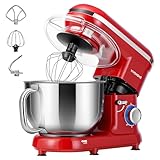
Overview: The VIVOHOME red stand mixer delivers impressive power and capacity at a budget-friendly price point. With its 660W motor and 6-quart stainless steel bowl, this machine targets families who want to tackle bread dough, batters, and whipped creams without the premium cost of high-end brands.
What Makes It Stand Out: This mixer punches above its weight class with planetary mixing action that ensures thorough ingredient incorporation. The inclusion of an egg yolk separator adds thoughtful value, while the suction-cup base provides stability during heavy kneading sessions—features rarely seen at this price. The ten-speed settings offer versatility from gentle folding to vigorous whipping.
Value for Money: At $99.98, this represents exceptional value. You’re getting a 660W motor (more powerful than some $200+ mixers) and a generous 6-quart capacity that handles up to three loaves of bread. The dishwasher-safe attachments and solid construction make it a smart alternative to hand-kneading or pricier competitors.
Strengths and Weaknesses:
- Pros: Powerful 660W motor; Large 6QT capacity; Stable suction-cup base; Dishwasher-safe attachments; Includes egg separator
- Cons: Aluminum attachments less durable than stainless steel; Uncertain long-term reliability; Limited color options at this price
Bottom Line: An outstanding entry-level stand mixer that offers genuine performance without breaking the bank. Perfect for families of 2-4 who bake regularly but don’t need professional-grade durability.
2. VIVOHOME Stand Mixer, 660W 10 Speed 6 Quart Tilt-Head Kitchen Electric Food Mixer with Beater, Dough Hook, Wire Whip and Egg Separator, Black
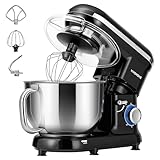
Overview: Functionally identical to its red counterpart, the black VIVOHOME stand mixer offers the same robust 660W power and 6-quart capacity in a sleek, darker finish. This model caters to those prioritizing kitchen aesthetics while seeking budget-conscious performance for everyday baking tasks.
What Makes It Stand Out: Beyond the matte black exterior, this mixer maintains the same impressive feature set: planetary mixing action, suction-cup stability, and a bundled egg separator. The ten-speed control provides precise mixing control, while the tilt-head design ensures easy attachment changes. It’s a workhorse disguised in a more sophisticated colorway.
Value for Money: Priced at $129.98, the black variant commands a $30 premium over the red model for purely cosmetic reasons. While still considerably cheaper than mid-tier competitors, the value proposition is diluted. You’re paying for color preference rather than enhanced functionality, making it less of a bargain.
Strengths and Weaknesses:
- Pros: Same powerful motor and capacity as red model; Attractive black finish; Stable operation; Dishwasher-safe parts; Helpful accessories included
- Cons: $30 more for color alone; Aluminum attachments may wear over time; Brand lacks long-term track record; Heavier than expected
Bottom Line: A solid performer that looks great on the counter, but the price premium for black is hard to justify. Choose this only if the color is essential to your kitchen design; otherwise, the red version offers better savings.
3. Cuisinart Stand Mixer, 12 Speed, 5.5 Quart Stainless Steel Bowl, Chef’s Whisk, Mixing Paddle, Dough Hook, Splash Guard w/ Pour Spout, Ruby Red, SM-50R, Manual
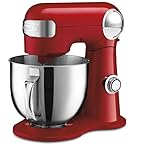
Overview: Cuisinart’s ruby red stand mixer occupies the sweet spot between budget and premium appliances. With a 500W motor and 5.5-quart capacity, this die-cast metal mixer emphasizes precision and durability over raw power, backed by a trusted brand name and three-year warranty.
What Makes It Stand Out: The twelve-speed settings offer unparalleled control for delicate meringues to stiff bread doughs. Its compatibility with optional attachments (pasta makers, meat grinders) transforms it into a versatile kitchen center. The die-cast metal construction and polished stainless steel bowl signal quality that budget competitors can’t match.
Value for Money: At $239.99, you’re investing in brand reliability and precision engineering. While less powerful and smaller than the VIVOHOME alternatives, the Cuisinart justifies its price through superior build quality, extensive warranty, and a proven track record. It’s a mid-range mixer that will outlast cheaper options.
Strengths and Weaknesses:
- Pros: Reputable brand; 12 precise speeds; Sturdy die-cast construction; 3-year warranty; Optional attachments available; BPA-free
- Cons: Lower wattage (500W) than cheaper alternatives; Smaller 5.5QT capacity; Heavier unit; Basic included accessories
Bottom Line: A reliable, precision-engineered mixer for serious home bakers who value durability and brand support over maximum capacity. The three-year warranty provides peace of mind that justifies the premium.
4. Bosch Universal Plus Stand Mixer 500 Watt, 6.5 Quarts with Wire Whips, Dough Hook & NutriMill Dough Hook Extender Bundle

Overview: The Bosch Universal Plus represents German engineering at its finest, featuring a unique bottom-drive design and 6.5-quart BPA-free bowl. This 500W mixer is built for serious bakers who need to process up to 15 pounds of whole grain bread dough or 34 dozen cookies in a single batch.
What Makes It Stand Out: The bottom-drive configuration allows easy ingredient addition without stopping the mixer. Its belt-driven transmission delivers exceptional torque, while dual beaters provide triple whipping action. The removable drive shaft and dishwasher-safe components simplify cleanup after massive baking sessions.
Value for Money: At $449, this is a professional-grade investment. The price reflects its industrial capacity and durability rather than wattage alone. For occasional bakers, it’s overkill, but for those regularly making large batches or heavy whole-grain breads, it replaces multiple appliances and countless hours of manual labor.
Strengths and Weaknesses:
- Pros: Massive 15-pound dough capacity; Unique bottom-drive design; Exceptional torque; Easy ingredient addition; BPA-free bowl; Dishwasher-safe
- Cons: Expensive; Plastic bowl feels less premium; Steep learning curve; Most attachments sold separately; Large footprint
Bottom Line: Designed for passionate bread makers and high-volume bakers who need commercial-level performance. The investment pays dividends if you regularly tackle heavy, large-batch recipes that would burn out lesser mixers.
5. Hamilton Beach Electric Stand Mixer, 4 Quarts, Dough Hook, Flat Beater Attachments, Splash Guard, 7 Speeds with Whisk, Easy-Carry Top Handle, Aqua

Overview: Hamilton Beach’s aqua stand mixer prioritizes convenience and compact design for casual bakers. The 300W motor and 4-quart bowl suit small households, while the integrated carry handle and lightweight build make it ideal for kitchens where appliances live in cabinets between uses.
What Makes It Stand Out: The built-in handle is genuinely innovative, allowing safe lifting and storage. The slow-first-speed feature prevents ingredient splatter, and planetary mixing ensures thorough blending despite the lower wattage. Seven speeds cover essential tasks without overwhelming novices.
Value for Money: At $99.99, it competes directly with budget options while offering superior portability. The smaller capacity and lower power limit its heavy-dough capabilities, but for occasional cookie batches and cake mixes, it delivers reliable performance without counter space commitment.
Strengths and Weaknesses:
- Pros: Integrated carry handle; Lightweight and portable; Slow start prevents mess; Dishwasher-safe parts; Affordable; Attractive aqua color
- Cons: 300W motor struggles with stiff doughs; 4QT capacity limits batch size; Less stable than heavier models; Fewer speed options
Bottom Line: Perfect for apartment dwellers, occasional bakers, or anyone short on storage. It won’t replace a bread machine, but for cakes, cookies, and light mixing tasks, it’s a practical, space-saving solution that punches above its price.
6. Kitchen in the box Stand Mixer,3.2Qt Small Electric Food Mixer,6 Speeds Portable Lightweight Kitchen Mixer for Daily Use with Egg Whisk,Dough Hook,Flat Beater (Blue)
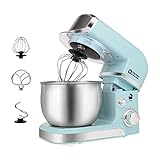
Overview: The Kitchen in the Box Stand Mixer is a compact, lightweight solution designed for small kitchens and novice bakers. Weighing under seven pounds with a 3.2-quart capacity, this blue mixer targets singles, couples, and space-conscious users who want stand mixer convenience without the bulk of traditional models.
What Makes It Stand Out: Its space-saving footprint (12.9×7×10.2 inches) sets it apart from conventional mixers, while four anti-slip suction cups provide unexpected stability for its size. The tilt-head design and transparent splash guard offer practical usability, and the color variety—including this vibrant blue—adds personality to compact kitchens that often lack style.
Value for Money: At $79.99, this mixer sits in the sweet spot between basic hand mixers and full-sized stand mixers. It’s an accessible entry point for beginners testing their baking interest without committing to $200+ alternatives, though serious bakers will eventually outgrow its limited capacity and power.
Strengths and Weaknesses:
- Strengths: Extremely portable and storage-friendly; six speeds cover most basic tasks; suction cups prevent walking; gasket design simplifies cleaning; affordable entry-level pricing
- Weaknesses: 3.2Qt capacity limits batch sizes; aluminum attachments less durable than stainless steel; weaker motor struggles with stiff bread dough; not suitable for heavy-duty use
Bottom Line: Perfect for apartment dwellers and occasional bakers, this mixer delivers surprising functionality in a tiny package, but frequent bakers should invest in a more powerful model.
7. Babroun Dough Mixer 8.45 QT Electric Mixer - 660W 6 Speed Large Capacity Kitchen Stand Mixer with Whisk Dough Hook Mixing Beater Household Food Mixer for Baking Cakes Cookie Bread Salad
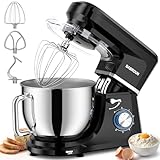
Overview: The Babroun Dough Mixer positions itself as a professional-grade workhorse with its massive 8.45-quart capacity and 660-watt motor. This $189.99 stand mixer targets serious home bakers and large families who regularly tackle big batches of bread, cookies, and cakes without commercial equipment prices.
What Makes It Stand Out: The enormous bowl with a convenient handle distinguishes it from standard 5-6 quart models, allowing you to prepare dough for multiple loaves simultaneously. The pulse function adds precision control, while the pure copper motor promises durability. Its rugged ABS housing keeps weight manageable despite the large capacity, making it surprisingly practical.
Value for Money: Competing with KitchenAid Artisan models at nearly half the price, this mixer offers exceptional capacity-per-dollar value. The $189.99 price tag is justified for bakers who need volume, though the lesser-known brand name may give some buyers pause compared to established competitors with proven track records.
Strengths and Weaknesses:
- Strengths: Huge 8.45Qt capacity handles large batches; powerful 660W motor; dishwasher-safe components; bowl handle improves maneuverability; six speeds plus pulse; relatively quiet operation
- Weaknesses: ABS housing feels less premium than metal; brand lacks long-term reputation; bulky footprint requires substantial counter space; may be overkill for casual bakers
Bottom Line: An excellent value for high-volume baking, this mixer delivers professional capacity without the premium brand tax, ideal for serious home bakers.
8. VIVOHOME Stand Mixer with Fermentation, One-Touch Presets Electric Dough Mixer with 6 Qt Bowl, Kitchen Standing Mixer for Baking, Cake with Flex Edge Beater, Bread Hook, Whisk, Red
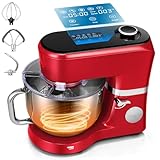
Overview: The VIVOHOME Stand Mixer revolutionizes home bread-making with its integrated fermentation function—a feature typically found in commercial equipment. This red 6-quart mixer combines a 660-watt motor with intelligent presets for $189.98, targeting artisan bakers who value precision and convenience over basic functionality.
What Makes It Stand Out: The one-touch presets for kneading, whisking, and stirring eliminate guesswork, while the unique fermentation setting maintains optimal proofing temperatures (77-113°F). The flex-edge beater scrapes the bowl automatically, and 11 speed settings provide unparalleled control. The 360° planetary mixing ensures thorough incorporation without manual intervention.
Value for Money: At $189.98, you’re paying for genuine innovation. The fermentation feature alone justifies the cost for bread enthusiasts, eliminating the need for separate proofing equipment. It competes favorably with premium brands while offering unique functionality they lack, making it a smart investment for dedicated bakers.
Strengths and Weaknesses:
- Strengths: Innovative fermentation setting; one-touch presets simplify operation; powerful yet quiet 660W motor; flex-edge beater reduces scraping; 11 speeds offer fine control; stable with five suction cups
- Weaknesses: Learning curve for advanced features; may be unnecessarily complex for casual users; red finish won’t suit all kitchens; higher price than basic 6Qt models
Bottom Line: A game-changer for bread bakers, this mixer’s fermentation function and presets make it worth every penny for those who’ll use its advanced capabilities.
9. Kitchen in the box Stand Mixer,3.2Qt Small Electric Food Mixer,6 Speeds Portable Lightweight Kitchen Mixer for Daily Use with Egg Whisk,Dough Hook,Flat Beater (Black)

Overview: The Kitchen in the Box Stand Mixer in black offers the same compact, lightweight design as its colorful siblings, targeting space-constrained bakers who prefer a neutral aesthetic. Weighing under seven pounds with a 3.2-quart capacity, this $79.99 mixer suits singles and couples in small apartments where every inch counts.
What Makes It Stand Out: The matte black finish provides a sleek, modern look that integrates seamlessly into any kitchen décor, unlike bolder colors that may clash with existing appliances. It maintains the series’ signature space-saving footprint (12.9×7×10.2 inches) and four anti-slip suction cups for stability during operation.
Value for Money: Identically priced to other colors at $79.99, the black variant offers the same excellent entry-level value. It’s an affordable bridge between hand mixers and professional stand mixers, perfect for testing the waters of stand mixer ownership without a major financial commitment or space sacrifice.
Strengths and Weaknesses:
- Strengths: Neutral black finish matches any kitchen; highly portable and storable; six speeds handle basic tasks; suction cups provide stability; gasket design eases cleaning; budget-friendly
- Weaknesses: Small 3.2Qt capacity restricts batch size; aluminum attachments less durable; motor lacks power for heavy dough; not built for frequent, intensive use
Bottom Line: The black colorway makes this already practical mixer even more versatile for style-conscious consumers, delivering solid performance for occasional bakers with limited space.
10. VIVOHOME Stand Mixer with Fermentation, One-Touch Presets Electric Dough Mixer with 6 Qt Bowl, Kitchen Standing Mixer for Baking, Cake with Flex Edge Beater, Bread Hook, Whisk, Gray

Overview: The VIVOHOME Stand Mixer in gray delivers the same advanced fermentation technology and one-touch presets as its red counterpart, packaged in a more subdued finish. This $189.98, 6-quart mixer appeals to tech-savvy bakers who prefer understated aesthetics and innovative functionality over brand name recognition.
What Makes It Stand Out: The sophisticated gray exterior offers a contemporary alternative to the bold red model, making it suitable for minimalist or industrial kitchen designs. It retains the revolutionary fermentation setting (77-113°F), three smart presets, and 11-speed control that distinguish this series from conventional mixers lacking intelligent features.
Value for Money: At $189.98, the gray version provides identical value to the red model. The fermentation function eliminates the cost of a separate proofing box, while the presets save time and reduce errors. For serious bakers, the premium over standard mixers pays for itself in convenience and consistent results within the first year.
Strengths and Weaknesses:
- Strengths: Subtle gray finish fits modern kitchens; unique fermentation capability; intuitive one-touch presets; quiet 660W motor; flex-edge beater ensures complete mixing; five suction cups for stability
- Weaknesses: Advanced features may overwhelm beginners; higher price than standard mixers; color options limited; larger footprint requires dedicated counter space
Bottom Line: Choose the gray model if you want the same innovative bread-making features in a more versatile, contemporary package that complements any kitchen style.
Why Your Stand Mixer Choice Matters for Bread Dough
Bread dough is the ultimate stress test for any stand mixer. Unlike cake batter or whipped cream, dense, hydrated dough develops significant resistance as gluten strands form and strengthen. This resistance demands sustained power, robust torque, and engineering that prevents overheating. A mixer that handles cookies beautifully might gasp, overheat, or strip its gears when faced with a stiff whole wheat dough at 70% hydration.
The consequences of choosing poorly extend beyond equipment failure. Inconsistent kneading produces uneven gluten development, resulting in dense crumbs, poor oven spring, and that disappointing moment when your artisan loaf looks more like a doorstop. The right mixer doesn’t just save your muscles—it ensures repeatable, professional-quality results while lasting through years of weekly baking sessions.
Decoding Motor Specifications for Dough Work
Wattage Ratings: What They Actually Tell You
You’ve seen the numbers plastered on boxes: 325 watts, 500 watts, even 1000+ watts. Here’s the truth—wattage alone tells you almost nothing about bread dough performance. Wattage measures power consumption, not output efficiency. A 500-watt motor with poor engineering can stall out where a well-designed 300-watt motor thrives.
What matters more is how that power gets delivered to the dough. Look for motors rated for continuous duty rather than peak power. Continuous duty ratings indicate the motor can sustain that output for extended periods without overheating. For bread dough, you need a motor that can run at medium-low speeds for 8-12 minutes without breaking a sweat. Anything less means you’ll be babysitting your mixer with ice packs and forced rest periods.
The Torque Factor: Real-World Mixing Power
Torque is the unsung hero of bread mixing—the rotational force that keeps your dough hook moving when the mixture becomes stiff and resistant. High torque at low speeds is the secret sauce for proper gluten development. A mixer that maintains consistent torque between speed 2 and 4 (the sweet spot for most bread doughs) will knead more effectively than one with higher peak power but torque drop-off under load.
Think of it like a truck versus a sports car. The sports car has more horsepower but can’t tow a trailer up a hill. Your dense rye dough is that trailer. The best mixers for bread deliver at least 1.5 Newton-meters of torque at the dough hook in the critical kneading speed range. Manufacturers rarely publish torque specs, so you’ll need to read between the lines of user reviews focusing specifically on heavy dough performance.
Motor Types: AC vs DC for Bread Enthusiasts
The motor type fundamentally affects performance, noise, and longevity. Traditional AC motors are workhorses—simple, reliable, and excellent at delivering consistent torque. They’re heavier and louder but often outlast their DC counterparts in heavy-duty bread applications.
DC motors, increasingly common in modern mixers, offer variable speed control and quieter operation. The catch? Many consumer-grade DC motors use plastic gears and electronic speed controllers that can overheat or fail under sustained bread dough loads. However, premium DC motors with metal gearboxes and thermal protection represent the best of both worlds: precise control with durability. For serious bread bakers, a DC motor with documented heavy-duty credentials often beats a basic AC model.
Bowl Capacity and Design Considerations
Matching Size to Your Baking Ambitions
Bowl capacity directly impacts your batch flexibility. A 4.5-quart bowl handles two standard loaves (about 1kg of flour) comfortably. Bump to 5-6 quarts for three loaves or enriched doughs like brioche that expand significantly during mixing. Larger 7+ quart bowls shine for bulk fermentation in the bowl or double batches, but they struggle with small quantities—the dough hook can’t properly grab just 200g of flour in a cavernous bowl.
Consider your typical baking pattern. Do you bake daily sandwich bread for a family of four? A 5-quart might be your sweet spot. Are you a weekend experimenter making single artisan loaves? A 4.5-quart offers better small-batch performance. Planning to supply the school fundraiser or neighborhood bakery pop-up? Go big or go home with 7+ quarts.
Planetary Mixing Action: Why It Beats Stationary
Planetary mixing—where the attachment moves around the bowl while simultaneously spinning—creates superior gluten development for bread. This dual motion ensures every bit of dough gets worked, eliminating pockets of unmixed flour and developing gluten strands more uniformly. The best planetary systems maintain consistent bowl coverage without creating “dead zones” where dough gets trapped.
The geometry matters immensely. The optimal planetary radius touches about 67% of the bowl’s diameter, creating enough overlap for thorough mixing while allowing dough to be thrown against the sides for proper kneading. Mixers with too-small planetary circles leave unmixed flour at the bowl’s periphery, forcing you to stop and scrape repeatedly—defeating the purpose of hands-free kneading.
Bowl Materials and Thermal Properties
Stainless steel dominates the market for good reason: it’s durable, non-reactive, and easy to clean. But not all stainless is equal. Thicker gauge steel (18/8 or 18/10) resists denting and better maintains temperature during long kneads—critical because excessive heat from friction can kill yeast or rush fermentation.
Glass bowls look gorgeous and let you monitor gluten development visually, but they transfer heat poorly and can become dangerously heavy when full of dough. Plastic bowls have no place in serious bread baking—they scratch, retain odors, and flex under heavy loads, compromising the mixing action. For bread, polished stainless steel with a comfortable handle and a slightly curved bottom beats all alternatives.
Critical Features That Define Bread Performance
Dough Hook Design and Kneading Efficiency
The dough hook’s shape dramatically affects gluten development. C-shaped hooks (actually more of a spiral) excel at developing gluten quickly by stretching and folding dough against the bowl sides. J-shaped hooks can work but often require more manual intervention and longer kneading times.
The hook’s coating matters too. Burnished metal looks classic but develops oxidation that can discolor light doughs. Nylon-coated hooks are easier to clean but can chip over time, especially with stiff doughs. The sweet spot? A solid stainless steel hook with a polished finish—durable, food-safe, and effective. The hook should also have a slight taper that allows dough to climb and then be slapped back down, mimicking hand-kneading’s effectiveness.
Speed Control Precision
Bread dough demands subtle speed management. Too fast, and you incorporate excessive air while overheating the dough. Too slow, and gluten development takes forever. Look for mixers offering at least 6 distinct speeds, with the lowest setting truly slow—around 40 RPM at the hook. Variable speed dials beat stepped sliders because you can fine-tune for different hydration levels.
The “stir” or fold setting is invaluable for initially incorporating ingredients without flour explosions. Speeds 2-3 should handle most kneading, while higher speeds remain available for enriched doughs that need more aggressive development. Avoid mixers where speed 2 is already too fast—the lack of low-end control will limit your bread repertoire.
Stability Systems: Preventing the “Mixer Walk”
Nothing’s more alarming than a mixer inching toward the counter edge during a stiff whole wheat knead. Effective stability requires three elements: sufficient weight (15+ pounds for serious bread mixers), suction cup or non-slip feet, and internal counterweighting. Some premium models add active stabilization that adjusts motor torque based on detected movement.
The mixer’s head design contributes too. A tilting head offers easier bowl access but can become wobbly under heavy loads. Bowl-lift designs provide superior stability for bread dough, locking the head in place and distributing forces more evenly. If you opt for a tilt-head, ensure it has a robust locking mechanism that won’t gradually loosen during 10-minute kneads.
Build Quality: Investment vs. Disposable Culture
Gear Systems: Metal vs. Plastic Internals
This is non-negotiable for bread bakers: metal gears only. Plastic gears strip under bread dough’s sustained resistance, often catastrophically and expensively. Look for mixers advertising “all-metal construction” or specifically “metal gears.” Some manufacturers use metal for primary drive gears but sneak plastic into secondary stages—research teardown reviews to confirm.
Worm gears made from hardened steel offer the best durability, while cast metal gears work well in mid-range models. The gearbox should be sealed and permanently lubricated, but accessible for professional servicing if needed. A 5-year warranty on the motor and gears indicates manufacturer confidence; 1-year warranties suggest planned obsolescence.
Housing Materials and Vibration Damping
Die-cast metal housings absorb vibration and provide the heft needed for stability. Plastic housings might seem modern and lightweight, but they amplify noise and allow the entire machine to flex during heavy kneading. This flex translates to inefficient energy transfer—your motor works harder while the dough gets less development.
The finish matters for longevity. Powder-coated enamel resists chipping better than painted finishes and cleans easily. Bare stainless steel offers ultimate durability but shows fingerprints. Whatever the material, ensure all seams are tight and the motor ventilation is adequate—bread dough sessions generate significant heat that must dissipate.
Bowl Design Nuances That Pros Notice
Handle Placement and Ergonomics
A full 6-quart bowl with 2kg of brioche dough weighs over 10 pounds. Handle design separates thoughtful engineering from cost-cutting. Look for bowls with two handles—one primary grip and a secondary stabilizing handle—or a single large, offset handle that lets you maintain wrist neutrality when pouring.
The handle should be welded, not riveted, to prevent bacterial buildup in crevices. It should also stay cool during long kneads and have a non-slip texture even with flour-dusted hands. Some premium bowls feature silicone-wrapped handles that provide superior grip and heat insulation—worth the upgrade if you frequently make enriched doughs that require temperature control.
Splash Guards: Necessity or Nuisance?
The humble splash guard (or pouring shield) becomes essential when adding flour to wet ingredients. For bread, choose a two-piece guard that allows you to add ingredients while mixing without stopping. The guard should snap securely to the bowl rim without wobbling and have a wide enough chute for measuring cups.
Clear guards let you monitor dough consistency, while opaque models hide splatter but block your view. The best designs include measurement markings for adding water or oil directly through the guard. Avoid guards that attach to the mixer head—they become misaligned when tilting and create gaps where flour escapes.
Attachment Versatility and Expandability
While bread dough is your primary concern, a mixer that only kneads represents poor value. Evaluate the attachment hub’s compatibility with accessories like pasta rollers, meat grinders, or vegetable spiralizers. The hub should use a standard interface rather than proprietary connections—this ensures third-party attachments work and replacements remain available.
Check whether the mixer includes basic attachments beyond the dough hook. A sturdy paddle for mixing starters or enriched doughs initially, and a whisk that reaches the bowl bottom for small quantities, indicate thoughtful design. Some mixers offer bowl-scraping paddles with silicone edges that reduce manual scraping during sticky dough development—a genuine time-saver.
Price Realities: What Your Budget Actually Buys
Entry-Level Expectations and Smart Compromises
Sub-$200 mixers can handle occasional bread baking if you’re strategic. Expect plastic housings, moderate torque, and smaller capacities (4-4.5 quarts). These work for basic white bread or pizza dough a few times monthly but will struggle with whole grains or frequent use. The compromise? You’ll knead in smaller batches and may need to finish by hand.
The smart move in this tier is prioritizing metal gears over fancy features. A bare-bones metal-geared mixer outperforms a feature-rich plastic-geared model every time. Also, check whether the manufacturer sells replacement parts individually—some budget brands only offer complete head assemblies, making repairs economically impractical.
Mid-Range Sweet Spots for Serious Bakers
The $300-$600 range represents the bread baker’s sweet spot. Here you’ll find 5-6 quart capacities, all-metal construction, robust torque, and 5+ year warranties. These mixers handle weekly bread baking, including whole grains and stiff doughs, without breaking a sweat. Many include advanced features like timers, bowl lights, and improved speed control.
This tier often delivers 90% of premium performance at half the cost. The key differentiator from premium models is often motor type (AC vs. refined DC) and country of manufacture. Don’t overpay for celebrity chef endorsements or cosmetic finishes—focus on torque specs, gear materials, and bread-specific reviews from long-term users.
Premium Territory: Justifying the Investment
$600+ mixers target daily bread bakers, small bakeries, and enthusiasts who demand perfection. These machines offer near-commercial performance: 1+ horsepower motors, 7+ quart capacities, and engineering that eliminates virtually all vibration. They knead 5kg of whole grain dough while you sip coffee, running for 20 minutes without overheating.
The justification isn’t just power—it’s longevity. Premium mixers often last decades with basic maintenance, while mid-range models might need replacement after 5-7 years of heavy use. They also retain value; a well-maintained premium mixer sells for 60-70% of its original price years later. If you bake bread more than three times weekly, the cost-per-use math strongly favors investing once.
Maintenance Secrets for Decades of Service
Daily Cleaning vs. Deep Maintenance
After each bread session, wipe down the mixer head immediately—dried dough becomes concrete that’s nearly impossible to remove. Remove the bowl and wash it separately; never submerge the mixer head. For the dough hook, soak briefly in warm water, then scrub with a nylon brush to preserve any coating.
Every 10-15 uses, remove the attachment hub cover and clean out flour dust that accumulates inside. A dry toothbrush works perfectly. If your mixer has a hinged head, clean the pivot point—flour works its way in and creates gritty wear. Once yearly, apply food-grade grease to the attachment hub’s internal gears if accessible.
Storage Strategies in Humid Environments
Bread bakers often live in humid climates, and moisture is a mixer’s silent enemy. Store your mixer with the bowl removed to allow air circulation. If you won’t use it for weeks, place a desiccant packet in the bowl and cover it. For coastal areas, wipe metal surfaces with a thin coat of mineral oil quarterly to prevent oxidation.
Never wrap the cord tightly around the mixer—this stresses internal connections. Instead, loosely coil it and secure with a Velcro strap. If your mixer lives on the counter, invest in a breathable cover that prevents dust while allowing moisture to escape. Plastic covers trap humidity and promote motor corrosion.
Common Mistakes That Void Warranties
Overloading is the number one warranty killer. Respect capacity limits, especially with stiff doughs. A 5-quart mixer might handle 6 quarts of cake batter but only 3 quarts of 60% hydration whole wheat dough. When in doubt, split batches—your mixer and your bread will thank you.
Another warranty voider? Using attachments not designed for your model, especially third-party dough hooks that don’t match the original’s geometry. These create uneven stress on gears. Also, never exceed speed 2 for initial dough mixing—starting too fast flings unmixed flour into the motor vents, where it absorbs moisture and creates conductive paste that shorts circuits.
Looking Ahead: 2026’s Stand Mixer Evolution
The stand mixer market in 2026 emphasizes smart integration without sacrificing durability. We’re seeing torque sensors that automatically adjust speed when dough resistance increases, preventing motor strain. Some models now include temperature sensors in the bowl that alert you when friction heat approaches yeast-killing levels—game-changing for sourdough enthusiasts managing fermentation.
Modular design is another trend. Premium manufacturers now offer user-replaceable motor modules and gearboxes, extending lifespan and reducing electronic waste. Wireless connectivity lets you monitor kneading progress via smartphone, though this remains a gimmick for most bakers. More practically, 2026 mixers feature improved thermal management with larger heat sinks and quieter cooling fans, addressing the two biggest complaints about heavy-duty models.
Frequently Asked Questions
How long should I knead bread dough in a stand mixer?
Most doughs require 8-12 minutes at speed 2-3, but timing varies by hydration and flour type. Whole grain doughs often need 10-15 minutes, while enriched doughs might need only 6-8. Watch for the dough to pull cleanly from the bowl sides and pass the windowpane test rather than relying solely on time.
Can I damage my mixer by making bread too often?
Not if you buy appropriately. Mixers designed for bread duty (metal gears, adequate torque, thermal protection) thrive on frequent use. Problems arise when lightweight mixers designed for occasional cakes face daily bread baking. It’s like using a sedan for commercial hauling—it’ll work briefly then fail spectacularly.
What’s the minimum wattage for effective bread dough mixing?
Ignore wattage. Focus on torque and gear quality. A well-engineered 300-watt mixer with metal gears outperforms a 600-watt plastic-geared model. Look for “continuous duty” ratings and user reviews specifically mentioning heavy dough performance.
Why does my mixer get hot when kneading?
Friction from the dough creates heat, and the motor generates its own thermal load. Quality mixers dissipate this through metal housings and ventilation. If yours gets uncomfortably hot to touch, you’re likely overloading it or the thermal protection is failing—both warrant immediate attention.
Is a bowl-lift or tilt-head design better for bread?
Bowl-lift designs offer superior stability and handle heavy loads better, making them ideal for frequent bread bakers. Tilt-heads provide easier bowl access and work fine for moderate bread baking if they have robust locking mechanisms. For dough exceeding 2kg of flour, bowl-lift is non-negotiable.
Can I use a dough hook for all bread types?
Almost. The dough hook handles standard lean doughs, enriched doughs, and most whole grain doughs. Extremely stiff doughs like bagel dough (50% hydration) or some rye breads may need hand finishing. Also, very wet doughs (80%+ hydration) sometimes develop better with a paddle initially, switching to the hook later.
How do I know if I’m overloading my mixer?
Signs include: the mixer slowing noticeably under load, unusual grinding noises, the head rising slightly, or the mixer walking. If you see these, immediately stop and reduce batch size. Most manufacturers specify maximum flour weight—respect these limits, especially for whole grains which create more resistance.
Should I buy an extended warranty?
For mid-range and premium mixers, skip the retailer’s extended warranty. Quality mixers include 5-year manufacturer warranties covering motors and gears. The retail warranty often has exclusions for “commercial use” that could apply to frequent baking. Instead, invest that money in a model with a better base warranty.
Can I knead cold dough straight from the fridge?
Cold dough is stiffer and more resistant, increasing motor load. Let it warm for 30 minutes first. If you must mix cold, reduce batch size by 25% and knead at the lowest effective speed. Repeated cold-dough mixing accelerates gear wear and stresses the motor.
What’s the lifespan difference between AC and DC motors in bread mixers?
Quality AC motors typically last 15-25 years with heavy use. Premium DC motors can match this lifespan but depend heavily on electronic controller quality. Budget DC motors might fail in 3-5 years. For bread baking, a simple, robust AC motor often outlasts complex DC systems, though top-tier DC motors with thermal protection offer the best performance and similar longevity.