Achieving those whisper-thin ribbons of cucumber that practically disappear on a sushi roll or translucent potato slices that shatter into perfect crisps isn’t about knife skills—it’s about having the right tool. Mandoline slicers have evolved from simple French kitchen staples into precision instruments that can elevate your culinary game from home cook to chef-level artistry. As we look toward 2026, the technology behind these vegetable virtuosos has reached new heights, with safety innovations and blade engineering that would make previous generations weep with envy.
Whether you’re crafting delicate garnishes, preparing vegetables for quick pickling, or aiming for the ultimate gratin, understanding what separates a mediocre mandoline from a paper-thin perfection machine is crucial. This comprehensive guide cuts through the marketing noise to give you the expert knowledge you need to choose your ideal slicing companion—no brand bias, just pure, unadulterated kitchen wisdom.
Top 10 Mandoline Slicers for Paper-Thin Veggies
Detailed Product Reviews
1. OXO Good Grips Handheld Mandoline Slicer for Kitchen, Adjustable Vegetable Slicer

Overview:
The OXO Good Grips Handheld Mandoline Slicer brings the brand’s legendary ergonomic design to vegetable prep. This compact tool offers three precise thickness settings (1mm, 2.5mm, 4mm) for consistent slices of everything from delicate tomatoes to firm potatoes. Its thoughtful construction allows direct slicing onto plates, cutting boards, or bowls, adapting seamlessly to your workflow without creating unnecessary mess.
What Makes It Stand Out:
OXO’s signature large non-slip handle and stable foot provide exceptional control and security during use. The innovative viewing window lets you monitor your sliced volume in real-time, eliminating guesswork and preventing waste. Unlike many competitors, this slicer handles diverse tasks equally well—functioning as a vegetable, meat, cheese, or fruit slicer with consistent results.
Value for Money:
At $18.60, this sits in the sweet spot between budget and premium options. You’re paying for OXO’s reputation for durability and user-centric design. While not the cheapest, it outlasts flimsy alternatives and delivers professional results without the professional price tag, making it a smart long-term investment for regular home cooks.
Strengths and Weaknesses:
Strengths include superior ergonomics, stable design, versatile functionality, and the practical viewing window. The three fixed thickness settings cover most needs, though some may want more granularity. The main weakness is the lack of a mentioned hand guard, requiring careful handling. Plastic components may eventually wear, though OXO’s build quality typically exceeds competitors.
Bottom Line:
This mandoline excels for users prioritizing comfort, safety, and reliability. It’s ideal for everyday slicing tasks and justifies its moderate price through thoughtful engineering and brand-backed durability.
2. PrepSolutions Adjust-A-Slice Mandoline Slicer, Green – Adjustable Thickness, Perfect for Vegetables, Fruits, and More

Overview:
The PrepSolutions Adjust-A-Slice Mandoline offers an affordable entry into precision slicing with its vibrant green design and adjustable thickness dial. This compact tool transitions from paper-thin to thick slices, accommodating diverse recipes from delicate garnishes to hearty gratins. Its user-friendly approach makes it particularly appealing to novice cooks building their kitchen arsenal.
What Makes It Stand Out:
The continuous adjustable dial provides more flexibility than fixed-setting models, allowing truly customized thickness. Safety features shine with an included hand guard and non-slip base, addressing common mandoline hazards. The dishwasher-safe construction and space-saving profile make it practical for daily use, while the cheerful color adds personality to kitchen drawers.
Value for Money:
At $17.14, this represents excellent value for beginners. It delivers core mandoline functionality with enhanced safety features at a price point that’s hard to beat. While not constructed from premium materials, it offers sufficient durability for moderate home use and outperforms similarly priced competitors with its adjustable dial design.
Strengths and Weaknesses:
Strengths include the adjustable thickness dial, comprehensive safety features, easy cleaning, and compact storage. The vibrant aesthetic appeals to style-conscious buyers. Weaknesses include potential durability concerns with heavy plastic components and blades that may dull faster than premium steel. The lightweight construction can feel less substantial during aggressive slicing.
Bottom Line:
This is an outstanding starter mandoline that balances safety, functionality, and affordability. Perfect for occasional cooks or those wanting to experiment with mandoline slicing without significant investment.
3. Gramercy Adjustable Mandoline Food Slicer, Mandoline Slicer for Kitchen, Mandolin, Potato, Tomato, Carrot, Vegetable, Fruit and Onion Cutter - Stainless Steel - INCLUDING 1 Pair Cut-Resistant Gloves

Overview:
The Gramercy Adjustable Mandoline positions itself as a professional-grade tool for serious home cooks. Featuring a rotating blade cylinder system and built-in thickness dial, this stainless steel slicer delivers precise, uniform cuts across vegetables, fruits, and more. The inclusion of cut-resistant gloves signals a commitment to user safety from the first slice.
What Makes It Stand Out:
The innovative rotating blade mechanism ensures smooth transitions between thickness settings without manual blade changes. This engineering creates consistently clean cuts across varying food densities. The comprehensive safety package—including cut-resistant gloves and a quick-start guide—demonstrates exceptional attention to user protection. The stainless steel construction provides both durability and a sleek, professional aesthetic.
Value for Money:
At $39.95, this is the premium option in the lineup. The price is justified by professional features, superior materials, and included safety equipment that would cost extra with competitors. For frequent cooks who prioritize precision and safety, this represents solid long-term value, though casual users may find it excessive.
Strengths and Weaknesses:
Strengths include the rotating blade system, premium stainless steel build, comprehensive safety accessories, and dishwasher-safe convenience. The 30-second setup video support shows customer-focused thinking. The primary weakness is the price point, which may deter budget-conscious buyers. It’s also potentially more complex than necessary for simple tasks.
Bottom Line:
This mandoline suits enthusiastic home chefs who cook frequently and prioritize safety and precision. The investment pays dividends in durability and performance, making it the professional’s choice for home kitchens.
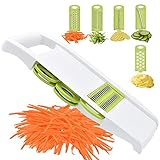
4. NACOLUS 5 in 1 Mandoline Slicer Vegetable Slicer Mandolin Multi Blade Potato Veggie Slicer Vegetable Cutter Julienne Shredder Potato Slicer Green
Overview:
The NACOLUS 5 in 1 Mandoline Slicer delivers remarkable versatility at an unbeatable price point. This multi-blade system transforms from a straight slicer to shredder, waffle cutter, and even includes a dedicated ginger grater. Designed for simplicity, all five functions are built into the unit without requiring assembly or blade storage concerns, making it ideal for quick meal prep.
What Makes It Stand Out:
No other mandoline in this comparison offers such diverse functionality at this price. The ability to create waffle cuts and grate ginger distinguishes it from single-function competitors. The ultra-simple operation—just rinse under running water for cleaning—addresses a major pain point of multi-blade systems. The included handheld peeler adds further value to this already comprehensive package.
Value for Money:
At $9.99, this represents exceptional value for experimental cooks. It essentially provides five specialized kitchen tools for the price of one, making it perfect for those wanting to explore different cutting techniques without committing to expensive equipment. The 3-month warranty provides basic protection, though longevity remains a question.
Strengths and Weaknesses:
Strengths include incredible versatility, simplicity, easy cleaning, compact storage, and the lowest price point. The built-in blade system eliminates lost components. Weaknesses include potential quality concerns given the price—blades may not maintain sharpness, and the plastic construction feels less substantial. The short warranty reflects possible durability limitations.
Bottom Line:
This is the ultimate budget mandoline for adventurous cooks wanting maximum functionality with minimal investment. Accept some quality trade-offs in exchange for remarkable versatility and unbeatable price.
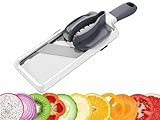
5. Multi Vegetable Slicer-Safe Mandoline slicer for kitchen,Adjustable Stainless Steel Blade,Cutter for Fruits and Vegetables,Cabbage Shredder
Overview:
The Multi Vegetable Slicer-Safe Mandoline targets beginners and small-space dwellers with its emphasis on safety and compact design. This straightforward slicer offers three thickness settings (1mm, 2mm, 3mm) and prioritizes user protection through anti-slip handle and bottom grips, plus a vegetable clip that keeps fingers away from the ultra-sharp stainless steel blade. Its minimalist approach simplifies the mandoline experience.
What Makes It Stand Out:
The thoughtful safety integration stands out at this price point—the vegetable clip provides protection many budget models omit. The space-saving design easily tucks into crowded drawers, while the 30-second cleaning promise addresses the common complaint of difficult cleanup. The anti-slip features work together to create a secure, confidence-inspiring experience for nervous first-time users.
Value for Money:
At $10.98, this offers tremendous value for beginners or anyone prioritizing safety over advanced features. It delivers essential mandoline functionality with enhanced protection at a price barely above basic models. For small kitchens or occasional use, it’s a practical, low-risk investment that outperforms its price point in safety features.
Strengths and Weaknesses:
Strengths include excellent safety features, compact storage, easy cleaning, and beginner-friendly operation. The stainless steel blade maintains sharpness better than some budget alternatives. Weaknesses include limited thickness options compared to adjustable models, basic functionality without specialty cuts, and plastic components that may wear over time. It lacks the versatility of multi-blade systems.
Bottom Line:
This mandoline is perfect for novice cooks, small kitchens, or safety-conscious buyers wanting reliable basic functionality without complexity or high cost. It makes mandoline slicing accessible and secure.
6. YAMJUG Multi Handheld Mandoline Slicer - Adjustable Stainless Steel Blade, Slicer Vegetable Cutter with Comfort Grip, Safety Features, Easy to Clean, Slicers for Fruits and Vegetables

Overview:
The YAMJUG Multi Handheld Mandoline Slicer positions itself as an entry-level kitchen companion for novice cooks seeking uniform slices without complexity. This compact tool prioritizes simplicity and safety at an accessible price point, delivering essential functionality for everyday meal prep.
What Makes It Stand Out:
This slicer distinguishes itself through its thoughtful beginner-friendly design. The integrated three-thickness settings (1mm, 2.5mm, 4mm) cover most home cooking needs, while the included bonus peeler adds immediate value. The locking dial protects the blade during storage—a crucial safety feature often missing in budget options. Its hanging hole design and compact footprint make it ideal for small kitchens with limited drawer space.
Value for Money:
At $10.99, this represents exceptional value for casual cooks. While professional-grade mandolines cost 3-5 times more, this model delivers 80% of the functionality for basic slicing tasks. The included peeler effectively makes this a two-in-one purchase, eliminating separate tool costs for those starting their kitchen collection.
Strengths and Weaknesses:
Strengths include the protective lock mechanism, comfortable non-slip handle, straightforward cleaning process, and ultra-compact storage. The food-grade materials and finger guard provide adequate safety for careful users. Weaknesses involve the limited thickness range compared to premium models, all-plastic construction that may lack long-term durability, and manual blade adjustment that requires handling the cutting edge. The blade quality, while functional, won’t match higher-end stainless steel alternatives.
Bottom Line:
Perfect for beginners, apartment dwellers, or occasional cooks who prioritize safety and storage over professional features. This budget workhorse handles basic slicing competently but serious cooks will eventually outgrow its limitations.
7. Mandoline Food Slicer, Adjustable Mandoline Slicer for Kitchen, Stainless Steel Mandolin Vegetable Chopper for Potato/Tomato/Onion, Vegetable Slicer Julienne Cutter with Cut-Resistant Gloves

Overview:
The WELTONHM Mandoline Food Slicer targets safety-conscious home chefs seeking professional versatility without the traditional risks. This premium model eliminates blade handling entirely through its innovative knob-controlled adjustment system, making it a standout in the crowded mandoline market.
What Makes It Stand Out:
Revolutionary safety engineering defines this slicer. The built-in blade system allows 1-9mm slicing and two julienne settings (4.5mm, 9mm) via a simple dial rotation—never touch a blade again. The inclusion of cut-resistant gloves and a safety food holder provides double protection. Foldable handle and feet enable remarkably compact storage for such a capable tool.
Value for Money:
At $34.99, this sits in the mid-premium range, justified by its safety innovations and sturdy stainless steel construction. Comparable professional models often exceed $50 and lack the integrated blade storage. The comprehensive safety package (gloves, holder, non-slip base) eliminates additional purchases, making it cost-effective for serious home cooks.
Strengths and Weaknesses:
Major strengths include the unparalleled safety mechanism, heavy-duty stainless steel frame, built-in blade variety, and excellent stability during use. The foldable design and dishwasher-safe components add convenience. Weaknesses include the higher price point for budget shoppers, slightly slower adjustment between settings compared to manual blade changes, and the mandatory glove requirement that some may find cumbersome. The unit’s weight, while stable, may challenge users with limited hand strength.
Bottom Line:
An excellent investment for families, frequent cooks, or anyone prioritizing finger safety above all else. The premium price delivers peace of mind and professional results that justify every penny.
8. ZKIRON Multi Handheld Mandoline Slicer - Adjustable Stainless Steel Blade, Comfort Grip, Safety Features, Easy to Clean, Ideal for Speedy Slicing of Fruits and Vegetables (Gray)

Overview:
The ZKIRON Multi Handheld Mandoline Slicer offers a balanced approach to quick, safe vegetable prep for home cooks wanting efficiency without countertop clutter. This handheld model emphasizes speed and security in a minimalist package that fits any kitchen drawer.
What Makes It Stand Out:
This slicer excels in its streamlined three-thickness adjustment (1mm, 2mm, 3mm) and safety-first ergonomics. The secure grip design and stable base address the primary concern of handheld models—wobbling during use. Its dishwasher-safe construction and smooth surfaces eliminate cleaning friction, encouraging regular use rather than relegation to the back of the cabinet.
Value for Money:
Priced at $13.92, this hits the sweet spot between bargain and premium. It offers more refined safety features than sub-$10 options while avoiding the $25+ price tag of full-sized units. For cooks who value handheld control and storage convenience over julienne or waffle capabilities, this delivers focused value without unnecessary complexity.
Strengths and Weaknesses:
Strengths include the intuitive thickness selector, comfortable handle reducing hand fatigue, compact storage footprint, and quick rinse-clean design. The stable base provides surprising security for a handheld unit. Weaknesses include the limited 3mm maximum thickness (too thin for some recipes), lack of julienne or specialty cuts, and reliance on manual technique that may produce inconsistent results for beginners. The blade access for cleaning still requires careful handling.
Bottom Line:
Ideal for small households, RV kitchens, or cooks preferring handheld tools. It masters basic slicing with enhanced safety but won’t replace a full-featured mandoline for versatile meal prep.
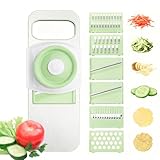
9. ZKIRON Stainless-Steel Mandoline Slicer for Kitchen, 6-in-1 Vegetable & Cucumber Slicer with Safety Guard, Easy-Clean Design, Compact Space-Saving Tool for Daily Salad & Meal Prep (Mint Green)
Overview:
The ZKIRON 6-in-1 Stainless-Steel Mandoline Slicer elevates the handheld category with unprecedented versatility and style. Its mint green finish and comprehensive blade set challenge the notion that compact slicers must compromise on functionality, offering six cutting styles in a space-saving form.
What Makes It Stand Out:
Six interchangeable blades (including julienne and wavy cuts) transform this from a simple slicer into a complete prep station. The full-cover safety guard provides superior finger protection while firmly gripping produce—critical for slippery items like tomatoes. The extended handle delivers leverage typically missing in handheld models, while the stainless steel cutting surface ensures durability and effortless food release.
Value for Money:
At $19.92, this represents outstanding versatility-per-dollar. Individual specialty blades often cost $5-8 each; having six integrated into one tool creates immediate savings. The stainless steel construction and thoughtful safety features punch above its sub-$20 price, competing with $30+ competitors while occupying minimal space.
Strengths and Weaknesses:
Strengths include the diverse blade selection, superior safety guard design, attractive color options, easy-clean open architecture, and robust stainless steel surface. The extended handle improves control significantly. Weaknesses involve blade storage (six loose pieces require organization), slightly longer cleaning time with multiple components, and the mint green color may not suit all kitchen aesthetics. The learning curve for blade swapping could intimidate absolute beginners.
Bottom Line:
A versatile powerhouse for creative cooks wanting variety without sacrificing counter space. The style, safety, and functionality make it a top contender in the under-$20 category.
10. Mandoline Food slicer for kitchen, Adjustable Stainless Steel Mandoline Vegetable slicer, Food slicer Onion Potato Chip French Fry, 7 in-1 Adjustable Blade, Including 1 Pair Cut-Resistant Gloves

Overview:
This 7-in-1 Mandoline Food Slicer positions itself as a comprehensive solution for home chefs demanding professional-grade versatility with maximum safety. The stainless steel construction and integrated blade adjustment system address common pain points of both budget plastic models and expensive commercial units.
What Makes It Stand Out:
The single-knob adjustment for both thickness and blade type eliminates dangerous blade handling entirely—a feature rarely seen under $25. Seven cutting options provide remarkable versatility from paper-thin chips to substantial French fries. The inclusion of cut-resistant gloves, a specialized cleaning brush, and silicone-wrapped stand demonstrates thorough attention to user safety and convenience.
Value for Money:
At $21.99, this slicer aggressively undercuts premium competitors while matching their feature set. The stainless steel deck ensures longevity where plastic models crack, while the integrated storage eliminates lost blades. For cooks wanting professional capability without $40+ investment, this delivers exceptional ROI with its comprehensive accessory package.
Strengths and Weaknesses:
Strengths include the foolproof blade adjustment system, durable stainless steel construction, sharp replaceable blades, included safety accessories, and efficient cleaning design. The foldable structure aids storage. Weaknesses include potential overkill for minimalists needing only basic slices, slightly bulkier footprint than handheld alternatives, and the blade replacement mechanism’s long-term durability remains unproven. Some users may find seven options excessive for daily needs.
Bottom Line:
An outstanding all-in-one choice for serious home cooks prioritizing safety and versatility. It bridges the gap between flimsy budget slicers and overpriced professional models with smart engineering and robust materials.
Why Paper-Thin Slices Matter in Modern Cooking
The difference between a good dish and a memorable one often comes down to texture and presentation. Paper-thin slices aren’t just aesthetically pleasing; they fundamentally change how ingredients behave in a recipe. Ultra-thin vegetables absorb marinades in minutes rather than hours, cook more evenly, and create delicate layers that melt on the tongue. In raw preparations like carpaccio or crudo, translucent slices showcase ingredient quality while maintaining a whisper-light mouthfeel that thicker cuts simply cannot achieve. As plant-based cuisine continues its meteoric rise in 2026, the ability to transform dense root vegetables into ethereal, pasta-like ribbons has become less of a party trick and more of an essential technique.
Anatomy of a Professional-Grade Mandoline Slicer
Understanding the core components of a mandoline helps you evaluate quality regardless of brand promises. The platform serves as your vegetable runway—its length and width determine what you can slice, while its angle affects the cutting mechanics. Professional-grade models feature a stable, non-slip base that refuses to budge even when you’re powering through a case of potatoes. The hand guard or food holder is your first line of defense, evolving from simple pronged pushers to sophisticated mechanisms that grip food securely while keeping fingers at a safe distance.
Blade Materials: The Heart of Precision
The blade is where the magic happens, and in 2026, we’re seeing exciting developments in materials science. Surgical-grade stainless steel remains the gold standard, offering corrosion resistance and the ability to hold a razor-sharp edge through hundreds of slicing sessions. Some manufacturers are experimenting with ceramic-coated blades that promise even longer edge retention and completely eliminate metallic taste transfer, though they require more careful handling. For true paper-thin performance, look for blades honed to a 15-degree angle or less—anything wider and you’re essentially crushing cells rather than cleanly severing them, which leads to bruised, weeping vegetables.
Thickness Adjustment Mechanisms
The hallmark of a superior mandoline is its ability to make micro-adjustments to slice thickness. Legacy models offered clunky, pre-set notches that jumped from 1mm to 3mm with nothing in between. Modern engineering has given us infinite adjustment dials that let you dial in exact specifications down to 0.5mm increments. This precision matters tremendously when you’re trying to achieve that perfect 1.2mm slice for pickled shallots or 2mm for consistent potato gaufrettes. The mechanism should glide smoothly without wobbling or slipping mid-slice, which is why threaded rod systems have largely replaced simple lever-and-notch designs.
Safety Features: Non-Negotiables for 2026
Let’s address the elephant in the room: mandolines are dangerous. The same razor-sharp blade that creates perfect slices can create perfect wounds. Fortunately, 2026’s models have revolutionized safety without sacrificing performance. Look for hand guards with spring-loaded plungers that maintain constant pressure on food, reducing the temptation to expose your fingertips. Some advanced designs incorporate blade retraction systems that automatically pull the blade below the surface when not in use. Cut-resistant gloves have evolved from bulky chainmail to form-fitting, food-grade fibers that feel like a second skin while offering Level 5 protection. Never compromise on safety features—the best mandoline is the one that doesn’t send you to the emergency room.
Understanding Blade Types and Their Uses
A mandoline’s versatility lives and dies by its blade options. While the straight blade handles your basic slicing needs, interchangeable blades transform your tool into a multi-dimensional prep station. The key is understanding which configurations actually matter for paper-thin work versus which are marketing fluff you’ll never touch.
Straight Blades for Clean Cuts
The straight blade is your workhorse for paper-thin supremacy. Its perfectly flat edge creates clean, single-pass cuts that preserve cell structure, essential for preventing oxidation in delicate items like apples or fennel. For translucent slices, the blade must be positioned at an optimal angle—typically between 30 and 35 degrees relative to the food runway. This geometry reduces drag while maximizing precision. Some premium models offer adjustable blade angles, letting you fine-tune the cut for different vegetable densities.
Serrated and Waffle Blades for Texture
While not typically used for paper-thin applications, serrated blades deserve mention for their ability to create textured surfaces that catch dressing and create visual interest. Waffle blades, with their criss-cross pattern, can produce stunningly thin lattice chips when set to minimal thickness. These specialty blades should be optional accessories rather than built-in features, as they require different tensioning and can compromise the straight blade’s alignment if permanently mounted.
Julienne and French Fry Blades
For creating hair-thin vegetable strands, julienne blades are indispensable. The best systems use a comb-like insert that sits above the straight blade, allowing you to switch between slicing and julienning without removing the main blade. Look for models where these inserts store safely within the mandoline body and click into place with audible confirmation. For paper-thin juliennes, aim for 2mm or smaller teeth—anything larger produces matchsticks rather than delicate threads.
Materials and Build Quality: What to Look For
The tactile experience of a mandoline reveals its quality immediately. Professional models favor solid stainless steel or reinforced ABS plastic that feels substantial without being unwieldy. Avoid anything that feels hollow or flexes when you press on the platform—stability directly translates to slice consistency. The blade housing should be a single, machined piece rather than welded components, as welds can create microscopic gaps that harbor bacteria and eventually fail under pressure. For the runway surface, look for slightly textured finishes that grip food without scratching, typically achieved through glass-bead blasting or chemical etching.
Ergonomics and User Experience
You might not think about ergonomics until you’ve processed five pounds of onions, but thoughtful design makes marathon slicing sessions bearable. The hand guard should accommodate various grip styles, from palm pressure to fingertip control. The thickness adjustment knob needs to be reachable mid-slice without requiring you to release your food or reposition your hand. Some innovative 2026 models feature angled platforms that leverage gravity, letting vegetables naturally slide toward the blade rather than requiring constant pushing force. Consider the mandoline’s storage footprint too—models that fold flat or have integrated blade storage save precious drawer space and protect edges from damage.
Cleaning and Maintenance Best Practices
A mandoline is only as good as its edge, and improper cleaning is the fastest way to dull that edge. Never toss your mandoline in the dishwasher, even if the manufacturer claims it’s safe. The harsh detergents and violent water jets degrade blade sharpness and can warp plastic components. Instead, rinse immediately after use and clean with a soft brush, always moving away from the blade edge. For stubborn starch buildup from potatoes or sweet potatoes, a diluted vinegar soak works wonders. Blade maintenance kits, including ceramic honing rods and food-safe mineral oil for lubricating adjustment mechanisms, should be part of your regular routine. Professional chefs hone their mandoline blades weekly, and you should too if you’re after consistent paper-thin results.
Price vs. Performance: Finding Your Sweet Spot
The mandoline market spans from $20 bargain bin specials to $400 professional masterpieces. The sweet spot for paper-thin performance lies between $75 and $150, where you get surgical-grade blades, robust safety features, and precision adjustment without paying for restaurant-grade durability you don’t need. Budget models under $50 can achieve thin slices initially but lack the blade stability and adjustment precision for consistent results. They also tend to have inferior safety features, which is a false economy when medical bills enter the equation. Premium models above $200 offer marginal improvements in materials and often include unnecessary accessories that clutter your kitchen.
Common Mistakes to Avoid When Using Mandolines
Even the best mandoline can’t compensate for poor technique. The number one mistake is applying uneven pressure, which creates slices that taper from thick to paper-thin within the same cut. Maintain consistent, gentle pressure and let the blade do the work. Another critical error is trying to slice the entire vegetable—always leave a substantial nub for the hand guard to grip. Attempting to slice those last few millimeters is how fingertips become garnish. Temperature matters too; slicing ice-cold vegetables straight from the fridge increases brittleness and leads to cracking. Let your produce come to room temperature for 10 minutes before slicing for the most delicate results.
The Future of Mandoline Technology in 2026
We’re witnessing fascinating innovations that hint at where mandoline design is heading. Smart mandolines with integrated scales and thickness sensors are emerging, though their practical value remains debatable for most home cooks. More promising are advances in blade coatings that reduce friction and prevent food from sticking, particularly valuable for starchy vegetables. Some experimental models feature ultrasonic blade vibration that literally glides through produce with minimal pressure, though this technology hasn’t yet reached consumer price points. The most impactful 2026 development is the standardization of modular blade systems, allowing you to upgrade individual components rather than replacing the entire tool when blade technology improves.
How to Test a Mandoline Before Buying
If possible, get hands-on before purchasing. Bring a potato and a carrot to the kitchen store—these two vegetables test different slicing challenges. The potato reveals blade sharpness and sticking tendencies, while the carrot tests the mandoline’s ability to handle dense, irregular shapes. Check that the thickness adjustment holds firm under pressure by setting it to 1mm and applying gentle downward force on the platform. The blade shouldn’t deflect or shift. Examine the hand guard’s grip on a small potato chunk; it should feel secure without requiring Herculean pressure. Finally, disassemble and reassemble any removable parts—they should click together intuitively without needing to consult instructions.
Frequently Asked Questions
What’s the absolute thinnest slice a mandoline can achieve?
Most quality mandolines can reliably slice down to 0.5mm, with some premium models reaching 0.3mm. However, slices thinner than 0.5mm become extremely fragile and difficult to handle, often tearing during retrieval. For practical kitchen use, 0.8mm to 1mm offers the best balance of delicacy and durability.
Can I sharpen the blade myself, or do I need professional service?
Straight blades can be honed at home using a ceramic rod designed for mandolines, which realigns the edge without removing metal. However, actual sharpening that removes material requires specialized equipment and is best left to professionals. Most manufacturers offer affordable mail-in sharpening services that return your blade to factory spec.
Why do my paper-thin slices stick together in clumps?
This typically happens with high-water-content vegetables like zucchini or cucumber. Try lightly salting your slices and letting them drain for 2-3 minutes before rinsing and patting dry. Also ensure your blade is perfectly clean—even microscopic starch residue creates adhesive surfaces. Some cooks swear by lightly oiling the blade with a neutral oil before starting.
Is a horizontal or vertical blade orientation better for ultra-thin slicing?
Horizontal blades (parallel to the countertop) generally offer more stability and control for paper-thin work, as gravity helps keep food seated on the platform. Vertical blades can achieve similar results but require more downward pressure, increasing the risk of uneven slices. The difference is subtle, but horizontal designs edge out for consistency.
How do I prevent oxidation when slicing apples or other sensitive produce?
Work quickly and submerge slices immediately in acidulated water (1 tablespoon lemon juice per quart). Some professional kitchens keep their mandoline blade chilled, which slows enzymatic browning. The clean cut of a sharp mandoline actually reduces oxidation compared to knife-cut pieces, which have more crushed cells releasing browning enzymes.
Can mandolines handle soft items like tomatoes or strawberries for paper-thin slices?
Only the sharpest, most precise mandolines can handle soft fruits without mashing them. For tomatoes, use a gentle sawing motion with the hand guard rather than forcing a straight push. Ensure your blade is freshly honed and the tomato is at peak ripeness but still firm. Many cooks find a serrated blade actually works better for ultra-thin tomato slices.
What’s the best way to store a mandoline to maintain blade sharpness?
Store it fully disassembled if possible, with blades wrapped in their protective covers or stored in a dedicated blade box. Never store with the blade exposed or touching other metal utensils. A drawer insert or wall-mounted magnetic strip specifically designed for mandolines prevents jostling that can micro-chip the edge. Climate-controlled storage prevents humidity from degrading the metal.
Are ceramic blades worth considering for paper-thin slicing?
Ceramic blades excel at maintaining sharpness and won’t react with acidic foods, but they’re brittle and can chip if you hit a hard seed or stem. For paper-thin slicing of uniform, pre-trimmed vegetables, they’re excellent. However, their lack of flexibility makes them less forgiving than steel for everyday use. Consider ceramic as a specialty blade rather than your primary workhorse.
How often should I replace my mandoline blade?
With proper honing and care, a high-quality steel blade can last 5-7 years of regular home use before needing replacement. Signs it’s time for a new blade include visible nicks, inability to achieve paper-thin slices even after professional sharpening, or excessive sticking that cleaning doesn’t resolve. If you find yourself applying significantly more pressure than when the mandoline was new, the blade has likely dulled beyond practical recovery.
Can I use a mandoline for grating or shredding, or do I need separate tools?
Most mandolines aren’t designed for true grating, though some include shredding blades that create thin, matchstick-like pieces. For paper-thin applications, these are too coarse. A dedicated microplane or box grater handles true grating better. Think of your mandoline as a precision slicing instrument rather than a multi-purpose grater—specialization is what makes it excel at paper-thin perfection.