There’s something almost meditative about transforming a rock-hard wedge of Parmigiano-Reggiano into a fluffy mountain of salty, nutty perfection. Whether you’re finishing a classic cacio e pepe, adding a final flourish to a Caesar salad, or simply sneaking a fresh-grated handful straight into your mouth (we’ve all been there), the tool you choose makes all the difference. Rotary cheese graters have quietly revolutionized how we approach hard cheeses, offering a blend of efficiency, safety, and consistency that traditional box graters and microplanes simply can’t match.
But not all rotary graters are created equal—especially when you’re dealing with the king of hard cheeses. Parmesan demands respect: its crystalline texture and low moisture content can dull inferior blades, clog poorly designed mechanisms, and turn what should be a joyful culinary moment into a frustrating arm workout. This guide cuts through the marketing noise to help you understand what truly separates exceptional rotary graters from the drawer-cluttering disappointments, ensuring your investment delivers perfect shreds for years to come.
Top 10 Rotary Cheese Graters for Hard Parmesan
Detailed Product Reviews
1. OXO Good Grips Rotary Grater,White

Overview: The OXO Good Grips Rotary Grater brings the brand’s renowned ergonomic design philosophy to cheese grating tasks. Featuring a large barrel with sharp stainless steel blades and a medium grating surface, this tool efficiently handles hard cheeses, chocolate, and nuts with minimal effort. The integrated collection cap with a silicone seal sets it apart from basic models, allowing you to grate, store, and serve from the same convenient container.
What Makes It Stand Out: The clever storage solution is the star feature here. The cap collects grated cheese directly during use, and the adjustable window lets you pour precise amounts while the silicone seal keeps leftovers fresh in the refrigerator. This eliminates the need for separate storage containers and reduces kitchen mess significantly. The large barrel accommodates substantial pieces of cheese, reducing prep time considerably.
Value for Money: At $19.95, this grater sits in the sweet spot between flimsy budget options and expensive professional-grade models. You’re paying for OXO’s reliable build quality and thoughtful design innovation. While it only offers one grating surface, the storage functionality adds significant practical value that cheaper alternatives completely lack.
Strengths and Weaknesses: Strengths include the innovative storage cap, sharp and efficient blades, comfortable handling, and trusted brand reputation for durability. Weaknesses are the single grating option and plastic components that may not match the longevity of all-metal restaurant graters. The medium grate may be too coarse for some culinary preferences.
Bottom Line: Perfect for home cooks who appreciate smart storage solutions and brand reliability. The OXO Good Grips Rotary Grater excels at everyday grating tasks while keeping your kitchen organized and efficient.
2. Zyliss Classic Rotary Cheese Grater - NSF Restaurant Certified Handheld Grater - Can be used for Hard Cheese, Chocolate & More - With Comfortable Handle & Easy-to-Clean Drum - White

Overview: The Zyliss Classic Rotary Cheese Grater earns its name through prestigious NSF Restaurant Certification, meeting rigorous professional health and safety standards. This handheld grater features an innovative folding design for compact storage and requires minimal pressure to operate, making meal prep effortless for hard cheeses, chocolate, and nuts.
What Makes It Stand Out: Professional certification distinguishes this from typical home kitchen tools. The folding mechanism is genuinely innovative, collapsing to half its size for convenient drawer storage. Its ambidextrous design accommodates both left and right-handed users—a rare and thoughtful feature that increases usability. The non-slip knob provides excellent control and stability during use.
Value for Money: Priced at $24.95, this represents a premium home option that approaches commercial quality. The NSF certification alone justifies the cost for serious cooks, ensuring strict food safety compliance. While more expensive than basic models, it offers professional durability and the space-saving fold-flat design that cramped kitchens will appreciate daily.
Strengths and Weaknesses: Strengths include professional certification, space-efficient folding, comfortable pressure-free operation, and universal handedness. Weaknesses include a single grating drum and premium pricing that may exceed casual cooking needs. The white plastic body may stain over time with heavy use, requiring diligent cleaning.
Bottom Line: Ideal for enthusiastic home cooks seeking restaurant-grade tools. The Zyliss Classic justifies its higher price through professional certification and clever engineering, particularly valuable for those with limited storage space who refuse to compromise on quality.
3. UHIYEE Patented Rotary Parmesan Cheese Grater, Hand Crank Cheese Shredder with Fine & Coarse Drums, Restaurant Quality, White, Stainless Steel & ABS, Dishwasher Safe

Overview: The UHIYEE Patented Rotary Parmesan Cheese Grater positions itself as a restaurant-quality tool inspired by popular dining establishments. This white model features interchangeable fine and coarse drums, delivering professional-grade results for hard cheeses like Parmesan and softer varieties such as Mozzarella with consistent reliability.
What Makes It Stand Out: The dual-drum system provides unmatched versatility in this category, allowing you to switch between fine dustings and coarser shreds effortlessly. The Olive Garden inspiration suggests robust performance for tableside service. The ergonomic handle and smooth crank mechanism reduce hand fatigue during extended grating sessions significantly.
Value for Money: At $25.45, this is among the pricier options, but the two included drums and restaurant-quality construction justify the investment. Comparable professional graters often cost significantly more, and the versatility eliminates the need for separate tools. For cheese enthusiasts, this pays dividends in performance and flexibility over time.
Strengths and Weaknesses: Strengths include dual grating options, professional performance, BPA-free construction, dishwasher-safe components, and comfortable operation. Weaknesses are the highest price point in this comparison and potential overkill for occasional users. The plastic body may not feel as premium as the price suggests to some buyers.
Bottom Line: A top choice for serious cheese lovers who demand versatility. The UHIYEE grater delivers genuine restaurant-quality performance with its dual-drum system, making it worth the premium for those who grate frequently and value having multiple options at their fingertips.
4. UHIYEE Cheese Grater Hand Crank, Patented Rotary Parmesan Cheese Grater Cheese Shredder Handheld with Fine & Coarse Drums, Restaurant Cheese Grinder with Handle for Hard Cheese, Gray Green

Overview: Functionally identical to its white counterpart, the UHIYEE Gray Green Rotary Cheese Grater offers the same patented design and restaurant-quality performance with an alternative aesthetic. This model features the same interchangeable fine and coarse drums for versatile grating of hard and soft cheeses, chocolate, and nuts with equal proficiency.
What Makes It Stand Out: Beyond the dual-drum versatility, this color variant provides design-conscious consumers with options to match their kitchen decor. The gray green finish offers a modern, muted alternative to clinical white. Like the white version, it boasts ergonomic handling and smooth operation inspired by professional dining experiences, ensuring comfortable use.
Value for Money: Matching the $25.45 price point, the value proposition remains identical—two drums, professional performance, and easy cleaning. The color choice adds no extra cost, giving you personalization without penalty. This remains a premium investment justified by versatility and durable construction.
Strengths and Weaknesses: Strengths mirror the white model: dual grating surfaces, restaurant-grade results, BPA-free and dishwasher-safe materials, and comfortable use. Weaknesses include the premium price and potentially unnecessary sophistication for casual grating needs. The darker color may better hide stains over time, offering practical benefits.
Bottom Line: Choose based on color preference—this Gray Green model delivers the same exceptional performance as the white version. Perfect for design-minded cooks seeking professional versatility, making it equally recommended for frequent users who value both function and aesthetic coordination.
5. KITEXPERT Cheese Grater with Handle, Parmesan Cheese Grater with 2 Stainless Steel Drums, Rotary Cheese Graters Handheld for Grating and Shredding Hard Cheese, Chocolate

Overview: The KITEXPERT Cheese Grater enters the market as a budget-friendly contender, offering essential rotary grating functionality at an accessible price point. With two stainless steel drums and food-grade ABS construction, it handles hard cheese, chocolate, and other grating tasks without breaking the bank or compromising basic safety standards.
What Makes It Stand Out: The remarkably low price of $11.99 with two included drums represents exceptional value in this category. Safety-focused construction using food-grade materials addresses key concerns for health-conscious consumers. The straightforward design prioritizes function over frills, making it approachable for beginners exploring rotary graters.
Value for Money: This is the clear value champion—costing less than half of premium alternatives while still providing dual drums. For occasional cooks or those testing rotary graters for the first time, the financial risk is minimal. However, the unknown brand longevity and basic features mean trade-offs versus established competitors with proven track records.
Strengths and Weaknesses: Strengths include unbeatable price, two grating surfaces, safe materials, and admirable simplicity. Weaknesses involve uncertain long-term durability, lack of brand reputation, minimal features (no storage or folding design), and potentially less refined operation. The sparse product description suggests limited manufacturer support.
Bottom Line: An excellent entry-level option for budget-conscious buyers or occasional users. The KITEXPERT delivers core functionality at a fraction of the cost, making it ideal for those wanting to explore rotary grating without significant investment, though serious enthusiasts may outgrow its basic capabilities quickly.
6. Honoson Rotary Cheese Grater Stainless Steel Handheld Rotary Parmesan Grater Cheese Cutter Slicer Shredder with 4 Stainless Drum for Grating Hard Chocolate Nuts Kitchen Tool
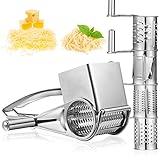
Overview: The Honoson Rotary Cheese Grater positions itself as a versatile kitchen companion with its quartet of interchangeable stainless steel drums. Designed for moderately hard cheeses, chocolate, and nuts, this handheld device measures a compact 2.17 x 7.68 inches, making it suitable for kitchens where space is at a premium. The combination of ABS plastic housing and stainless steel components suggests durability for everyday grating tasks.
What Makes It Stand Out: The inclusion of four distinct drums sets this grater apart from competitors that typically offer only one or two options. This variety allows users to achieve different textures from fine to coarse without purchasing separate units. The detachable design between drum and handle streamlines both operation and maintenance, while the rotary mechanism promises efficient grating with minimal elbow grease.
Value for Money: At $22.99, this grater sits in the mid-range category. The four-drum system provides good versatility for the price, effectively replacing multiple single-purpose tools. However, the contradictory information about dishwasher safety and limitations on cheese hardness temper its overall value proposition compared to more straightforward alternatives.
Strengths and Weaknesses: Strengths include the versatile four-drum system, compact footprint, and easy disassembly for cleaning. The stainless steel construction resists scratching and bending with moderate use. Notable weaknesses are the confusing care instructions that state both dishwasher-safe and not dishwasher-safe, the explicit warning against soft cheeses, and the inability to store food in the unit—limiting its functionality for some users.
Bottom Line: The Honoson grater is a solid choice for those who frequently grate hard cheeses and want multiple texture options. While the contradictory instructions raise quality control concerns, its versatile drum system and reasonable price make it worth considering for dedicated home cooks.
7. Manual Rotary Cheese Grater Stainless Steel Parmesan Grater, Hand Crank Cheese Graters, Cheese Shredder Slicer Handheld for Hard Cheese Chocolate Nuts Kitchen Parmesan

Overview: This Manual Rotary Cheese Grater targets discerning home chefs with its commercial-grade 304 stainless steel construction. Engineered to tackle hard cheeses, chocolate, nuts, and even vegetables, the unit emphasizes durability and user safety through its ergonomic extended handle design. With just two removable components, it prioritizes simplicity and hygiene in food preparation.
What Makes It Stand Out: The heavy-duty 304 stainless steel build distinguishes it from plastic-bodied competitors, offering superior resistance to cracking, rust, and wear. The extended handle design provides enhanced leverage while keeping fingers safely away from the sharp drum, making it particularly suitable for users with limited hand strength or arthritis. Its ability to process vegetables expands its utility beyond typical rotary graters.
Value for Money: At $26.99, this is the premium option in the lineup. The investment is justified by the professional-grade materials and streamlined two-part design that minimizes cleaning time and potential failure points. While pricier than alternatives, its durability and versatility across cheese, chocolate, nuts, and vegetables make it cost-effective for serious cooks who prioritize longevity.
Strengths and Weaknesses: Key strengths include exceptional build quality, ergonomic safety features, true dishwasher-safe components, and multi-purpose functionality. The fine drum produces consistent results with minimal effort. The primary weakness is the higher price point, which may deter casual users. Additionally, the product description mentions only one drum, potentially limiting texture variety compared to multi-drum competitors.
Bottom Line: This grater is ideal for dedicated home cooks seeking professional-grade durability and safety. The premium materials and thoughtful design justify the higher price, making it a worthwhile investment for those who frequently grate hard ingredients and value longevity over initial cost.
8. Cheese Grater with Handle, Rotary Cheese Grater,Vegetable, Chocolate, Hard Cheese & Nut Grater,White

Overview: This white rotary cheese grater offers an entry-level solution for occasional grating tasks. Constructed with an ABS plastic body and stainless steel blade, it handles cheese, nuts, vegetables, and chocolate with straightforward operation. The three-part detachable design simplifies cleaning, while its no-frills approach appeals to budget-conscious consumers seeking basic functionality.
What Makes It Stand Out: The remarkably low $9.99 price point immediately distinguishes this grater as the most accessible option. Its simplicity—just place food, press lightly, and turn—eliminates any learning curve for kitchen novices. The three-piece construction allows thorough cleaning without complicated disassembly, addressing hygiene concerns common in budget kitchen tools.
Value for Money: Unbeatable for the price. At under ten dollars, it delivers essential grating capabilities that satisfy occasional users without unnecessary features or premium materials that drive up cost. While it won’t match the durability of stainless steel-bodied models, it provides perfectly adequate performance for light to moderate use, making it an excellent value for apartments, vacation homes, or as a backup tool.
Strengths and Weaknesses: Strengths include exceptional affordability, straightforward operation, and easy three-part cleaning. The lightweight design makes it comfortable for short tasks. Weaknesses involve the all-plastic body construction, which may crack under heavy pressure or over time, and limited information about drum options or material grades. It’s best suited for softer hard cheeses rather than rock-hard parmesan.
Bottom Line: This grater is the perfect choice for budget shoppers or occasional users who need basic grating functionality without financial commitment. While not built for heavy-duty daily use, its price-to-performance ratio is excellent, making it a smart purchase for light kitchen tasks or as an introductory rotary grater.
9. Cheese Grater with Handle, Kitchen Parmesan Cheese Grater with 2 Stainless Steel Drums, Rotary Cheese Graters Handheld for Grating and Shredding Hard Cheese, Chocolate

Overview: This rotary cheese grater balances affordability with enhanced functionality through its dual stainless steel drum system. Constructed from food-grade ABS and quality stainless steel, it targets safety-conscious consumers who want versatility without premium pricing. The two-drum configuration allows texture variation while maintaining the simplicity of handheld rotary operation for hard cheeses and chocolate.
What Makes It Stand Out: Offering two drums at the $9.99 price point creates exceptional value, as most budget graters include only one. The explicit mention of food-grade materials provides reassurance about safety, while the quick-swap drum system enables effortless transitions between fine and coarse grating. Its gift-ready presentation suggests confidence in both aesthetics and functionality.
Value for Money: Outstanding. Competing products with multiple drums typically cost twice as much. This grater delivers genuine versatility—two textures for the price of one—while maintaining dishwasher-safe convenience. For home cooks who want options without investing in premium brands, this represents perhaps the best cost-to-feature ratio in the rotary grater category.
Strengths and Weaknesses: Major strengths include the dual-drum versatility, food-grade material certification, true dishwasher safety, and unbeatable price. The simple assembly and cleaning process enhance user experience. Potential weaknesses include unspecified stainless steel grade (likely 201 rather than 304) and ABS plastic body durability under heavy, sustained use. The handle design may be less ergonomic than premium extended-handle models.
Bottom Line: This is the budget category’s champion, offering genuine two-drum versatility at an entry-level price. Perfect for cost-conscious cooks who refuse to compromise on options, it delivers impressive functionality and safety certifications that make it a smart purchase for everyday kitchen use.
10. Zyliss Classic Cheese Grater - Handheld Rotary Grater with Handle - Vegetable, Chocolate, Hard Cheese & Nut Grater – White

Overview: The Zyliss Classic Cheese Grater leverages decades of kitchen tool expertise to deliver a refined rotary grating experience. Unlike competitors that only handle hard cheeses, this model is engineered to process both hard and soft varieties efficiently. The foldable handle design demonstrates thoughtful space-saving considerations, while the non-slip rotating knob accommodates both left- and right-handed users with equal comfort.
What Makes It Stand Out: Zyliss’s reputation among both everyday cooks and gourmet chefs lends immediate credibility. The ability to grate soft cheeses—a task that defeats many rotary graters—significantly expands its utility. The folding handle mechanism is genuinely innovative, reducing storage space by nearly half compared to fixed-handle designs. This combination of brand trust, versatility, and compact storage creates a compelling package.
Value for Money: At $21.95, you’re paying moderate premium for brand heritage and design refinement. While not the cheapest option, the Zyliss name assures quality control, replacement part availability, and proven durability. The soft-cheese capability alone justifies the price difference for many users, eliminating the need for separate tools. It’s a middle-ground investment between budget unknowns and premium stainless steel models.
Strengths and Weaknesses: Strengths include exceptional brand reputation, unique soft-cheese handling, space-saving foldable design, ambidextrous non-slip knob, and easy disassembly. The fine grating drum produces professional-quality results. Weaknesses include a single drum (no texture variety) and a plastic body that, while sturdy, doesn’t match the heft of all-metal construction. The price may feel high for brand-conscious but feature-limited design.
Bottom Line: The Zyliss grater is the reliable workhorse for cooks who value proven performance and brand support. Its soft-cheese capability and compact storage make it ideal for smaller kitchens, while the trusted name ensures longevity. A smart choice for those prioritizing quality over multiple drum options.
Why Rotary Graters Dominate for Hard Parmesan
When you’re working with a cheese that’s aged for 24 months or more, you need a tool designed for the job. Rotary graters excel with hard Parmesan because they convert your wrist’s natural rotating motion into powerful, consistent cutting action. Unlike stationary graters that require brute force and dangerous downward pressure, rotary mechanisms distribute your effort evenly across the drum’s surface, creating uniform shreds without compacting the cheese’s delicate structure. This means you get light, airy gratings that melt beautifully rather than dense, waxy chunks that sink to the bottom of your dish.
The physics are simple but brilliant: as you turn the handle, the cheese is pressed against a stationary blade with just enough force to slice cleanly through those characteristic tyrosine crystals. This controlled pressure prevents the cheese from heating up through friction (which can alter its flavor profile) and protects your knuckles from the inevitable slips that happen with flat graters. For anyone who values both safety and culinary precision, rotary graters represent the sweet spot between manual control and mechanical advantage.
Understanding Drum Materials and Construction
Stainless Steel vs. Plastic Drums
The heart of any rotary grater is its drum, and this is where material choice becomes critical. High-grade stainless steel drums with precision-etched grating surfaces are non-negotiable for serious Parmesan work. Look for 18/10 or 304-grade stainless steel that resists the salt and acids in aged cheese, preventing corrosion that can flake into your food. These drums maintain their sharp edges through hundreds of uses and can be sanitized at high temperatures without warping.
Plastic drums, even those marketed as “food-safe,” develop micro-scratches over time that harbor cheese residue and bacteria. They also lack the weight and stability needed for consistent grating pressure. While they might work for soft mozzarella, they struggle with Parmesan’s density, often resulting in uneven shreds and frustrating jams. The slight cost savings simply aren’t worth the compromise in performance and longevity.
Seamless vs. Seamed Construction
Examine how the grating surface attaches to the drum’s end caps. Premium models feature seamless construction where the grating cylinder is a single, continuous piece of metal. This eliminates catch points where cheese can accumulate and harden, making cleaning infinitely easier. Seamed drums, where the grating sheet is rolled and welded, inevitably develop gaps at the seam that trap cheese particles. Within weeks, you’ll notice off-flavors and potential mold growth in these hidden crevices—a nightmare for food safety.
Blade Geometry: The Science Behind Perfect Shreds
Sharpness Angle and Edge Retention
The ideal grating blade for Parmesan sits at a precise 30-35 degree angle—sharp enough to slice cleanly through dense cheese without crushing it, yet sturdy enough to resist chipping against those natural calcium lactate crystals. Blades sharpened to finer angles (common in cheaper models) dull quickly and can actually snap under pressure. This is why professional-grade rotary graters often feature slightly thicker blade stock; they prioritize durability and consistent performance over initially impressive sharpness.
Edge retention depends on both steel hardness and the grating pattern itself. Look for drums with alternating blade heights—some manufacturers etch micro-serrations that create tiny “teeth” along the cutting edge. These grab the cheese more effectively and distribute wear across multiple contact points, dramatically extending the blade’s useful life. A uniform, flat grating surface might look sleek, but it concentrates all force on a single edge that dulls within months of regular use.
Grating Hole Patterns and Shred Consistency
The pattern of holes on your grating drum directly determines your shred texture. For Parmesan, you want conical holes that taper from wide to narrow, creating shreds that are thick enough to maintain structure but fine enough to melt quickly. Drums with random hole placement produce inconsistent textures—some shreds will be powder-fine while others resemble chunky pebbles. Premium graters use mathematically spaced patterns that ensure every rotation produces uniform results.
Consider your culinary applications: drums with smaller, densely packed holes (around 1-2mm) create the snowy drifts perfect for finishing pasta, while slightly larger holes (3-4mm) produce the heartier shreds ideal for baking into bread or sprinkling over salads. Some advanced models offer interchangeable drums, but a single, well-designed medium-fine drum handles 90% of Parmesan tasks beautifully.
Ergonomics: Designing for Comfort and Control
Handle Mechanics and Wrist Strain
A rotary grater’s handle is your primary interface with the tool, and poor design here can turn cheese prep into a repetitive strain injury waiting to happen. The best handles feature an offset crank design that keeps your wrist in a neutral position throughout the rotation. Straight handles force your wrist into awkward angles, especially during the final passes when cheese volume decreases and you need to apply more pressure.
Handle diameter matters more than you might think. A grip between 1.25 and 1.5 inches allows your fingers to wrap securely without over-gripping, reducing forearm fatigue during extended grating sessions. Textured silicone or rubber overlays provide traction even when your hands are damp, while smooth plastic handles become slippery with cheese oils. Some high-end models incorporate a slight swell in the grip’s center that nestles perfectly in your palm—this subtle contouring makes a dramatic difference during holiday cooking marathons.
Base Stability and Countertop Grip
Nothing ruins the grating experience like a tool that skitters across your countertop with each turn. Premium rotary graters employ weighted bases with non-slip silicone rings that grip even polished marble or granite. The base should be wide enough to prevent tipping when loaded with a large chunk of cheese—look for a footprint of at least 4 inches in diameter for countertop models.
For handheld graters, the opposite end of the handle needs a soft-grip pad that you can press against your work surface for stability. This pad should be replaceable, as it wears down over time. Some innovative designs feature suction cup bases that lock onto smooth counters, freeing both hands for cheese manipulation. While this seems convenient, suction mechanisms can fail when exposed to cheese oils, so a simple, well-designed weighted base often proves more reliable.
Food Hopper Design and Cheese Capacity
Optimal Hopper Shapes for Hard Cheese
The food hopper—the chamber that holds your cheese against the drum—should be curved to match the natural arc of the grating surface. Angular, boxy hoppers create dead corners where cheese wedges get stuck, forcing you to stop and reposition constantly. A properly designed hopper guides the cheese into the drum with minimal pressure, using gravity and the cheese’s own weight to maintain contact.
For Parmesan, look for hoppers that accommodate wedge shapes rather than just blocks. Aged Parmigiano rarely comes in perfect cubes; you need a hopper that can grip irregular pieces securely. Some models feature spring-loaded plungers that automatically advance the cheese as you grate, maintaining consistent pressure without manual adjustment. This is a game-changer for large batches, though it adds complexity that some purists prefer to avoid.
Capacity vs. Control Trade-offs
Larger hoppers (holding 8-12 ounces) reduce reloading frequency but can make the grater top-heavy and harder to control with small cheese pieces. Compact hoppers (4-6 ounces) offer superior precision but require more frequent filling. The sweet spot for home cooks is typically around 6-8 ounces—enough to grate a generous portion for four diners without becoming unwieldy.
Consider whether the hopper opening allows you to load cheese while the grater is assembled. Some designs require complete disassembly between loads, which is unnecessarily tedious. A hinged lid or removable top panel that lets you drop in additional cheese mid-grating saves time and keeps your workflow smooth.
Cleaning and Maintenance: The Make-or-Break Factor
Dishwasher Safety Realities
Here’s a hard truth: even “dishwasher-safe” rotary graters benefit from hand washing. The harsh detergents and high heat in dishwashers can degrade plastic components and dull blade edges over time. However, if you must use a dishwasher, ensure the grater is certified for the top rack only and can withstand temperatures up to 180°F without warping.
The real issue is drying. Dishwashers don’t always fully dry the interior of grating drums, creating a perfect environment for rust and bacterial growth. After any wash cycle, remove the drum immediately and hand-dry it thoroughly with a microfiber cloth, paying special attention to the inside where water pools. Store the grater disassembled in a well-ventilated area—never reassemble it while damp.
Hand-Washing Best Practices
The most effective cleaning method is immediate rinsing under hot water right after use, before cheese residue hardens. Use a soft-bristled brush (an old toothbrush works perfectly) to scrub inside the drum and around the blade edges. Avoid abrasive sponges that can scratch the steel and create harborage points for bacteria.
For stubborn, dried-on cheese, soak the drum in warm water with a drop of mild dish soap for 10 minutes—never longer, as prolonged soaking can affect blade temper. A wooden skewer helps dislodge particles from individual grating holes without damaging the edges. Some chefs swear by a quick brush with a paste of baking soda and water to neutralize cheese acids and prevent corrosion.
Safety Features That Actually Matter
Finger Guard Engineering
The primary safety advantage of rotary graters is keeping your fingers away from sharp blades, but not all finger guards are equal. Effective guards feature a plunger design that extends to within a quarter-inch of the drum surface, allowing you to grate down to the last nub of cheese without risk. Some cheap models stop half an inch short, forcing you to either waste cheese or remove the guard and expose your fingertips—defeating the entire purpose.
Look for guards with textured surfaces that grip cheese securely, preventing slippage that could cause your hand to slide forward. The plunger should move smoothly without binding, and ideally, it should be reversible so you can grate in either direction. This is particularly useful for left-handed users who may prefer to crank counterclockwise.
Child-Friendly Operation
If you cook with kids, consider models with covered gear mechanisms. Exposed gears can pinch small fingers and trap hair. Enclosed drive systems also stay cleaner, as cheese dust can’t infiltrate the moving parts. The handle should require minimal force to turn—a child should be able to operate it with one hand while holding the base with the other. This not only makes cooking safer but also encourages young chefs to participate in meal prep.
Price Tiers and Value Proposition
Budget-Friendly Options: What to Expect Under $25
In this range, you’ll find basic plastic-bodied graters with stainless steel drums. They work adequately for occasional use but typically lack the heft and precision for serious Parmesan work. Expect thinner gauge steel that may dent if dropped, and plastic handles that can crack under torque. The real compromise is longevity—budget graters often last 1-2 years with regular use before blades dull significantly.
That said, some sub-$25 models offer surprising quality if you prioritize correctly. Focus on finding one with a solid stainless drum and accept that the body and handle may be plastic. Avoid any model where the drum itself feels flimsy or the grating edges look stamped rather than etched. These can still be excellent entry-level tools for testing whether rotary grating fits your cooking style.
Mid-Range Excellence: The $30-$60 Sweet Spot
This is where you find the best balance of performance, durability, and features for most home cooks. Graters in this range typically feature all-metal construction, precision-engineered drums, and ergonomic handles with comfort grips. The steel is thicker, the blades hold their edge for years, and the bases are weighted for stability.
You’ll also find innovative features like interchangeable drums for different shred sizes, stainless steel hoppers that resist staining, and warranties that actually provide protection. A $45 rotary grater used weekly will outperform and outlast three $15 models, making it the smart financial choice for anyone who cooks regularly. The difference in shred quality alone—consistent, fluffy, professional-looking results—justifies the investment.
Premium Professional Models: Over $75
Professional-grade rotary graters cater to serious home cooks and culinary professionals who grate pounds of cheese weekly. These feature hardened steel drums (sometimes even ceramic-coated for extra durability), sealed bearing systems for silky-smooth operation, and full disassembly for commercial-level sanitization. Some include multiple drums optimized for specific cheese types, including extra-fine options for Parmesan that create almost powdered results.
The law of diminishing returns applies here—for most households, the performance gains over a quality mid-range model are marginal. However, if you frequently host large gatherings, operate a small catering business, or simply demand the absolute best tools, these graters deliver unmatched consistency and lifespan. Many come with 10+ year warranties and replaceable wear parts, making them true lifetime investments.
Common Mistakes That Ruin Your Grater
Overloading the Hopper
Cramming too much cheese into the hopper is the fastest way to achieve poor results. Overloading prevents the cheese from making consistent contact with the drum, leading to uneven pressure and partial shreds. It also strains the handle mechanism and can cause the base to lift off the counter. Fill the hopper only 2/3 full, and let the cheese’s weight do the work. If you’re grating a large quantity, it’s better to reload frequently than to force the issue.
Ignoring Temperature Considerations
Never grate Parmesan straight from the refrigerator. Cold cheese is brittle and shatters rather than slicing cleanly, producing dusty particles and irregular chunks. Let your cheese warm to room temperature for 20-30 minutes before grating. Conversely, cheese that’s too warm (above 70°F) becomes soft and gums up the drum. If you’re grating in a hot kitchen, work in small batches and return the cheese to the fridge between sessions.
Using the Wrong Pressure
Many users press down too hard on the plunger, thinking more pressure equals faster grating. In reality, excessive force compresses the cheese, forcing it into the drum and creating dense, waxy shreds. It also accelerates blade dulling. The ideal technique uses just enough pressure to keep the cheese in contact with the drum—let the sharp blades do the cutting. A smooth, steady turning motion with light, consistent pressure produces the best texture and preserves your grater’s edge.
Advanced Usage Techniques for Parmesan Perfection
The Two-Direction Grating Method
Most rotary graters work in both directions, but few users take advantage of this. By alternating your cranking direction every few rotations, you prevent cheese from compacting on one side of the drum and create more uniform shreds. This technique also distributes wear evenly across the blade edges, extending sharpness. Start clockwise for 5-6 rotations, then switch to counterclockwise for the same number, continuing this pattern until the cheese is fully grated.
Creating Custom Cheese Blends
Rotary graters excel at creating consistent blends. Layer different hard cheeses—Parmesan, Pecorino, aged Gouda—in the hopper simultaneously. As you crank, they grate together into a homogeneous mixture perfect for complex flavor profiles. For the best results, cut cheeses into similar-sized pieces and alternate them in the hopper. This technique also works for adding herbs: place fresh thyme or rosemary leaves between cheese pieces, and they’ll grate into the mixture without clogging the drum.
Maximizing Yield and Minimizing Waste
To grate every last bit of cheese, save your rinds and tough edges. When you’ve grated down to an ungratable nub, toss it into the hopper with a fresh piece of cheese. The new piece will push the old nub through, capturing every flavorful bit. You can also collect the cheese dust that accumulates inside the drum—this powder is intensely flavored and perfect for incorporating into bread dough or sprinkling over popcorn. Simply tap the inverted drum gently over a piece of parchment paper to collect this bonus cheese.
Storage Solutions and Kitchen Integration
Countertop vs. Drawer Storage
Rotary graters are substantial enough to deserve permanent countertop real estate. A dedicated spot near your prep area encourages use and reminds you to grate fresh cheese rather than reaching for pre-grated alternatives. If you must store it in a drawer, choose a model that disassembles flat. Some graters have handles that fold or detach, reducing their height to under 4 inches for easy drawer storage.
Consider a wall-mounted magnetic strip for the drum (if it’s magnetic stainless steel) with the body stored separately. This keeps the sharp blade away from fingers rummaging in drawers and allows the drum to air-dry completely between uses. Never store your grater assembled—trapped moisture leads to rust and off-flavors.
Protecting the Blade Edge During Storage
The grating drum is the most vulnerable component. If you must store it in a drawer, invest in a blade guard or store it in its original packaging. A simple DIY solution is to slide the drum into a cardboard paper towel tube cut to length. This protects the edges from bumping against other utensils and prevents accidental cuts. For premium graters, some manufacturers sell replacement storage cases separately—worth the small investment to protect your tool.
Durability Factors and Longevity Predictors
Bearing Quality and Gear Life
The internal gears that transfer handle motion to the drum are often the first failure point. Look for graters with sealed stainless steel or bronze bearings rather than exposed plastic gears. A simple test: turn the handle slowly and feel for smooth, consistent resistance. Any grinding, clicking, or unevenness indicates poor gear meshing that will worsen over time. Premium models use helical gears that engage more teeth simultaneously, distributing load and reducing wear.
Metal Thickness and Stress Points
Examine stress points where the handle attaches to the body and where the drum connects to the drive mechanism. These should show reinforcement, either through thicker metal or engineered gussets. Thin, flat connections are prone to bending and eventual failure. A quality grater feels solid in your hands—nothing should flex or give when you apply moderate pressure. The drum’s end caps should be at least 1mm thick; thinner caps can deform, causing the drum to wobble and create uneven shreds.
What to Avoid: Red Flags in Rotary Graters
All-Plastic Construction
Even if marketed as “BPA-free” or “food-grade,” all-plastic rotary graters lack the weight and stability for serious Parmesan work. They flex during use, causing inconsistent shreds and requiring more effort. The plastic threads that connect components strip easily, and the material absorbs cheese odors over time. While they might seem like a bargain, they rarely last a year of regular use. A metal body with plastic accents is fine, but the structural components must be metal.
Non-Removable Drums
Avoid graters where the drum doesn’t detach from the handle mechanism. These are nearly impossible to clean thoroughly, as you can’t access the interior of the drum or the drive connection point. Cheese inevitably works its way into these crevices, leading to rancid smells and potential health hazards. Full disassembly should take seconds and require no tools—if you need a screwdriver to clean your grater, it’s poorly designed.
Overly Complex Mechanisms
Spring-loaded plungers, multiple locking tabs, and gear-reduction systems might sound impressive, but each additional moving part is a potential failure point. The best rotary graters are elegantly simple: a handle, a drum, a hopper, and a base. Features should enhance the core function, not complicate it. If a grater has more than three main components to assemble, question whether those extra parts truly improve performance or just create cleaning headaches.
Warranty and Customer Support Considerations
Understanding Coverage Terms
A rotary grater’s warranty reveals the manufacturer’s confidence in their product. Look for at least a 2-year warranty covering defects in materials and workmanship. Premium brands offer 5-10 year warranties on the drum itself, recognizing that blade dulling from normal use isn’t covered but structural failures are. Read the fine print: some warranties require product registration within 30 days, while others are automatically activated upon purchase.
The best warranties cover the entire grater, not just specific components. Be wary of “lifetime” warranties that only apply to the metal drum while excluding plastic handles and bases—these are often the parts that fail first. A comprehensive warranty that includes free replacement of worn parts (you pay shipping) indicates a company that stands behind their engineering.
Support Accessibility and Replacement Parts
Before purchasing, check if the manufacturer sells replacement drums separately. This is crucial because even the best blades eventually dull after years of use. Companies that offer individual replacement parts demonstrate a commitment to sustainability and long-term customer satisfaction. Also verify that customer service is reachable via multiple channels—phone, email, and chat. Some European brands offer excellent products but have support systems that are difficult to navigate from North America, making warranty claims frustrating.
Environmental and Health Considerations
Sustainable Material Choices
Stainless steel is infinitely recyclable, making it the most sustainable choice for rotary graters. Some manufacturers now use recycled steel in their construction, reducing the environmental impact without compromising quality. Plastic components should be minimal and clearly labeled with recycling codes. Avoid graters with decorative chrome plating, which can flake off over time and contains hexavalent chromium, a known carcinogen if ingested.
Food Safety Certifications
Look for NSF certification (National Sanitation Foundation) if you want absolute peace of mind. This certification means the grater has been tested and approved for commercial kitchen use, ensuring it meets strict standards for material safety and cleanability. For home use, FDA compliance is the baseline—any grater sold legally in the US should meet this, but NSF certification goes several steps further. European models should carry CE marks and be compliant with EU food contact material regulations.
Final Assembly and First Use Best Practices
Initial Inspection and Preparation
When your new rotary grater arrives, resist the urge to immediately grate cheese. First, disassemble it completely and wash all components in hot, soapy water to remove manufacturing oils and residues. Dry everything meticulously, then apply a single drop of food-grade mineral oil to the gear mechanism (if accessible) and the drum’s rotating shaft. This initial lubrication ensures smooth operation from day one.
Inspect the grating drum under bright light, looking for any burrs or imperfections from the factory. Run your finger (carefully) along the blade edges—they should feel uniformly sharp with no catching or rough spots. If you find defects, contact the manufacturer immediately; using a damaged drum can worsen the problem and potentially void your warranty.
Seasoning Your Grater
Believe it or not, rotary graters perform better after a “seasoning” period. Grate a small amount of cheese and discard it—this first batch often contains trace manufacturing residues and polishes the blade surfaces. Then grate a second small batch and use it. Over the first dozen uses, the blades will develop a micro-polish that reduces sticking and improves shred consistency. Think of it like seasoning a cast iron pan; the tool improves with proper use.
Frequently Asked Questions
1. How often should I sharpen the drum on my rotary cheese grater?
You shouldn’t need to sharpen the drum at all with normal home use—quality stainless steel blades maintain their edge for years when used properly on hard cheeses like Parmesan. If you notice performance declining, it’s more likely due to cheese buildup or a misaligned component. Professional sharpening is possible but costs nearly as much as a replacement drum, making replacement the more practical option.
2. Can I use my Parmesan rotary grater for other foods like chocolate or nuts?
Yes, but with caveats. Hard chocolate (straight from the fridge) grates beautifully, creating perfect curls for desserts. Nuts should be toasted and completely cooled first; raw nuts are too soft and will paste up the drum. Avoid ginger, garlic, or fibrous vegetables—these clog the fine grating holes and are difficult to clean. Always grate a small piece of cheese after using it for other foods to clear any residual oils.
3. Why does my grated Parmesan sometimes come out as clumps instead of fluffy shreds?
This usually indicates you’re applying too much pressure or the cheese is too cold. Reduce the force on the plunger and let the sharp blades do the cutting. Ensure your cheese has warmed to room temperature. Also check that the drum is properly seated—any wobble will compact the cheese instead of slicing it cleanly.
4. Is there a real difference between grating Parmigiano-Reggiano and generic Parmesan in these tools?
Absolutely. Authentic Parmigiano-Reggiano’s crystalline structure (tyrosine crystals) requires a sharper, more precise blade than mass-produced Parmesan. The real thing grates into lighter, fluffier shreds with less effort. Lower-quality Parmesan often contains more moisture and additives, making it stickier and more prone to gumming up the mechanism. Your rotary grater will perform best with high-quality, authentic cheese.
5. How do I prevent my rotary grater from developing that rancid cheese smell?
The key is immediate cleaning and thorough drying. Never leave cheese residue in the drum, even for a few hours. After washing, dry the interior with a hair dryer on cool setting to ensure no moisture remains. Monthly, soak the drum in a solution of one part white vinegar to four parts hot water for 10 minutes to neutralize oils. Store it disassembled in a well-ventilated area, never in an airtight container.
6. Are suction cup bases or weighted bases better for stability?
Weighted bases are more reliable for Parmesan work. Suction cups can lose grip on textured countertops or when oils are present. A heavy, wide base with a silicone grip ring stays put on any surface and doesn’t require a perfectly smooth, clean counter. However, if you have limited counter space and need to grate over a bowl in the sink, a strong suction model can be useful—just ensure it has a secondary locking mechanism.
7. What’s the ideal shred size for different Parmesan applications?
For finishing hot pasta, extra-fine shreds (like powder) that melt instantly are best—look for drums with 1mm holes. For salads and cold applications, medium-fine shreds (2-3mm) provide better texture and flavor bursts. For baking or breading, slightly larger shreds (4mm) hold up better to heat. If you can only choose one, the medium-fine drum offers the most versatility across applications.
8. Can I put my rotary grater in the dishwasher if I’m short on time?
Technically yes, if the manufacturer claims it’s dishwasher-safe, but it’s never recommended for optimal longevity. The harsh environment dulls blades and degrades plastic components over time. If you must use the dishwasher, place it on the top rack, skip the heated dry cycle, and remove and hand-dry it immediately after the cycle ends. Think of dishwasher use as emergency-only, not routine practice.
9. Why are some rotary graters so much harder to turn than others?
Difficulty turning usually indicates poor gear alignment, a dull drum, or cheese that’s too cold. High-quality graters should turn smoothly with minimal resistance. If it’s always been hard to turn, the gear ratio might be poorly designed—some cheap models require excessive force to compensate for weak blades. If it gradually became harder, the drum needs cleaning or the internal gears need lubrication with food-grade grease.
10. How do I know when it’s time to replace the drum versus buying a whole new grater?
Replace just the drum if the body and handle are still solid and the gears operate smoothly. Most quality manufacturers sell replacement drums for 30-50% of the full grater’s cost. However, if the handle wobbles, the base is cracked, or the gear mechanism feels gritty, invest in a complete new unit. Attempting to use a new drum with a failing body will produce poor results and potentially damage the replacement part.