There’s something primal about transforming a fresh cut of beef into chewy, flavor-packed jerky in your own kitchen. The aroma of marinated strips slowly drying, the satisfaction of slicing into perfectly preserved meat you’ve crafted yourself—it’s an experience that connects you to centuries of food preservation tradition. But here’s the truth: your oven wasn’t built for this job, and inconsistent results will leave you with either brittle, over-dried shards or dangerously under-preserved meat that spoils quickly. That’s why serious jerky enthusiasts eventually turn to countertop food dehydrators designed specifically for this protein-packed pursuit.
The right dehydrator doesn’t just dry meat; it orchestrates a precise dance of temperature, airflow, and time that eliminates moisture while preserving flavor, texture, and—most importantly—safety. Whether you’re a weekend warrior experimenting with teriyaki marinades or a dedicated prepper stocking your pantry with pounds of preserved protein, understanding what separates exceptional dehydrators from mediocre appliances will save you money, frustration, and potentially disappointing batches. Let’s dive deep into the features, technologies, and considerations that matter most when selecting your jerky-making companion.
Top 10 Countertop Food Dehydrators for Beef Jerky Enthusiasts
Detailed Product Reviews
1. COSORI Food Dehydrator for Jerky, 176°F Temperature Control, 5 Stainless Steel Trays Dryer Machine, 4 Presets, 48H Timer, for Dog Treats, Meat, Fruit, Veggies, Snacks, Recipe Book Included

Overview: The COSORI dehydrator positions itself as a precision-focused mid-range option for home food preservation enthusiasts. With five stainless steel trays and a temperature range reaching 176°F, it specifically targets jerky makers who prioritize food safety. The compact footprint (13.9" x 11.3" x 8.9") makes it kitchen-friendly while still accommodating up to 3.1 pounds of raw beef per batch.
What Makes It Stand Out: The standout feature is the 95-176°F temperature control adjustable in precise 1°F increments, allowing users to meet USDA’s 165°F recommendation for safe jerky production. Four one-touch presets (jerky, fruit, vegetables, yogurt) simplify operation for beginners while offering customization for experts. The rear-mounted fan ensures horizontal airflow, eliminating the need for tray rotation and preventing flavor mixing. The included recipe book, mesh screen, and fruit roll sheet provide immediate value out of the box.
Value for Money: At $114.37, this dehydrator sits in the sweet spot between budget plastic models and premium commercial units. The stainless steel construction justifies the price over cheaper alternatives, while the precise temperature control and 48-hour timer offer professional-level features. For jerky-specific use, the higher temperature capability eliminates the need for oven pre-cooking, making it cost-effective long-term.
Strengths and Weaknesses: Pros include precise temperature control, rear fan for even drying, stainless steel trays, safety-focused high temperature limit, compact design, and useful presets. Cons are limited to five trays (smaller capacity than similarly priced competitors), plastic housing despite stainless interior, and the potential need for additional accessory purchases for specialized tasks.
Bottom Line: This is an excellent choice for serious home jerky makers and health-conscious snackers who value precision and food safety. The COSORI delivers commercial-level temperature control in a countertop-friendly package, making it worth the investment for regular users.
2. Magic Mill Pro Food Dehydrator Machine | 7 Stainless Steel Trays | Dryer for Jerky, Dog Treats, Herb, Meat, Beef, Fruit | Keep Warm Function, Digital Timer and Temperature Control, ETL Approved

Overview: The Magic Mill Pro 7-tray model elevates home food dehydration with premium features and expanded capacity. This unit targets enthusiastic home preservers who process larger batches regularly. The sleek design incorporates a transparent door window for monitoring progress without heat loss, while the rear-mounted fan system promises professional-grade results without manual tray rotation.
What Makes It Stand Out: The Keep Warm function automatically maintains food temperature after cycles complete, preventing moisture reabsorption during cooldown. Intelligent overheat protection provides peace of mind during extended dehydration sessions. Seven spacious stainless steel trays offer 40% more capacity than standard five-tray units. The digital thermostat and timer with automatic shutoff enable precise, unattended operation, while the transparent door eliminates the need to open the unit and disrupt the drying environment.
Value for Money: Priced at $139.99, this dehydrator delivers strong value for the capacity and feature set. Seven stainless steel trays alone justify the premium over budget models. When factoring in the rear fan design, safety certifications, and Keep Warm functionality, it competes favorably with commercial units costing twice as much. The cost-per-tray ratio makes it economical for batch cooking.
Strengths and Weaknesses: Pros include superior rear-mounted fan for even drying, generous seven-tray capacity, Keep Warm function, overheat protection, ETL approval, dishwasher-safe components, and transparent monitoring window. Cons include higher price point for casual users, larger countertop footprint, and potential underutilization for those who only dehydrate occasionally.
Bottom Line: Ideal for serious home preservers, large families, or small-scale commercial users. The Magic Mill Pro 7-tray combines capacity, safety, and convenience features that justify its mid-premium price tag for those who will use it regularly.
3. Magic Mill Food Dehydrator Machine | 5 Stackable Stainless Steel Trays Jerky Dryer with Digital Adjustable Timer & Temperature Control - Electric Food Preserver for Fruits, Veggies, Meats & Dog Treats

Overview: This compact Magic Mill model delivers essential dehydration capabilities at an accessible price point. The five-tray design suits small households or beginners exploring food preservation without committing to premium features. Its streamlined 240W system focuses on efficiency and simplicity, while adjustable tray heights accommodate various food thicknesses. The stainless steel trays provide durability uncommon in this price range.
What Makes It Stand Out: The adjustable tray height system (0.6" to 1.1") offers flexibility for thick-cut meats and bulky produce without requiring separate accessories. The 97% nutrient retention rate highlights the unit’s gentle, efficient drying process. Stainless steel trays at this price represent exceptional value, and the simple one-touch control panel removes learning curves. The BPA-free plastic body with stainless steel base balances durability with cost savings.
Value for Money: At $49.99, this is arguably the best entry-level dehydrator with stainless steel components. It undercuts most competitors while delivering core functionality reliably. While lacking advanced features, it provides the essential tools for successful dehydration. The cost savings versus premium models could fund substantial quantities of meat and produce for preservation.
Strengths and Weaknesses: Pros include unbeatable price for stainless steel trays, adjustable tray height, nutrient retention focus, simple operation, compact storage, and dishwasher-safe parts. Cons include lower maximum temperature (158°F), shorter 24-hour timer, less powerful 240W heating element, plastic housing, and base-mounted fan that may be less even than rear-mounted designs.
Bottom Line: Perfect for beginners, occasional users, or those prioritizing budget over advanced features. This Magic Mill proves you don’t need to spend heavily to start making quality jerky and dried snacks at home, though serious users may eventually outgrow its limitations.
4. Elite Gourmet EFD319 Food Dehydrator, 5 BPA-Free 11.4" Trays Adjustable Temperature Controls, Jerky, Herbs, Fruit, Veggies, Dried Snacks, Black

Overview: The Elite Gourmet EFD319 serves as the most accessible entry point into food dehydration, prioritizing affordability over premium materials. This five-tray unit focuses on core functionality with straightforward operation. The black plastic construction and base-mounted fan design keep costs low while delivering essential drying capabilities for casual users and craft enthusiasts.
What Makes It Stand Out: The 350W power output is surprisingly robust for this price class, enabling faster drying than some budget competitors. The large viewing window allows progress monitoring without opening the unit and disrupting airflow. ETL listing provides basic safety assurance often missing in ultra-budget appliances. The 11.4" tray diameter offers slightly more surface area than standard square trays, maximizing the compact footprint.
Value for Money: At $39.99, this is the most affordable legitimate dehydrator on the market. While plastic trays may concern some users, the price makes it disposable-income territory for most households. It’s ideal for testing whether dehydration becomes a regular hobby before investing in stainless steel models. For craft use (flowers, potpourri, dough), the plastic construction is perfectly adequate.
Strengths and Weaknesses: Pros include rock-bottom pricing, powerful 350W heating, large viewing window, ETL safety certification, dishwasher-safe parts, and simple operation. Cons include BPA-free plastic trays (potential durability and food safety concerns), base-mounted fan requiring occasional tray rotation, no digital controls or presets, limited temperature range, and all-plastic construction.
Bottom Line: Best suited for absolute beginners, craft hobbyists, or those with minimal dehydrating needs. While not built for heavy jerky production, it capably handles fruits, herbs, and occasional meat drying. Consider this a trial unit before upgrading to stainless steel if you catch the dehydration bug.
5. Magic Mill Pro Food Dehydrator Machine | 10 Stainless Steel Trays | Dryer for Jerky, Dog Treats, Herb, Meat, Beef, Fruit | Keep Warm Function, Digital Timer and Temperature Control, ETL Approved

Overview: The Magic Mill Pro 10-tray model represents the pinnacle of home food dehydration capacity, targeting serious preservers, large families, and small business operators. This powerhouse combines commercial-level tray capacity with residential convenience features. The substantial unit maximizes output per batch while maintaining the premium attributes of its smaller siblings, including full stainless steel construction and advanced safety systems.
What Makes It Stand Out: The massive ten-tray configuration processes nearly double the volume of standard units, dramatically reducing per-pound electricity costs for bulk operations. The Keep Warm function and overheat protection provide commercial-grade safety and convenience. Rear-mounted fan technology ensures consistent results across all trays without manual intervention. The transparent door enables monitoring of large batches without heat loss, crucial for maintaining efficiency during 24+ hour cycles.
Value for Money: At $179.99, the price reflects professional capabilities but delivers strong value for high-volume users. The cost per tray ($18) actually improves upon smaller premium models. For those processing game meat, garden harvests, or running small-batch sales, the capacity pays for itself through time and energy savings. It’s an investment that bridges home and commercial use.
Strengths and Weaknesses: Pros include exceptional ten-tray capacity, superior rear fan evenness, Keep Warm functionality, overheat protection, ETL approval, dishwasher-safe stainless components, and transparent monitoring. Cons include premium pricing that exceeds casual user budgets, substantial countertop footprint requiring dedicated space, potential underutilization for small households, and higher initial investment.
Bottom Line: The ultimate choice for high-volume home preservers, hunters processing large game quantities, gardeners managing harvest gluts, or micro-business owners. If you regularly fill multiple dehydrators, this single unit will streamline your operation and deliver professional results worthy of the investment.
6. NutriChef Electric Countertop Food Dehydrator - Multi-Tier High-Heat Circulation Professional Food Preserver, Fruit, Vegetable Dryer, Meat or Beef Jerky Maker w/ 5 Stackable Trays - AZPKFD12

Overview: The NutriChef offers a straightforward entry into food dehydration with its five-stackable tray system and simple one-button operation. This compact unit reaches temperatures up to 180°F, making it suitable for basic jerky, fruit chips, and herb drying tasks without complex controls.
What Makes It Stand Out: Its simplicity is its greatest asset—anyone can operate this dehydrator immediately without studying manuals. The stackable trays provide flexibility for various food sizes, and the high-heat circulation system effectively removes moisture while allegedly preserving 97% of nutrients. The trays even work independently for air-drying.
Value for Money: At $34.19, this is among the most affordable electric dehydrators available. It delivers core functionality without premium features, making it ideal for beginners testing dehydration or occasional users. While lacking advanced controls, it performs basic tasks competently, offering better value than sun-drying or oven methods.
Strengths and Weaknesses: Strengths include ultra-low price, user-friendly operation, compact storage, and adequate temperature range for most foods. Weaknesses involve no timer requiring manual monitoring, limited temperature precision, basic plastic construction, and potentially uneven drying between top and bottom trays. The 180°F maximum may be excessive for delicate herbs.
Bottom Line: Perfect for budget-conscious beginners wanting to experiment with dehydration without investment risk. While it won’t satisfy advanced users needing precision, it reliably produces jerky and dried snacks at an unbeatable price point.
7. Food Dehydrator Machine Dryer for Jerky: Stainless Steel Dehydrater for Fruit Herb - Digital Food Drier for Meat Beef Dehydration

Overview: This stainless-steel based dehydrator elevates home food preservation with seven height-adjustable racks and digital precision. The 400W heating element and 360° airflow system handle everything from beef jerky to fruit leathers, offering more capacity and control than entry-level models.
What Makes It Stand Out: The innovative rack system rotates 180° to create two height configurations, accommodating bulky items like mushrooms or thick tomato slices. The digital LED display provides precise temperature (95-158°F) and timer (1-24 hours) settings, eliminating guesswork. Its stainless steel base adds durability and professional aesthetic.
Value for Money: Priced at $69.99, this model sits in the sweet spot between basic and premium dehydrators. The combination of adjustable racks, digital controls, and robust 400W power justifies the cost over simpler models, while remaining accessible for serious home cooks.
Strengths and Weaknesses: Strengths include versatile rack positioning, powerful heating, wide temperature range, digital interface, and dishwasher-safe trays. Weaknesses involve plastic trays rather than full stainless steel, larger countertop footprint, and potential noise from the fan. The BPA-free plastic, while safe, may stain with heavy use.
Bottom Line: An excellent mid-range choice for enthusiasts ready to move beyond basic dehydration. The adjustable racks and digital controls provide versatility that serious home preservers will appreciate, making it worth the step-up in price.
8. Elite Gourmet Food Dehydrator, Stainless Steel Trays Food Dehydrator, Adjustable Temperature Controls, Jerky Herbs Fruit Veggies Snacks

Overview: The Elite Gourmet balances affordability with performance through its horizontal airflow system and stainless steel trays. This 350W unit offers adjustable temperature and timer controls up to 24 hours, targeting health-conscious users wanting reliable results without premium pricing.
What Makes It Stand Out: Unlike vertical-flow models, the bottom-mounted fan pushes air horizontally across trays, significantly reducing flavor mixing and ensuring consistent drying. The transparent trays let you monitor progress without disrupting the process. ETL safety certification provides peace of mind for daily use.
Value for Money: At $54.61, it bridges the gap between basic and advanced models. The stainless steel trays alone add value over all-plastic competitors, while the horizontal airflow technology typically appears in pricier units. You’re getting premium features at a mid-range price.
Strengths and Weaknesses: Strengths include even horizontal drying, dishwasher-safe stainless trays, safety certification, transparent monitoring, and optimal temperature range. Weaknesses cover fewer trays (implied 5-6) than some competitors, no digital display (likely analog controls), and lower wattage may mean slower drying times. The transparent plastic may scratch over time.
Bottom Line: Ideal for safety-focused users wanting consistent results without breaking the bank. The horizontal airflow and stainless trays make this a smart upgrade from basic models, particularly for those prioritizing even drying and food-safe materials.
9. OSTBA Food Dehydrator Machine Adjustable Temperature & 72H Timer, 5-Tray Dehydrators for Food and Jerky, Fruit, Dog Treats, Herbs, Snacks, LED Display, 240W Electric Food Dryer, Recipe Book
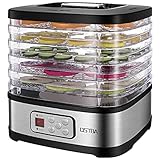
Overview: OSTBA’s digital dehydrator combines modern convenience with extended dehydration capabilities. Featuring a 72-hour timer and LED touchscreen, this 240W unit with five BPA-free trays targets users wanting “set it and forget it” operation for complex projects like yogurt, rising bread, or thorough meat drying.
What Makes It Stand Out: The exceptional 72-hour timer far exceeds standard 24-48 hour limits, enabling ambitious projects without midnight resets. The see-through window and LED display provide constant monitoring, while 360° circulation ensures even results. Included recipe book jumpstarts creativity for beginners.
Value for Money: At $59.99, the extended timer and digital interface offer excellent value. While lower wattage means slower drying than 400W+ models, the convenience of three-day automated operation compensates for speed, making it perfect for overnight and weekend projects.
Strengths and Weaknesses: Strengths include industry-leading timer duration, user-friendly digital controls, compact footprint, viewing window, and included recipes. Weaknesses involve lower 240W power extending drying times, only five trays limiting batch size, and plastic construction may lack durability. The temperature range, while adequate, doesn’t exceed 158°F for faster drying.
Bottom Line: Best suited for patient users prioritizing convenience over speed. The 72-hour timer is a game-changer for complex recipes, making this an excellent choice for dedicated home cooks who plan ahead and value digital precision.
10. Ivation 9 Tray Countertop Digital Food Dehydrator Drying Machine 600w with Preset Temperature Settings, Auto Shutoff Timer and Even Heat Circulation for Beef Jerky, Fruits, Vegetables & Nuts
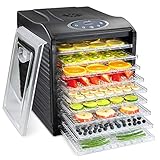
Overview: The Ivation represents professional-grade home dehydration with nine spacious trays and 600W of power. This digital powerhouse accommodates large batches for families, gardeners, and hunters, featuring rear-mounted fan technology that eliminates tray rotation and ensures uniform results across all levels.
What Makes It Stand Out: The rear-mounted fan configuration, typically found in commercial units, provides superior airflow without flavor crossover. Nine 13"x12" trays offer exceptional capacity, while eight precise temperature settings handle everything from delicate herbs to tough jerky. Included nonstick mesh and solid sheets expand versatility for small items and fruit leathers.
Value for Money: At $129.99, this premium model justifies its price through sheer capacity, power, and professional features. For serious users processing garden harvests or bulk meat purchases, it replaces multiple smaller units, saving time and energy long-term.
Strengths and Weaknesses: Strengths include massive capacity, powerful 600W heating, even rear airflow, digital precision, safety certifications, and useful accessories. Weaknesses involve significant countertop space requirements, higher energy consumption, and price prohibitive for casual users. The large size may be overkill for singles or small families.
Bottom Line: A worthwhile investment for dedicated dehydrating enthusiasts, large families, or anyone processing substantial quantities regularly. While overkill for occasional use, its capacity and performance make it the most capable home unit reviewed.
Why a Dedicated Dehydrator Matters for Beef Jerky Perfection
Making beef jerky isn’t just about removing moisture—it’s about creating an environment hostile to bacteria while preserving the meat’s nutritional value and texture. Countertop dehydrators engineered for this purpose offer precise temperature control that hovers in the USDA-recommended 160°F (71°C) safety zone, ensuring pathogen elimination without cooking the meat. Unlike conventional ovens that fluctuate wildly or convection ovens that blast meat with excessive heat, quality dehydrators maintain steady, low temperatures for hours. This consistency prevents case hardening, where the exterior seals moisture inside creating a perfect breeding ground for bacteria. The dedicated design also means proper airflow patterns that reach every surface of every strip, eliminating those frustrating wet spots that ruin entire batches.
Understanding the Science Behind Jerky Dehydration
The magic number for safe beef jerky is reaching a water activity level below 0.85, which effectively halts microbial growth. This requires removing 70-80% of the meat’s original moisture content—a process that takes 4-12 hours depending on thickness and fat content. Quality dehydrators achieve this through a combination of low heat (145-165°F is the sweet spot) and constant air circulation. The heat energizes water molecules, while airflow whisks them away before they can recondense. Too much heat and you cook the meat, creating brittle texture and potentially driving surface moisture deeper into the strip. Too little airflow and you get uneven drying, with some pieces becoming leather while others remain dangerously moist. Understanding this balance helps you appreciate why features like adjustable thermostats and fan positioning aren’t just marketing fluff—they’re fundamental to food safety.
Types of Countertop Dehydrators: Pros and Cons
Vertical Flow Systems
These stackable tray models position the heating element and fan either at the base or top, pushing air vertically through the unit. They’re generally more compact, affordable, and expandable—simply add more trays for larger batches. The circular design fits neatly on countertops and stores easily. However, airflow can become uneven as it fights gravity and tray obstacles, often requiring tray rotation every few hours for consistent results. The central channel that directs air can also create a hot zone that over-dries strips positioned directly above it. For jerky enthusiasts, this means more hands-on monitoring and potential texture variations across a single batch.
Horizontal Flow Systems
Rear-mounted fans and heating elements push air horizontally across each tray in these cabinet-style units. This design mirrors professional food dehydrators and delivers remarkably even drying without tray rotation. The temperature consistency from top to bottom tray typically varies less than 5°F, crucial for large jerky batches. These models usually feature slide-out trays that provide easier access and better visibility. The trade-off? They’re bulkier, heavier, and command premium prices. The rectangular footprint demands more permanent countertop real estate, and they’re less forgiving if you’re working in a cramped apartment kitchen.
Capacity Considerations: Matching Size to Your Jerky Ambitions
Before falling in love with any dehydrator, honestly assess your jerky consumption and production goals. A compact four-tray unit might handle 1-2 pounds of wet meat per batch—perfect for occasional snacking. But if you’re preparing for camping trips, stocking a prepper pantry, or supplying a protein-hungry household, you’ll quickly outgrow small capacity. Most enthusiasts discover that a six to nine-tray system hits the sweet spot, processing 3-5 pounds of marinated meat per cycle. Remember that meat shrinks by 50-60% during dehydration, so what looks like a massive raw batch becomes a modest finished quantity. Also consider tray spacing—jerky strips need adequate air circulation, so trays with 1-inch clearance accommodate thicker cuts while 0.5-inch spacing limits you to thin slices.
Temperature Precision: The Make-or-Break Feature
The difference between a $50 dehydrator and a $300 model often comes down to thermostat accuracy. Budget units might claim 165°F but actually swing between 140°F and 190°F, putting you in the danger zone. Look for models with adjustable thermostats offering 5°F increments between 95°F and 165°F. Digital controls with LED displays provide better precision than analog dials, which can drift over time. Some premium models feature dual temperature settings—starting at 160°F for the first hour to eliminate surface bacteria, then automatically dropping to 145°F for the remaining drying time. This “high-low” approach optimizes both safety and texture, preventing that overcooked chewiness that plagues many homemade batches.
Airflow Dynamics: Even Drying Prevents Disaster
Consistent airflow matters more than raw fan power. A whisper-quiet fan that moves air evenly beats a hurricane-force blower creating hot and cold zones. The best dehydrators circulate air so every tray receives identical treatment, eliminating the need for manual rotation. Pay attention to vent placement—models with adjustable vents let you fine-tune airflow based on batch size and ambient humidity. Some advanced units feature dual-directional airflow that reverses periodically, ensuring no dead zones develop. For jerky specifically, look for units where air flows across the meat surface rather than directly onto it, which can create case hardening. The fan should run continuously—avoid models that cycle on and off, as temperature fluctuations extend drying time and compromise safety.
Material Matters: Durability and Food Safety
Your dehydrator’s construction materials directly impact both longevity and food safety. Food-grade stainless steel trays are the gold standard—non-reactive, dishwasher safe, and resistant to acidic marinades that can degrade plastic over time. BPA-free plastic trays are acceptable but can warp at sustained high temperatures and may absorb flavors from pungent marinades. Avoid any unit with exposed heating elements inside the drying chamber, as drippings can cause smoke or fire hazards. The exterior housing should be cool-touch insulated plastic or stainless steel that won’t scorch your countertop during 12-hour runs. Check that door seals are silicone, not foam, as foam deteriorates and can harbor bacteria. Transparent doors or trays let you monitor progress without opening the unit and losing heat, but ensure the plastic is rated for sustained heat exposure.
Noise Levels: Kitchen Peace vs. Performance
That gentle hum becomes maddening when it continues for 10 hours straight. Fan noise typically ranges from 35 decibels (quiet library) to 65 decibels (normal conversation). Horizontal flow units generally run quieter because larger fans spin slower to move the same air volume. Some manufacturers publish dB ratings—look for anything under 50 decibels for overnight runs. Bear in mind that noise increases as units age; bearings wear and vibrations intensify. Rubber feet or mounting pads help dampen vibration transfer to countertops. If you plan to run dehydrators in living spaces or during sleep, prioritize models marketed as “quiet operation” and check user reviews specifically mentioning noise levels after months of use, not just fresh-out-of-box impressions.
Energy Consumption: The Hidden Cost of Homemade Jerky
A typical dehydrator runs 6-10 hours per batch, making energy efficiency more significant than many buyers realize. Most units draw 300-800 watts—comparable to a slow cooker. At 10 hours and $0.13 per kWh, a 600-watt unit costs about $0.78 per batch. Over a year of weekly jerky making, that’s $40 in electricity. Models with better insulation and efficient heating elements reach temperature faster and maintain it with less energy input. Some feature eco-modes that reduce power draw by 30% once target temperature is reached. While the savings seem modest annually, they compound over the dehydrator’s 5-10 year lifespan. Check for Energy Star ratings or manufacturer-provided efficiency data, and consider that horizontal flow units often consume less energy long-term due to shorter drying times from superior airflow.
Essential Features That Transform Good Into Great
Programmable Timers and Auto-Shutoff
Digital timers with auto-shutoff prevent over-drying and provide peace of mind during overnight runs. Look for models offering at least 24-hour timers with 30-minute increments. The auto-shutoff should engage a cool-down cycle, gradually reducing temperature rather than abruptly cutting power, which prevents condensation from forming on jerky surfaces. Some units include memory functions that resume the cycle after power outages—crucial for those living in areas with unreliable electricity. Avoid models where the timer simply shuts off the heating element but leaves the fan running, as this can actually reintroduce moisture in humid environments.
Thermostat Accuracy and Range
A quality dehydrator maintains set temperature within ±5°F. Premium models feature PID controllers—the same technology used in high-end espresso machines—that learn your environment and adjust power output to eliminate temperature swings. The thermostat range should extend from 95°F for herbs and fruit leathers up to at least 165°F for jerky safety. Some units include meat probes that monitor internal jerky temperature, automatically shutting off when the center reaches the target. This probe feature is particularly valuable for thick-cut jerky or when working with wild game where safety margins are critical.
Tray Design and Flexibility
Tray spacing should be adjustable or come in multiple heights. Jerky requires different clearance than fruit rolls or yogurt. Look for trays with fine mesh screens that prevent thin slices from falling through while allowing maximum airflow. Some systems offer dedicated jerky trays with raised edges to contain marinades and spices. The ability to remove trays entirely lets you dehydrate larger items when you’re not making jerky, increasing the appliance’s versatility. Dishwasher-safe trays are non-negotiable for serious users—hand-washing 9 trays after every batch becomes tedious quickly.
Jerky-Specific Accessories Worth Considering
While the dehydrator itself does the heavy lifting, certain accessories elevate your jerky game. Silicone jerky mats with raised grids prevent sticking and make cleanup effortless—they’re especially valuable for sticky teriyaki or honey-based marinades. Extra mesh screens let you rotate batches without downtime. A jerky gun or slicer ensures uniform thickness, which translates to consistent drying times and eliminates the frustration of some strips finishing hours before others. Some dehydrators offer optional fruit leather trays that double as drip catchers for particularly wet marinades, protecting the heating element. Consider whether the manufacturer offers replacement parts—trays and screens wear out, and being able to purchase spares extends your unit’s useful life significantly.
Maintenance and Cleaning: The Reality Check
The aftermath of a jerky marathon is a sticky, spice-encrusted cleanup operation. Dishwasher-safe components are essential, but check whether the manufacturer recommends top-rack only—high heat can warp trays over time. The interior chamber should have a smooth, non-porous surface that wipes clean with a damp cloth. Avoid units with exposed screw heads or seams inside the chamber where meat particles can hide. The fan and heating element housing should be accessible for occasional vacuuming to remove dust that reduces efficiency. Some premium models feature self-cleaning cycles that run the unit empty at high temperature to burn off residue. Read the manual before buying—if it requires disassembly tools for basic cleaning, you’ll likely neglect maintenance, shortening the unit’s lifespan.
Safety Certifications and What They Actually Mean
UL (Underwriters Laboratories) or ETL (Intertek) certification means the unit has been independently tested for electrical safety and fire hazards—non-negotiable for appliances running unattended for hours. NSF (National Sanitation Foundation) certification indicates food-contact surfaces meet commercial kitchen standards, though few residential units pursue this costly certification. FDA compliance for materials is standard, but verify the manufacturer explicitly states “food-grade” for all interior components. Some units include overheat protection that automatically shuts down if airflow is blocked—a valuable safeguard if a tray gets overloaded. Child lock features prevent curious hands from opening the unit or changing settings mid-cycle, important in busy households.
Budget Breakdown: What Your Money Really Buys
Entry-level dehydrators ($50-$100) offer basic functionality but sacrifice temperature precision, even drying, and durability. Mid-range units ($150-$250) hit the enthusiast sweet spot with accurate thermostats, decent capacity, and user-friendly features. Premium models ($300-$600) deliver commercial-grade temperature control, stainless steel construction, and advanced features like programmable profiles and meat probes. The price jump from mid-range to premium often reflects build quality that translates to 5-10 years of reliable service versus 2-3 years. Consider cost-per-use: a $400 unit that makes jerky weekly for 8 years costs $0.96 per batch, while replacing a $100 unit every two years costs $1.92 per batch. Factor in ruined batches from poor performance, and the premium option often proves more economical long-term.
Common Mistakes First-Time Buyers Make
The most frequent error is prioritizing capacity over airflow quality—a huge dehydrator with uneven drying wastes more meat than it preserves. Another misstep is assuming higher wattage equals better performance; efficient design matters more than raw power. Many buyers overlook tray spacing, only to discover their favorite thick-cut recipe won’t fit. Don’t be seduced by excessive features you’ll never use—if you only make jerky, you don’t need 20 programmable presets for herbs and yogurt. Ignoring noise ratings leads to regret when that “quiet” unit drones on for 12-hour overnight sessions. Finally, failing to check replacement part availability means you’re buying a disposable appliance rather than a long-term investment. Always search for user reviews mentioning customer service and parts availability before committing.
Frequently Asked Questions
How long does beef jerky really take in a quality dehydrator?
Expect 4-6 hours for thin slices (1/8 inch) and 8-12 hours for thicker cuts (1/4 inch). The first hour at 160°F eliminates surface bacteria, then 145-150°F for the remainder. Time varies based on meat fat content, marinade viscosity, ambient humidity, and how densely you pack trays. Always check doneness by bending a cooled piece—it should crack but not break, with no visible moisture when squeezed.
Can I dry jerky safely in a dehydrator without a 160°F setting?
No—this is non-negotiable for food safety. The USDA recommends heating meat to 160°F before dehydrating or maintaining 160°F throughout the process. Some pathogens can survive lower temperatures even after extended drying. If your unit maxes at 155°F, pre-cook meat strips in a 300°F oven for 10 minutes before dehydrating, though this affects final texture.
Why does my jerky sometimes develop white spots after drying?
Those are likely fat globules or salt deposits, not mold. Fat rises to the surface as meat dries, creating white specks. Trim all visible fat before marinating to minimize this. Salt deposits occur with heavily salted marinades and are harmless. True mold appears fuzzy and colored—white, green, or blue. Properly dried jerky stored in airtight containers shouldn’t mold for several months.
How many trays can I actually use without affecting performance?
Most horizontal flow units maintain performance fully loaded. Vertical flow models typically lose efficiency beyond 70% capacity—air struggles to penetrate the center of overloaded trays. For consistent results, leave about 20% of each tray’s surface area open for air circulation. Stagger pieces rather than packing them in tight rows, and never overlap strips.
Is stainless steel worth the extra cost over plastic trays?
For jerky enthusiasts, absolutely. Stainless steel withstands acidic marinades (vinegar, citrus) that degrade plastic over time. It won’t absorb flavors or odors, handles dishwasher heat better, and provides superior airflow due to stronger mesh construction. Plastic trays warp, develop micro-scratches that harbor bacteria, and typically need replacement every 2-3 years with heavy use.
Can I run my dehydrator overnight unattended?
Quality units with auto-shutoff and overheat protection are designed for this. Place the unit on a heat-resistant surface away from walls, ensure all vents are unobstructed, and don’t exceed recommended load capacities. Check your smoke detectors before the first overnight run. Avoid running dehydrators in enclosed cabinets or pantries where heat can accumulate.
What’s the ideal thickness for beef jerky strips?
1/8 to 3/16 inch (3-5mm) offers the best balance of drying time and chewiness. Thinner dries too brittle, thicker risks uneven drying and spoilage. Partially freeze meat for 1-2 hours before slicing—it firms the texture for uniform cuts. A meat slicer ensures consistency; hand-cutting rarely achieves even thickness across a whole batch.
How do I prevent jerky from sticking to trays?
Lightly coat trays with non-stick spray before loading, even on non-stick surfaces. Silicone jerky mats eliminate sticking entirely and make cleanup trivial. Avoid sugar-heavy marinades that caramelize and glue meat to trays. Flip strips once during drying if not using mats—about 2/3 through the estimated time—to prevent sticking and promote even drying.
Why does my jerky taste different than commercial brands?
Commercial producers use curing salts (pink salt/sodium nitrite), liquid smoke, and precise humidity control during drying. You can replicate this by adding curing salt to your marinade (1 teaspoon per 5 pounds of meat) for that characteristic tangy flavor and extended shelf life. Use hickory or mesquite powder for smoke flavor without a smoker. The texture difference comes from commercial tumblers that massage marinade deeper into meat fibers.
How should I store homemade jerky for maximum shelf life?
Cool jerky completely before storage—any residual warmth creates condensation and mold risk. Vacuum seal for 1-2 months at room temperature, or 6+ months refrigerated. Zip-top bags with oxygen absorbers work for 2-3 weeks. Store in a cool, dark place; light degrades both flavor and texture. If you spot any mold, discard the entire batch—visible mold means invisible toxins have spread throughout.