There’s something almost magical about pulling a crusty, aromatic artisan loaf from your own oven—steam escaping from a golden, blistered crust as you hear that satisfying crackle. For beginners, the journey from store-bought sandwich bread to handcrafted boules can feel overwhelming, but modern bread makers have evolved into sophisticated tools that bridge that gap. The right machine doesn’t just mix and bake; it becomes your personal baking assistant, handling the technical heavy lifting while you focus on creativity.
Choosing a bread maker for artisan-style loaves requires a different mindset than selecting a basic model for weekly white bread. Artisan breads demand specific conditions: longer fermentation times, precise temperature control during proofing, and the flexibility to work with wet, sticky doughs that develop complex flavors. This guide cuts through the marketing noise to reveal the essential features that truly matter for beginners aspiring to create bakery-quality loaves at home.
Top 10 Bread Makers for Artisan Loaves
Detailed Product Reviews
1. Cuisinart Bread Maker Machine, Stainless Steel Automatic Bread Machine with 12 Menu Options, 3 Loaf Sizes up to 2 Lb., 3 Crust Colors, Removable Nonstick Baking Pan & Kneading Paddle, CBK-110NAS

Overview: The Cuisinart CBK-110NAS brings reliable automation to home bread making in a sleek stainless steel package. This vertical bread maker offers 12 pre-programmed menus covering basic loaves, dough cycles, and specialty items like cakes and pizza dough. With capacity for up to 2-pound loaves and three crust color options, it handles family-sized baking needs while maintaining a counter-friendly footprint that maximizes kitchen space efficiency.
What Makes It Stand Out: Cuisinart’s legacy of kitchen appliance reliability shines through in this model’s thoughtful design. The vertical baking pan produces a traditional loaf shape while requiring less counter depth than horizontal machines. The 60-minute keep-warm cycle extends beyond competitors’ standard 30-minute function, ensuring your bread stays at optimal serving temperature. The LCD display provides clear cycle tracking, and audible alerts keep you informed throughout the 3-hour baking process.
Value for Money: At $157.88, this machine sits in the sweet spot between budget models and premium competitors. You’re paying for Cuisinart’s proven durability and customer support network rather than gimmicky features. Compared to similar-priced alternatives, the build quality and brand reputation justify the investment, especially for bakers who prioritize longevity over experimental functions.
Strengths and Weaknesses: Pros include compact vertical design, trusted brand reputation, straightforward operation, and generous keep-warm cycle. The 12 programs cover essentials without overwhelming beginners. Cons include fewer menu options than similarly priced competitors, no automatic fruit/nut dispenser, and the vertical loaf orientation may not suit those preferring traditional horizontal slices.
Bottom Line: The Cuisinart CBK-110NAS excels for space-conscious bakers who value brand reliability and simplicity. While it lacks some premium features, its solid construction and intuitive operation make it an excellent choice for consistent, hassle-free bread making.
2. KBS Pro 710W Bread Maker, 2LB 17-in-1 Automatic Bread Machine with Healthy Ceramic Pan, Nut Dispenser, Tempered Glass Touch Panel, Stainless Steel Housing,3 Crust Colors, 15H Timer&Keep-Warm, Recipe
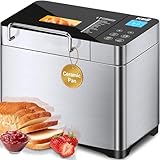
Overview: The KBS Pro 710W positions itself as a premium bread making solution with an impressive 17-in-1 functionality. This stainless steel machine combines high-power performance with health-conscious design, featuring a ceramic non-stick pan free from PTFE and PFOA chemicals. With capacity for 1, 1.5, and 2-pound loaves, it caters to various household sizes while promising bakery-quality results through advanced heating technology.
What Makes It Stand Out: The 710-watt motor significantly outperforms standard 600-watt models, delivering superior kneading action that mimics artisan techniques. The automatic nut dispenser eliminates manual monitoring, adding ingredients at the optimal moment for perfect distribution. The ceramic pan, fired at 3,000°F, offers unmatched durability and chemical-free baking. Combined with 360° convection heating and professional-grade sensors, this machine achieves consistent results that rival commercial bakery output.
Value for Money: At $159.99, the KBS Pro commands only a slight premium over basic stainless steel models while delivering substantive upgrades. The ceramic pan alone justifies the price difference, representing a $30-40 value over traditional non-stick coatings. When factoring in the auto dispenser, higher wattage, and 53 included recipes, it offers exceptional feature density for the price point.
Strengths and Weaknesses: Major strengths include powerful motor performance, health-safe ceramic coating, truly hands-off operation with auto dispenser, extensive recipe collection, and rapid ExpressBake function. Potential drawbacks include a less recognizable brand name, slightly steeper learning curve for beginners overwhelmed by 17 programs, and the premium price may exceed casual bakers’ budgets.
Bottom Line: For health-conscious enthusiasts seeking professional-grade results, the KBS Pro 710W delivers outstanding value. The combination of power, safety, and automation makes it ideal for serious home bakers ready to invest in premium features.
3. 2LB Bread Maker Machine, OSIPOTO 17 in 1 Automatic Stainless Steel Bread Machine, Non-stick, Beginner-Friendly Controls, 15 Hour Timer, Easy to Clean Low Noise, High Success Rate for Homemade Bread

Overview: The OSIPOTO 2LB Bread Maker democratizes home baking with its beginner-friendly approach and budget-conscious pricing. This stainless steel automatic machine packs 17 customizable programs into an accessible package, handling everything from basic white bread to yogurt and jam. Designed specifically for novices, it eliminates the intimidation factor while delivering consistent results through automated kneading, rising, and baking cycles.
What Makes It Stand Out: Operating at just 50 decibels, this machine is notably quieter than competitors that typically reach 60-65 decibels, making it ideal for overnight baking without disturbing sleep. The 15-hour delay timer combined with quiet operation enables true set-it-and-forget-it convenience. Despite its low price point, it doesn’t compromise on core functionality, offering the same program variety as machines costing 60% more.
Value for Money: At $99.99, the OSIPOTO dramatically undercuts the competition while maintaining feature parity. This represents exceptional value for first-time buyers unsure about committing to bread making. The cost savings could fund premium ingredients for months, making it a financially smart entry point into home baking without sacrificing capability.
Strengths and Weaknesses: Pros include unbeatable price, quiet operation, intuitive controls, comprehensive 17 programs, and compact design. The 600-watt motor provides adequate power for most recipes. Cons include unknown long-term durability, less robust construction than premium brands, no automatic dispenser, and limited customer support infrastructure compared to established competitors.
Bottom Line: The OSIPOTO shines as the ultimate starter machine for budget-conscious beginners. While it may lack the refinement of pricier models, its combination of low cost, quiet operation, and full feature set makes it an unbeatable value proposition for those testing the waters of home bread making.
4. The Perfect Loaf: The Craft and Science of Sourdough Breads, Sweets, and More: A Baking Book

Overview: “The Perfect Loaf” serves as a comprehensive masterclass in sourdough baking, bridging the gap between artisan tradition and food science. This meticulously crafted guide explores the microbial mysteries behind starter cultivation, fermentation control, and achieving the perfect crumb structure. Covering breads, sweets, and beyond, it transforms home bakers into sourdough specialists through detailed explanations and chef-curated recipes.
What Makes It Stand Out: Unlike recipe collections that skip the why, this book dives deep into the biochemical processes governing sourdough success. The science-first approach demystifies variables like temperature, hydration, and flour composition, empowering bakers to troubleshoot and innovate rather than blindly follow formulas. Its specialization in sourdough—while limiting for some—creates unparalleled depth in this increasingly popular baking niche.
Value for Money: Priced at $22.29, the book delivers professional-grade education at a fraction of workshop costs. Free online resources pale in comparison to the systematic knowledge and tested recipes compiled here. For sourdough enthusiasts, this represents a permanent reference that pays dividends through countless successful bakes and avoided failures.
Strengths and Weaknesses: Strengths include scientific rigor, sourdough mastery, diverse recipe applications beyond bread, and permanent reference value. The hardcover format ensures durability in flour-dusted kitchens. Weaknesses include steep learning curve for beginners wanting simple recipes, sourdough-only focus excludes yeast breads, and requires significant time investment to absorb principles.
Bottom Line: This book is essential for bakers committed to mastering sourdough’s complexities. While not for quick-recipe seekers, it provides the theoretical foundation and practical guidance needed to create bakery-quality sourdough at home consistently.
5. Silicone Bread Maker, Silicone Bread Bowl Loaf Pan for Homemade Baking Bread

Overview: This silicone bread bowl reimagines artisan baking through minimalist design and material innovation. Shaped as a partially closed bowl, it creates a self-contained steam environment that mimics professional bakery ovens, producing crusty, moist loaves without expensive equipment. Made from food-grade silicone, it withstands temperatures up to 428°F while offering natural non-stick properties.
What Makes It Stand Out: The cloche-like design solves the home baker’s greatest challenge—steam generation—without requiring a Dutch oven or water pans. Its flexibility allows for easy dough transfer and release, eliminating the need for parchment paper. The collapsible, stackable design saves precious kitchen space compared to bulky cast iron alternatives, while the dishwasher-safe material simplifies cleanup dramatically.
Value for Money: At $8.68, this represents extraordinary value, delivering artisan results for less than the cost of two store-bought artisan loaves. It democratizes professional techniques that typically require $100+ equipment investments, making it accessible to casual bakers experimenting with hand-shaped breads.
Strengths and Weaknesses: Pros include unbeatable price, space-saving storage, effortless cleaning, steam-generating design, and chemical-free material. It works in ovens, microwaves, and dishwashers. Cons include manual kneading requirement, limited size capacity, no temperature control assistance, and silicone’s potential to retain odors over time.
Bottom Line: This silicone bowl is a game-changer for hands-on bakers seeking artisan results on a budget. While it won’t replace a bread machine’s convenience, it excels at elevating manual baking with professional-grade crust development at an impulse-buy price point.
6. Cuisinart Bread Maker Machine, Stainless Steel Convection Bread Machine with 16 Menu Options, 3 Loaf Sizes Up to 2 Lb., 3 Crust Colors, Includes Measuring Cup, Spoon & Kneading Hook, CBK-210

Overview: The Cuisinart CBK-210 is a premium convection bread maker built for serious home bakers. It offers 16 menu options, three loaf sizes up to 2 pounds, and three crust colors in a stainless steel body. The included measuring cup, spoon, and kneading hook enable immediate use. This machine targets users wanting bakery-quality results through advanced technology rather than basic functionality.
What Makes It Stand Out: The convection fan circulates air for superior crust, color, and texture—features rarely found in home bread makers. The automatic fruit and nut dispenser adds ingredients at the perfect time without manual intervention. Combined with robust stainless steel construction, these features create a professional baking experience that justifies the premium positioning.
Value for Money: At $258.99, this is a significant investment, but frequent bakers will see returns through consistent, high-quality results. The convection technology and automatic dispenser save time and elevate bread quality beyond $100-150 models. For those baking weekly, the durability and performance offset the initial cost compared to replacing cheaper units.
Strengths and Weaknesses: Strengths include exceptional convection baking, automatic ingredient dispensing, versatile programming, and sturdy build quality. The 16 menus cover everything from basic white to artisan doughs. Weaknesses are the steep learning curve for beginners, large countertop footprint, and premium price that may deter casual users. The interface could be more intuitive.
Bottom Line: Perfect for passionate bakers seeking professional results, the CBK-210 delivers superior performance that validates its price. If crust quality and consistency matter, this convection model is worth the investment.
7. Elite Gourmet EBM8103B Programmable Bread Maker Machine 3 Loaf Sizes, 19 Menu Functions Gluten Free White Wheat Rye French and more, 2 Lbs, Black
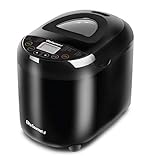
Overview: The Elite Gourmet EBM8103B is a mid-range automatic bread maker offering 19 programmed menu functions. It handles 1, 1.5, or 2-pound loaves with three crust settings, covering everything from basic bread to pizza dough. The 15-hour delay timer and 60-minute keep-warm function provide scheduling flexibility for busy households wanting fresh bread on demand.
What Makes It Stand Out: The extensive 19-function menu exceeds most competitors at this price, offering specialty settings for gluten-free, wheat, rye, and French breads. The combination of delay timer and keep-warm ensures bread is ready exactly when needed. Additionally, oven-free operation reduces kitchen heat and energy use—a practical benefit for summer baking.
Value for Money: At $129.52, this model balances functionality and affordability effectively. It delivers nearly double the presets of budget models while costing far less than premium brands. The energy savings and reduced cleanup provide ongoing value. For families baking several times weekly, the features justify the moderate investment over basic $70 units.
Strengths and Weaknesses: Strengths include versatile programming, generous delay timer, effective keep-warm function, and reliable performance across bread types. The three loaf sizes accommodate various needs. Weaknesses include no automatic fruit/nut dispenser, plastic construction that feels less durable, and absence of a viewing window. The brand lacks Cuisinart’s proven longevity record.
Bottom Line: A reliable workhorse for regular family baking, the EBM8103B offers outstanding functionality per dollar. It’s ideal for households wanting variety without premium cost, though enthusiasts might miss advanced features like automatic dispensing.
8. Elite Gourmet EBM8103M Programmable Bread Maker Machine 3 Loaf Sizes, 19 Menu Functions Gluten Free White Wheat Rye French and more, 2 Lbs, Mint
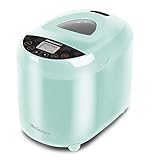
Overview: The Elite Gourmet EBM8103M delivers the same robust feature set as its siblings in a distinctive mint finish for just $69.99. With 19 programmed menu functions, three loaf sizes up to 2 pounds, and a 15-hour delay timer, this machine automates kneading, rising, and baking. It maintains all core functions including gluten-free settings and pizza dough capability.
What Makes It Stand Out: The remarkable $69.99 price makes this the most accessible fully-featured bread maker available, democratizing homemade artisan bread. The mint color offers a refreshing design alternative for those tired of conventional appliances. It proves that budget pricing doesn’t require sacrificing essential functionality or programmable convenience.
Value for Money: This represents exceptional value, offering features typically found in $120+ machines for nearly half the cost. The savings don’t compromise critical functionality. For budget-conscious buyers or beginners, the risk-reward is unbeatable. Oven-free operation reduces energy costs and kitchen heat, adding ongoing savings that compound the initial value.
Strengths and Weaknesses: Strengths include unbeatable pricing, comprehensive 19-function menu, generous delay timer, and unique color option. It performs reliably for basic and specialty breads. Weaknesses involve the polarizing mint color that may clash with many kitchens, absence of automatic ingredient dispenser, plastic build quality, and lack of viewing window. Long-term durability remains unproven.
Bottom Line: If the mint finish complements your kitchen, this is the best budget bread maker available. It removes financial barriers to fresh, homemade bread while delivering features that matter most.
9. Gemelli Home™ 2LB Artisan Bread Maker, Stainless Steel w/ 21 Functions, Ceramic Pan, Fruit/Nut Dispenser, 3 Loaf Sizes, 3 Shades, Gluten-Free Settings
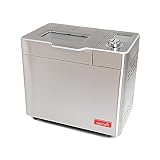
Overview: The Gemelli Home 2LB Artisan Bread Maker targets health-conscious consumers with its premium ceramic-coated pan and 21-function capability. The stainless steel exterior houses a BPA, Teflon, and PTFE-free baking chamber with three loaf sizes and three crust shades. A viewing window and digital display enhance usability while addressing chemical concerns.
What Makes It Stand Out: The ceramic pan eliminates traditional nonstick coatings without sacrificing convenience—a major advantage for health-focused buyers. The automatic fruit and nut dispenser adds ingredients at optimal times. With 21 functions, this machine handles bread, pizza dough, jam, yogurt, and even kimchi, making it a versatile kitchen multi-tool beyond just baking.
Value for Money: At $199.99, it positions between budget and premium models, justifying cost through health-conscious materials and superior versatility. The ceramic pan adds significant value for those avoiding conventional nonstick. Compared to the $259 Cuisinart, it offers comparable features with healthier construction at a lower price point.
Strengths and Weaknesses: Strengths include chemical-free ceramic pan, 21 diverse functions, automatic dispenser, viewing window, and sleek stainless design. Healthy settings for low-sugar, vegan, and gluten-free recipes expand dietary options. Weaknesses include a shorter 13-hour delay timer versus competitors’ 15 hours, limited brand recognition, and price still steep for casual users. The recipe booklet could be more comprehensive.
Bottom Line: Perfect for health-conscious households wanting versatility without premium pricing, Gemelli Home delivers peace of mind through safer materials and impressive functionality. The ceramic pan alone makes this worthwhile for chemical-aware consumers.
10. Elite Gourmet EBM8103SS Programmable Bread Maker Machine, 3 Loaf Sizes, 19 Menu Functions Gluten Free White Wheat Rye French and more, 2 Lb, Stainless Steel

Overview: The Elite Gourmet EBM8103SS wraps proven bread-making technology in a stainless steel exterior for just $74.99. This model maintains the 19-program menu, three loaf sizes up to 2 pounds, and 15-hour delay timer that define the series. The stainless finish provides an aesthetic upgrade from basic black or mint options without increasing price.
What Makes It Stand Out: It delivers a premium stainless steel appearance at a budget price unmatched by competitors. The 15-hour delay timer exceeds Gemelli’s 13-hour limit, while the 60-minute keep-warm function ensures flexibility. For shoppers wanting appliances to coordinate with stainless steel kitchens, this eliminates the usual $150+ price premium for metal finishes.
Value for Money: Exceptional value for design-conscious buyers. You receive identical functionality to the $129 black model for $55 less, simply with a different finish. The stainless steel exterior provides durability and style without inflating cost. Energy savings from oven-free baking and reduced cleanup further enhance long-term value beyond the purchase price.
Strengths and Weaknesses: Strengths include attractive stainless steel design, comprehensive 19-function programming, best-in-class 15-hour delay timer, and outstanding affordability. It bakes reliably across bread types. Weaknesses mirror other Elite models: no automatic ingredient dispenser, plastic interior components, absence of viewing window, and less robust construction than premium brands. The fan noise can be noticeable during operation.
Bottom Line: The smartest choice for budget shoppers with stainless steel kitchens. It proves you don’t need to sacrifice style or features for affordability, making it the best value in the Elite Gourmet lineup.
Understanding Artisan Bread and Machine Capabilities
What Makes a Loaf “Artisan”?
Artisan bread isn’t just a marketing term—it’s a methodology. These loaves typically feature crisp, caramelized crusts; open, irregular crumb structures; and complex flavors developed through slow fermentation. Unlike commercial bread that rushes from mixer to oven in under two hours, true artisan loaves often spend 12-24 hours developing character. Your bread maker must accommodate extended rise times, work with high-hydration doughs (70-85% water-to-flour ratio), and provide the intense heat needed for proper crust formation. Beginners should look for machines that specifically advertise “artisan” or “custom” cycles rather than assuming all bread makers can handle these demanding recipes.
Can Machines Really Make Artisan Bread?
The short answer: yes, with the right features and your involvement. While a machine can’t replicate a wood-fired oven or the tactile experience of hand-shaping, it excels at temperature-controlled fermentation—a critical element many home bakers struggle with. The key is finding a model that works with you, not just for you. Machines with dough-only cycles allow you to shape and bake in a Dutch oven for superior crust development. Others offer customizable programs that mimic the long, cool ferments of traditional methods. Think of your bread maker as a precision tool that manages the most temperature-sensitive phases while you retain creative control over ingredients and final shaping.
Key Features That Transform Beginners into Bakers
Crust Control: The Foundation of Artisan Texture
Crust control goes beyond simple “light, medium, dark” settings. For artisan loaves, you need machines that can sustain high baking temperatures (ideally 350-400°F) for extended periods. Look for models offering variable crust settings that adjust both temperature and time, not just color. Some advanced units feature a “crust bake” extension that adds 10-15 minutes of dry heat after the main bake cycle, essential for achieving that signature shatteringly crisp exterior. Beginners often underestimate how crucial this is—artisan bread without a proper crust is just… bread.
Programmable Cycles: Your Secret Weapon
Pre-programmed settings are convenient, but custom cycle programming separates hobby machines from serious artisan tools. You want the ability to adjust each phase independently: knead time (5-30 minutes), primary rise (0-6 hours), punch-down, secondary rise (0-6 hours), and bake duration. This flexibility lets you experiment with autolyse techniques, extend bulk fermentation for better flavor development, and create recipes that match your kitchen’s ambient temperature. Machines offering 3+ custom program slots give you room to grow as you develop signature recipes.
Dough-Only Settings: Shaping Your Own Destiny
The dough cycle might be the most valuable feature for aspiring artisan bakers. It handles mixing, kneading, and controlled rising, then stops before baking. This lets you turn the dough onto a floured surface, shape it into boules or batards, proof in a banneton, and bake in a preheated Dutch oven for oven spring that no bread machine can match. This hybrid approach gives beginners the confidence of machine-assisted fermentation while building hand-shaping skills. Always verify the dough cycle includes a proper bulk fermentation phase, not just a quick 30-minute rise.
Capacity Considerations: Size Matters for Beginners
1-Pound vs. 2-Pound Loaves: Making the Right Choice
While larger seems better, beginners should carefully consider capacity. A 1-pound loaf produces roughly a 4-5 inch diameter boule—perfect for a couple’s dinner or small family without waste. These smaller machines heat more evenly and give you more opportunities to practice recipes without committing to massive amounts of flour. Two-pound machines offer versatility but can be intimidating; a failed large loaf means wasted ingredients and discouragement. Many experienced bakers recommend starting with a 1-pound capacity machine, then upgrading once you’ve mastered hydration levels and timing.
Family Size and Frequency of Baking
Your household’s bread consumption directly impacts which features matter most. Daily bakers need machines with durable motors and pans that withstand constant use. Weekend bakers might prioritize programmable delay timers so you can wake up to fresh bread. Consider this: a family of four typically consumes one 1.5-pound loaf every two days. If you’re baking this frequently, invest in a model with a stainless steel bread pan rather than aluminum, as it resists warping and provides more consistent heat distribution over time.
The Science of Kneading: Paddle Design and Power
Single vs. Dual Paddle Systems
Dual paddle systems excel at handling high-hydration artisan doughs that cling and climb. These sticky doughs can wrap around a single paddle, creating uneven mixing and requiring manual intervention. Dual paddles create a more thorough, consistent knead that develops gluten properly without overheating the dough. However, they leave two holes in your baked loaf. For artisan bakers using the dough cycle, this doesn’t matter—you’ll remove the dough before baking. If you plan to bake in-machine, consider whether the convenience outweighs the aesthetic compromise.
Motor Strength and Gluten Development
Motor wattage directly impacts your machine’s ability to handle whole grain and high-hydration doughs. For artisan breads, look for motors rated at least 600 watts. Weaker motors struggle with stiff whole wheat doughs and can overheat during extended kneading cycles, killing yeast and ruining flavor. Overheating also triggers premature fermentation, leading to dense, gummy loaves. Quality machines feature thermal protection that pauses kneading if temperatures exceed 80°F, protecting your dough’s integrity. This is particularly crucial for beginners who might not recognize the signs of overheating.
Temperature Control: The Hidden Game-Changer
Proofing Precision
Artisan bread lives and dies by fermentation temperature. The best bread makers include ambient temperature sensors that automatically adjust proofing times based on your kitchen’s conditions. A 75°F kitchen might need a 2-hour rise, while a 65°F space requires 3-4 hours. Without this compensation, beginners get inconsistent results—over-proofed, collapsed loaves in summer and dense, under-proofed bricks in winter. Some premium models even offer adjustable proofing temperatures, allowing you to set a precise 78°F for consistent sourdough development regardless of season.
Adjustable Rising Times
Fixed rising times are the enemy of artisan bread. Your machine should allow you to extend or shorten each rise phase in 10-15 minute increments. This matters because different flours ferment at different rates—rye speeds through fermentation while whole wheat takes its sweet time. Being able to pause the cycle and check dough development gives beginners invaluable learning opportunities. Look for models with a “pause” or “add time” button that works mid-cycle without resetting the entire program.
Customization Features That Elevate Your Loaves
Add-In Dispensers: Nuts, Seeds, and More
While seemingly minor, automatic add-in dispensers transform how you incorporate seeds, nuts, dried fruits, and even cheese into artisan loaves. Manual addition requires you to hover near the machine, listening for the “beep” during kneading. Automatic dispensers release ingredients at the optimal moment—typically 5-8 minutes before kneading completes—ensuring even distribution without crushing. For beginners, this means one less thing to time perfectly. The dispenser should hold at least 3/4 cup and be removable for easy cleaning, as sticky dried fruit can jam mechanisms.
Custom Cycle Programming
Beyond basic adjustments, advanced machines let you create entirely new cycles from scratch. Want a 24-hour sourdough with a 12-hour bulk ferment at 68°F, gentle folding instead of aggressive kneading, and a final 4-hour proof? Programmable cycles make this possible. This feature becomes essential as you graduate from beginner recipes to developing your own formulas. The interface should be intuitive—avoid models requiring you to memorize button sequences. LCD displays that show each phase’s duration and temperature make programming less intimidating.
Construction and Durability: Built to Last
Bread Pan Materials and Non-Stick Coatings
The bread pan is your loaf’s home for 3-4 hours—its quality matters immensely. Traditional non-stick coatings (Teflon) wear down within 12-18 months of regular use, eventually sticking to high-hydration doughs and tearing your loaves. Look for ceramic or silicone-based non-stick coatings rated for 500+ uses. Better yet, some artisan-focused machines offer uncoated stainless steel pans designed for dough-only cycles. These develop a natural patina over time, similar to cast iron, and last indefinitely. The pan should also have a secure, wobble-free connection to the drive shaft.
Viewing Windows: Are They Necessary?
Viewing windows seem like a novelty until you’re trying to perfect your first sourdough. Being able to monitor gluten development during kneading and judge rise progression without lifting the lid prevents heat loss and maintains stable proofing temperatures. However, windows can fog from steam and may reduce the machine’s ability to retain heat during baking. The best designs include double-paned, tempered glass with internal vents to reduce condensation. If you choose a model without a window, ensure it has a “peek” feature that pauses the cycle when you briefly open the lid.
Noise Levels: The Midnight Baking Question
Decibel Ratings and Kitchen Placement
Bread makers aren’t silent. Kneading phases typically generate 60-70 decibels—comparable to a dishwasher. For apartment dwellers or those who bake overnight using delay timers, this matters. Machines with belt-driven motors tend to be quieter than direct-drive systems. Some models feature “quiet knead” settings that reduce speed slightly, extending knead time but dropping noise to 50-55 decibels. Consider your machine’s placement: a heavy marble countertop absorbs vibration better than a lightweight IKEA cart. Rubber feet or a silicone mat underneath can reduce noise transfer by 30%.
Cleaning and Maintenance: The Reality Check
Removable Parts and Dishwasher Safety
After a glorious loaf emerges, you’re left with cleanup. Every removable part—bread pan, paddles, dispenser—should be dishwasher safe, but here’s the expert tip: hand wash them anyway. Dishwasher detergents are abrasive and degrade non-stick coatings faster than any dough. Hot, soapy water and a soft sponge extend pan life dramatically. The kneading paddles are the weak link; they trap water in their hollow shafts, leading to mold. After washing, shake them vigorously and air dry completely. Some premium models have solid paddles that don’t trap water—a feature worth seeking.
Keeping Your Machine in Peak Condition
Quarterly maintenance prevents 90% of bread maker failures. Crumbs and flour dust accumulate in the heating element chamber, creating burnt smells and potential fire hazards. Unplug the machine, remove the pan, and use a soft brush to clean the chamber. Check the drive shaft seal annually—if you see oil seepage, the seal is failing and needs replacement. For machines used weekly, replace the drive belt every 2-3 years. Many beginners don’t realize that a “dead” machine often just needs a $15 belt. Store your machine with the lid slightly open to prevent mold growth in humid climates.
Budget Considerations: Investment vs. Features
Entry-Level Price Points
Sub-$100 bread makers can produce decent basic bread, but they lack the precision for true artisan loaves. Their motors overheat with high-hydration doughs, and fixed cycles don’t allow for long fermentation. However, they work well as “dough-only” assistants for beginners on tight budgets. Expect 12-18 months of regular use before performance degrades. If you must start here, choose a model with at least a 600-watt motor and manual cycle adjustments, even if the interface is clunky.
Premium Features Worth the Splurge
The $200-350 range hits the sweet spot for artisan capabilities. Here you’ll find dual paddles, custom programming, temperature sensors, and robust motors. These machines last 5-10 years with proper care. Features worth paying extra for include: precise temperature control (within 2°F), delayed start timers that work with custom cycles, and automatic ingredient dispensers. Above $350, you’re paying for brand reputation, smartphone connectivity, or commercial-grade components most home bakers don’t need. Invest the difference in high-quality flour instead.
Space and Storage: The Countertop Commitment
Footprint and Vertical Height
Bread makers are deceptively large. A typical unit occupies 12x16 inches of counter space but needs 20+ inches of vertical clearance to open the lid fully. Measure your space before ordering. Consider storage: will it live on the counter or in a cabinet? At 15-20 pounds, they’re not easily moved. Some models feature retractable cords and flat tops that allow stacking lightweight items, maximizing vertical space. For small kitchens, look for machines under 14 inches tall that can tuck under cabinets when not in use.
Storage Solutions for Small Kitchens
If countertop real estate is precious, prioritize machines with carrying handles and cord storage. A dedicated appliance garage with ventilation prevents dust accumulation while keeping the machine accessible. Avoid storing bread makers in unheated pantries or garages; temperature fluctuations damage electronic components and make first-rise times unpredictable. In humid climates, store with a silica gel packet inside to prevent mold. The manual and recipe book should fit inside the bread pan for compact, organized storage.
Learning Curve: What Beginners Should Expect
First Loaves and Common Mistakes
Your first 3-5 loaves will likely disappoint. This is normal. Beginners typically make three mistakes: using old yeast, mismeasuring flour (scooping instead of weighing), and opening the lid during rises. Artisan bread is particularly unforgiving. Start with established recipes from the machine’s manufacturer before experimenting. Keep a baking journal: note room temperature, flour brand, hydration percentage, and results. Patterns emerge quickly. Most machines have a “learning period” where you adjust to its quirks—some run hot, others knead aggressively. Patience during this phase pays dividends.
Resources for Recipe Development
Once you master basic cycles, join online communities dedicated to bread machine artistry. These forums share custom programs for specific machines and troubleshoot hydration adjustments. Invest in a kitchen scale measuring in 1-gram increments—artisan baking is chemistry, and volumetric measurements guarantee inconsistency. Books on bread science, not just recipe collections, teach you why machines behave differently, empowering you to adapt any artisan recipe. Many manufacturers now offer recipe apps with user ratings, helping you identify which formulas truly work for your model.
Beyond Basic Bread: Advanced Functions for Growing Skills
Sourdough Starters and Long Fermentation
Serious artisan bakers eventually venture into sourdough, which presents unique challenges for machines. The acidic starter can corrode aluminum pans over time, so stainless steel becomes essential. Look for machines with “sourdough” or “extended ferment” cycles that maintain cooler temperatures (75-80°F) ideal for wild yeast. Some advanced models include a built-in scale and temperature probe, letting you monitor starter activity. The machine can mix and proof your levain, then incorporate it into final dough at peak activity—a game-changer for beginners intimidated by starter maintenance.
Jam, Yogurt, and Other Unexpected Capabilities
Many bread makers include jam, yogurt, and even meatloaf settings. While seemingly unrelated to artisan bread, these functions indicate precise temperature control. Jam cycles heat to exact temperatures for pectin activation; yogurt settings maintain 110°F for cultures. This same precision benefits artisan recipes requiring temperature-controlled fermentation. A machine that excels at multiple tasks likely has superior engineering. However, avoid paying premium prices for 15+ functions you’ll never use. Focus on bread performance first.
Warranty and Customer Support: Your Safety Net
What to Look for in Manufacturer Support
A 1-year warranty is standard, but premium brands offer 2-3 years on motors and electronics. Read the fine print: some warranties void if you use recipes not from their cookbook—a red flag for creative bakers. Customer support quality matters as much as duration. Check online reviews specifically mentioning support experiences. Do they answer technical questions about custom cycles? Replace parts after warranty expiration? Companies that maintain replacement part inventories for 7-10 years demonstrate commitment to longevity. Register your machine immediately; many brands extend warranties by 6 months for registered products.
Frequently Asked Questions
Can I really make authentic sourdough in a bread maker, or is it just “sourdough-flavored” bread?
You can make authentic sourdough, but with limitations. The machine can mix, knead, and proof your sourdough dough perfectly, but baking in-machine won’t give you the crust you need. Use the dough cycle, then shape and bake in a preheated Dutch oven at 450°F for the real deal. Some high-end models have customizable cycles that can handle the full process, but the crust will be softer and thinner than traditional methods.
What’s the minimum motor power I need for high-hydration artisan doughs?
Aim for at least 600 watts. High-hydration doughs (75%+ water) are heavy and sticky, requiring sustained power to develop gluten properly. Weaker motors overheat, which kills yeast and ruins flavor. Dual-paddle systems can sometimes get away with slightly less power since they distribute the workload, but 600 watts is the safe minimum for consistent results.
How important is a viewing window for a beginner?
More important than you’d think. Being able to see gluten development during kneading and judge rise progress without opening the lid is invaluable for learning. It teaches you what properly developed dough looks like versus under-kneaded slack. That said, if you find a perfect machine without a window, you can learn by occasionally lifting the lid during non-critical phases—just know you’re losing heat and moisture each time.
Will a bread maker save me money compared to buying artisan bread?
Financially, break-even happens around 6-12 months if you bake weekly. A $250 machine making $5 loaves pays for itself after 50 loaves. But the real value isn’t monetary—it’s consistency and accessibility. You can bake at 10 PM in your pajamas, experiment with ancient grains, and never worry about commercial bakeries’ schedules. Plus, you control every ingredient, avoiding preservatives and additives.
Can I use any artisan bread recipe in my machine, or do I need special formulas?
You can adapt most recipes, but hydration levels often need adjustment. Machine pans are enclosed, so less water evaporates during kneading. Start by reducing recipe hydration by 5-8% for in-machine baking. For dough cycles, use the recipe as written. Also, artisan recipes using commercial yeast amounts for long ferments need yeast reduction (by half) for machine cycles, which are shorter and warmer.
How do I prevent the huge hole the kneading paddle leaves in my loaf?
Three strategies: First, remove the paddle after the final knock-down and before the last rise (most machines beep when this happens). Second, use the dough cycle and bake separately. Third, some premium models have collapsible paddles that fold flat during baking. The hole is purely aesthetic—artisan bakers focused on flavor and texture rarely care, but if it bothers you, the dough-only method eliminates it completely.
What’s the deal with dual paddles? Are they really better?
For artisan breads, absolutely. High-hydration doughs cling to single paddles, riding around the pan without being fully kneaded. Dual paddles create opposing forces that stretch and develop gluten more effectively. They also prevent dough from climbing up the shaft. The trade-off is two holes in your finished loaf, but if you’re serious about texture and crumb structure, dual paddles are non-negotiable for in-machine baking.
How long should I expect a quality bread maker to last?
With weekly use and proper care, 5-7 years is reasonable. The motor and belt are usually the first failures. Machines with metal gears rather than plastic last longer but cost more. The bread pan’s non-stick coating typically wears out in 2-3 years with regular baking; replacement pans cost $40-60. If your machine starts making grinding noises or struggles with basic doughs, the motor is failing. Regular cleaning and not exceeding capacity recommendations dramatically extend lifespan.
Is it worth paying extra for a machine with a sourdough starter function?
Only if you’re fully committed to sourdough. These specialized cycles maintain precise 75-80°F temperatures ideal for starter maintenance, but they’re unnecessary if you keep your starter on the counter or fridge. The real value is in machines that can handle the full sourdough process—mixing, long fermentation, and baking—with customizable timing. If you’re just dabbling, use the dough cycle and manage your starter separately.
Can I bake gluten-free artisan breads in these machines?
Yes, but success depends on the machine’s program sophistication. Gluten-free artisan breads rely on precise mixing and controlled rises—no punch-down phases, which degas the delicate structure. Look for dedicated gluten-free cycles that mix thoroughly but gently, and skip secondary rises. The pan must be thoroughly cleaned if you’ve previously made wheat bread, as residual gluten can contaminate your gluten-free loaf. Some bakers keep a separate pan exclusively for gluten-free baking.